Top 18 Product Management Podcasts You Need to Hear
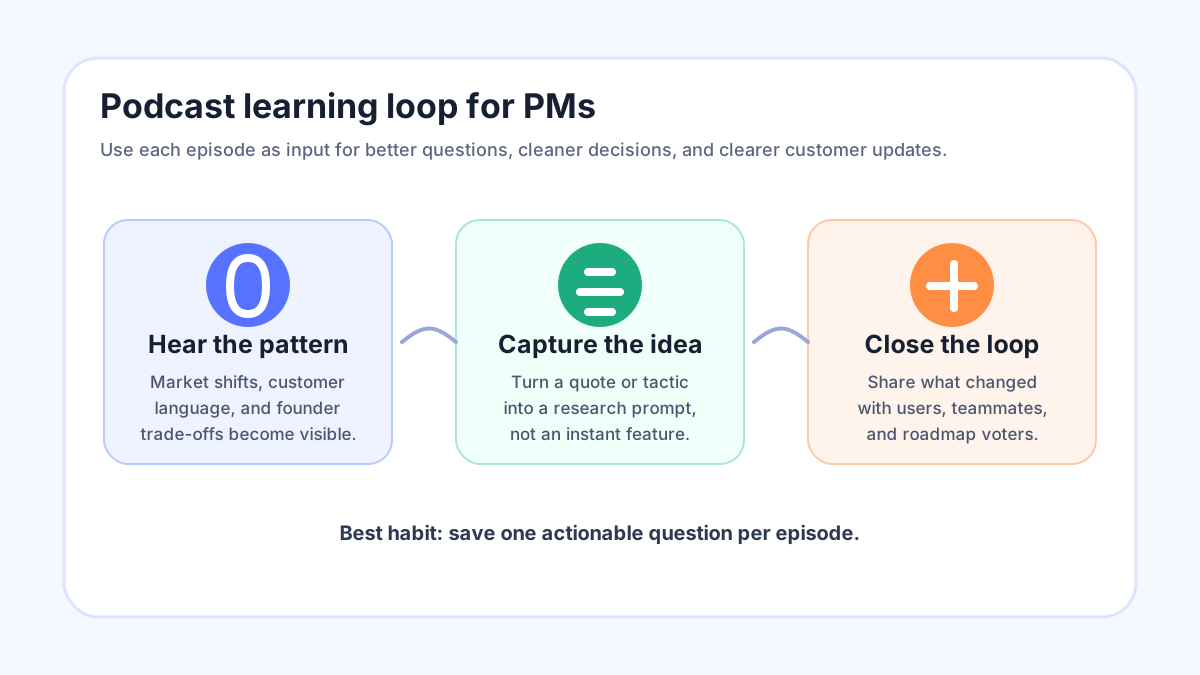
Product management podcasts are useful because the job is full of judgment calls that are hard to learn from a template. A good episode lets you hear how experienced product leaders frame ambiguous problems, defend trade-offs, research customers, design growth loops, and recover when a launch does not behave as planned. That is different from reading a polished playbook after the outcome is known.
The catch is that podcast advice can also become noise. One guest's successful pricing move, AI roadmap, onboarding experiment, or community strategy may be wrong for your product. The best product managers listen for patterns, not prescriptions. They turn a sharp episode into a better question, then test that question with users, data, and team context.
This guide covers 18 product management podcasts worth adding to your rotation. It keeps the list practical: what each show is best for, when to listen, and how to apply what you hear without flooding your roadmap. If you are building a feedback habit alongside your listening habit, FeaturAsk's guides to feature requests, idea tracking, and how to prioritize feature requests pair well with the workflow below.
If your team needs a simple place to turn podcast-inspired questions into real user evidence, try FeaturAsk with a 1 month free trial and no credit card required. It is $29.95/year after the trial, so small teams can collect ideas, votes, comments, and status updates without buying an enterprise product suite.
Why product managers should listen to podcasts
Podcasts fit the uneven rhythm of product work. You can listen while commuting, walking, cleaning up backlog notes, or preparing for a planning session. More importantly, the format preserves nuance. You can hear hesitation, disagreement, examples, and caveats that often disappear from short social posts.
That nuance matters in 2026 because product teams are navigating fast shifts in AI features, lower tolerance for bloated SaaS budgets, pressure to show retention impact, and increasingly public customer feedback loops. Apple Podcasts documents support for episode transcripts, and Spotify has expanded auto-generated transcripts and richer podcast pages, making it easier for teams to revisit and share specific passages instead of relying on memory. Those platform changes were rechecked in May 2026 on <a href="https://podcasters.apple.com/support/5316-create-transcripts" rel="nofollow">Apple Podcasts for Creators</a> and <a href="https://newsroom.spotify.com/2023-09-28/auto-generated-transcripts-chapter-recommendations-show-pages-podcasts/" rel="nofollow">Spotify Newsroom</a>.
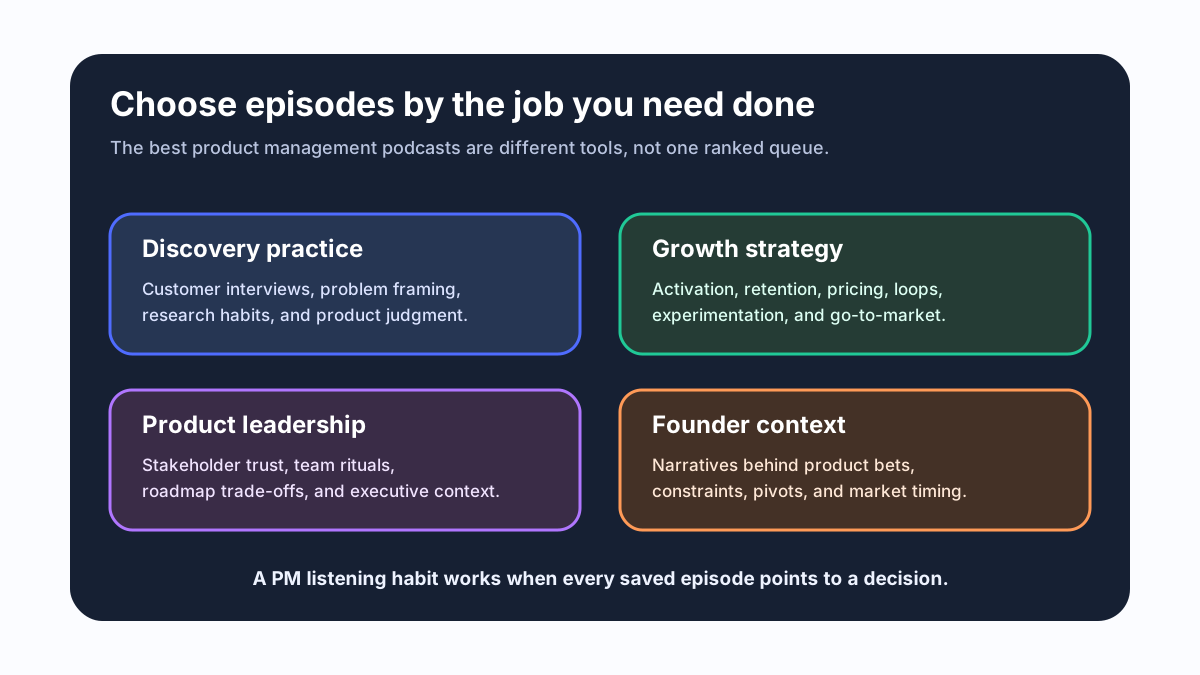
The value is not passive inspiration. Use a product management podcast to sharpen one of four skills: discovery, growth, leadership, or market context. After each episode, write down one question you want to ask customers, one assumption you want to revisit, or one communication habit you want to improve. If an episode does not produce a better question, it was entertainment, not product learning.
How to choose the right product management podcast
Start with the decision you are trying to improve. A founder who needs sharper positioning should not listen to the same queue as a senior PM preparing for stakeholder conflict. A growth PM should bias toward activation, retention, pricing, and experimentation. A first-time product manager may need more episodes about prioritization, research, and working with engineering.
Also separate evergreen advice from time-sensitive claims. A discussion about interviewing users may stay useful for years. A conversation about app-store rules, AI model costs, privacy regulation, or channel tactics needs a date check before you apply it. If an episode triggers a roadmap idea, capture the underlying user problem and validate it. Do not ship a feature because a guest with a different product, market, and cost structure made it sound obvious.
The top 18 product management podcasts
1. The Product Podcast
The Product Podcast from Product School is one of the most direct options for PM craft. Product School's official podcast page, rechecked in May 2026, positions it around product management conversations with leaders and practitioners. Listen for broad examples across discovery, execution, AI, career growth, and product leadership.
2. Lenny's Podcast
Lenny's Podcast is especially useful for growth, marketplace dynamics, career development, and operating lessons from high-growth software companies. The official Lenny's Newsletter podcast page was accessible when rechecked in April 2026. Use longer episodes to study why a metric mattered, what failed first, and which constraints shaped the playbook.
3. Product Hunt Radio
Product Hunt Radio helps with founder psychology, launches, communities, and the creative side of product building. Listen before a beta, launch, or positioning refresh. The lesson is usually not “copy this channel,” but “make the product easier to explain, try, and discuss.”
4. 100 PM
100 PM gives quick exposure to different product career paths and operating styles. That range is useful because PMs can be research-heavy, commercial, technical, or alignment-oriented. Use it to calibrate which skills your current role underuses.
5. Product Chats
Product Chats is practical for product operations, customer feedback, roadmaps, and product leadership. It works best when you translate an episode into one ritual improvement: a better discovery question, clearer roadmap update, or sharper summary of customer evidence.
6. One Knight in Product
One Knight in Product is a good fit for candid conversations about team structure, leadership, discovery, product operations, and the human side of software work. Listen when you need language for ambiguity: unclear strategy, too many stakeholders, weak discovery, or a roadmap pretending capacity is unlimited.
7. How I Built This
How I Built This is not a pure product management show, but it is valuable for market context. Founders describe timing, pivots, distribution, and moments when customer behavior surprised them. Listen for constraints, because limited money, trust, distribution, or time often creates the clearest product choices.
8. Masters of Scale
Masters of Scale is useful for growth narratives, network effects, leadership, and company-building patterns. Because the stories are polished, listen critically and ask, “What would the small-team version of this principle look like?”
9. Rocketship FM
Rocketship FM mixes startups, product, growth, and founder lessons. It is a strong choice when you want to connect product decisions to business survival: activation, retention, revenue, cost, and differentiation.
10. Product Thinking
Product Thinking is valuable when your backlog is crowded and your team needs sharper questions. A strong product thinker does not ask “Which feature is next?” first. They ask which problem matters most and what evidence would change the decision.
11. 20VC
20VC is broader than product management, but it helps startup PMs understand venture-backed growth, go-to-market, pricing, founder decisions, and market narratives. Filter aggressively: some advice assumes large markets and aggressive growth targets.
12. BUILD with Blake Bartlett
BUILD with Blake Bartlett is useful for SaaS operators who want product-led growth, go-to-market, pricing, and company strategy context. It helps PMs explain how roadmap choices connect to revenue motion and customer acquisition.
13. The Product Manager Podcast
The Product Manager Podcast is a generalist option for product responsibilities, leadership, roadmapping, collaboration, and career growth. Use it when you want practical prompts for requirements, stakeholder communication, discovery, technical debt, or product leadership.
14. The Intentional Product Manager Podcast
The Intentional Product Manager Podcast is a reminder that PM work is also attention, habits, and communication. Listen when work feels busy but unfocused, then choose one behavior to change for a week: fewer vague asks, better pre-reads, clearer decision logs, or more customer follow-up.
15. Lessons in Product Management
Lessons in Product Management is useful for practical, experience-based advice. Keep a “mistakes to prevent” note for warnings about unclear ownership, weak discovery, vanity metrics, overbuilt launches, and stakeholder misalignment.
16. The Product Experience
The Product Experience, associated with Mind the Product, is strong for product culture, leadership, discovery, and community-level conversations. Use it to compare your team's habits with the wider product community and spot patterns that are common, not unique to your company.
17. Productea
Productea is a lighter, conversational option for approachable product discussions. Use it when you want to stay connected to product thinking without turning every commute into homework. The test remains the same: did it give you a better question?
18. Product Led Podcast
Product Led Podcast earns the extra spot because product-led growth remains relevant for SaaS teams focused on activation, self-serve upgrades, trials, and in-app education. Listen when a roadmap debate is really about adoption behavior, not raw feature count.
A simple listening system for product teams
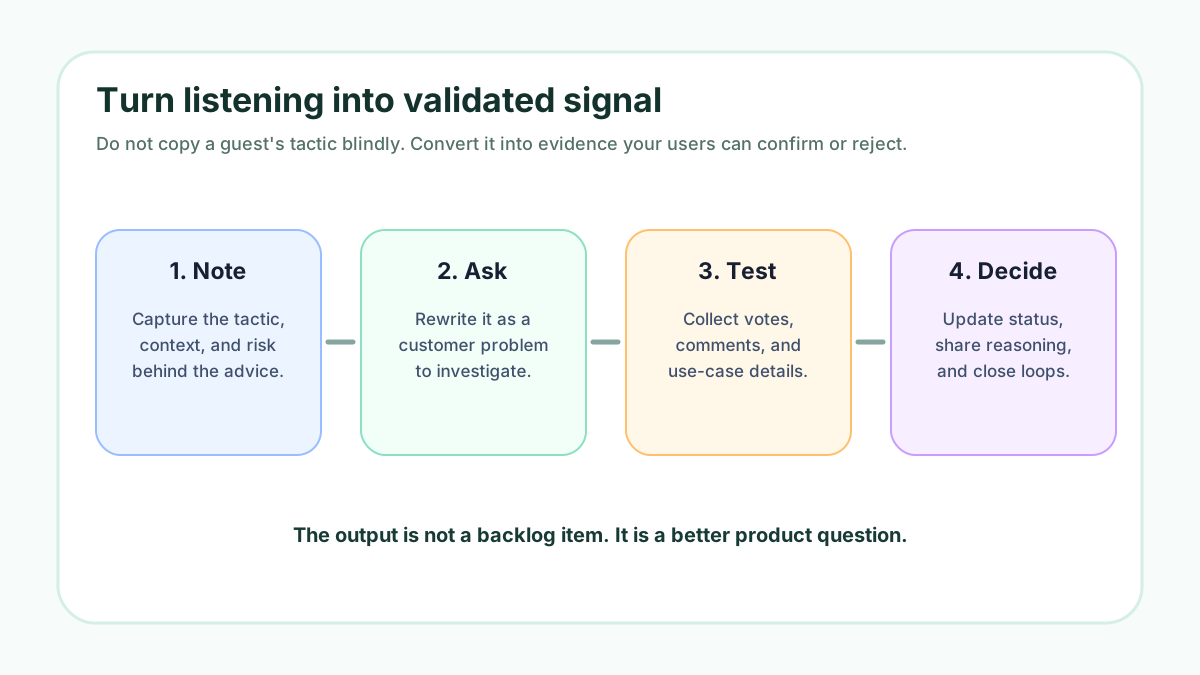
The easiest way to waste podcast learning is to keep it personal. One PM hears a good episode, mentions it in passing, and the idea disappears. A better system has four steps.
First, capture the episode, timestamp, and one sentence about why it matters. Second, rewrite the insight as a question about your users. Third, place that question somewhere visible, such as a feedback board, discovery plan, or roadmap research note. Fourth, close the loop after you learn more. Did customers confirm the problem? Did the idea conflict with your strategy? Did it expose a better opportunity?
This keeps podcast inspiration from becoming backlog clutter. For example, an episode about AI onboarding should not create a ticket called “add AI onboarding.” It should create a research question: “Where do new users get stuck because they do not know what to do next?” That question can be validated through support tickets, onboarding analytics, interviews, and customer votes.
FeaturAsk is built for this kind of lightweight loop. You can capture an idea, let users vote and comment, update the status, and show what changed. If you want to test the habit without budget drama, start FeaturAsk with 1 month free, no credit card required. The paid plan is $29.95/year, which keeps the feedback loop affordable even for tiny teams.
What to do after a great episode
After a strong episode, resist the urge to forward it with “we should do this.” Instead, send a short note with three parts: the idea, the context, and the question. For example: “This episode described a pricing page experiment for self-serve SaaS. Their context was a high-volume trial motion. Our question: do trial users understand which plan matches their use case before they hit the paywall?”
That structure respects the episode while protecting your roadmap. It also makes the idea easier for design, engineering, support, and sales to discuss. People can disagree with the question, add evidence, or suggest a better test without debating whether the podcast guest is credible.
For team use, create a shared monthly ritual. Each PM brings one episode-inspired question and one piece of customer evidence. The point is not to review podcasts. The point is to improve decisions. Over time, your team builds a library of product questions tied to market examples, customer comments, and roadmap outcomes.
Common mistakes when learning from podcasts
The first mistake is confusing confidence with evidence. Podcast guests are often persuasive because they are experienced storytellers. Their confidence does not prove their tactic fits your market.
The second mistake is ignoring dates. Product advice about AI tooling, platform rules, search behavior, privacy expectations, or paid acquisition can age quickly. Check the publish date and look for fresher sources before making a current claim in a roadmap discussion.
The third mistake is listening only to people who match your product model. If you only hear venture-scale growth stories, you may undervalue support quality, profitability, and retention. If you only listen to bootstrapped founders, you may miss lessons about scaling teams and systems. Mix perspectives deliberately.
The fourth mistake is hoarding insight. If a podcast changes how you think, share the useful part in a format others can act on. A two-sentence summary with a customer question is more helpful than a vague recommendation to listen to a full episode.
Final recommendation
The best product management podcast is the one that improves your next decision. Use The Product Podcast or The Product Manager Podcast for broad PM craft, Lenny's Podcast for growth depth, Product Thinking for sharper judgment, One Knight in Product for honest operating conversations, How I Built This and Masters of Scale for founder context, and Product Led Podcast for self-serve SaaS adoption.
Do not try to keep up with every episode. Build a small rotation, save the best timestamps, and convert insights into customer-backed questions. That is how listening becomes product work instead of background noise.
If you want a simple home for those questions, use FeaturAsk free for 1 month with no credit card required. At $29.95/year after the trial, it gives small teams an affordable way to collect feedback, prioritize ideas, and close the loop with customers.
Sources and further reading
- <a href="https://podcasters.apple.com/support/5316-create-transcripts" rel="nofollow">Apple Podcasts for Creators: Create transcripts</a>, rechecked May 2026.
- <a href="https://newsroom.spotify.com/2023-09-28/auto-generated-transcripts-chapter-recommendations-show-pages-podcasts/" rel="nofollow">Spotify Newsroom: auto-generated transcripts and podcast discovery updates</a>, rechecked May 2026.
- <a href="https://www.productschool.com/podcast" rel="nofollow">Product School: The Product Podcast</a>, rechecked May 2026.
- <a href="https://www.lennysnewsletter.com/podcast" rel="nofollow">Lenny's Podcast official page</a>, rechecked April 2026.