28 Best Product Feedback Software Tools By Category
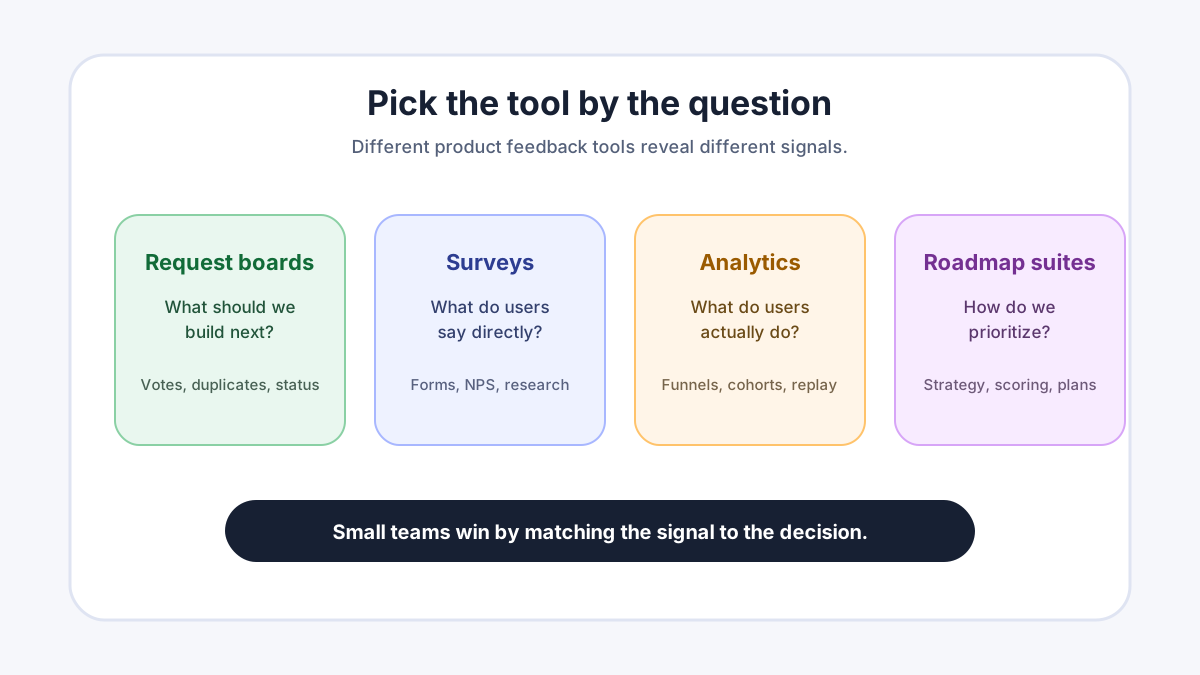
Choosing product feedback software is less about finding the most famous logo and more about matching the tool to the signal you need. A feature request board is great when customers know what they want. A survey is better when you need structured answers. Session replay helps when people cannot explain what went wrong. A product management suite helps when feedback must flow into discovery, prioritization, and roadmaps.
This guide groups 28 tools by category so you can shortlist faster. The recommendations and framing are written for small SaaS teams, founders, and product managers who want useful feedback without enterprise complexity.
For context on modern feedback practice, Nielsen Norman Group explains why research methods answer different questions, Pendo describes how product analytics can connect usage to behavior, and the ProductPlan roadmap guide shows how feedback becomes a prioritization input rather than a dumping ground. Useful external references include Nielsen Norman Group on UX research methods, Pendo product analytics guidance, and ProductPlan roadmap guidance.
How to choose product feedback software
Start with the decision you need to make. If the team is asking “what should we build next,” prioritize voting boards, idea capture, and feature request management. If the question is “why are people dropping off,” analytics and session replay will be more useful. If the question is “which message resonates,” survey and research tools belong in the shortlist.
The strongest setups combine three signals: qualitative context, quantitative demand, and product behavior. Qualitative context tells you why customers care. Demand tells you how many people are affected. Behavior tells you whether the pain shows up in the product. You do not need a huge stack to get there, but you do need to avoid treating every comment as equal.
Small teams should also check cost, setup time, ownership, and how easy it is to close the loop with customers. A powerful platform that nobody maintains becomes expensive shelfware. A simple board that the team actually reviews every week can outperform a complicated system.
Idea boards and feature request tools
1. FeaturAsk
FeaturAsk is built for teams that want a clean public or private place to collect feature requests, let customers vote, and understand demand before committing roadmap time. It is intentionally lightweight: capture the idea, group similar requests, discuss internally, and keep customers informed when status changes.
It is a good fit for bootstrapped SaaS, agencies with productized software, and early product teams that need a customer-facing feedback loop without buying a full product management suite. If you are replacing scattered Slack messages, sales notes, and support tickets, start FeaturAsk with one month free and no credit card. The plan is $29.95/year, which keeps feedback management affordable while you learn what customers actually want.
2. Canny
Canny is a mature feedback board and roadmap tool used by SaaS teams that want voting, segmentation, and public changelog workflows. It is strongest when customer-facing teams need to attach requests to accounts and product managers want a central place to score demand.
3. UserVoice
UserVoice is designed for larger B2B teams that need account-level feedback, sales and success workflows, and prioritization across many customer segments. It can be powerful, but smaller teams should confirm that the process overhead is worth it.
4. FeatureOS
FeatureOS combines boards, roadmaps, and announcements. It is useful for teams that want one hub for requests and product updates, especially when external communication is part of the product workflow.
5. Upvoty
Upvoty focuses on feedback boards, roadmaps, and changelogs. It is approachable for SaaS teams that want public voting and status updates without building a custom portal.
6. Nolt
Nolt is a simple feedback board with voting and status labels. It fits teams that need a minimal, easy-to-understand request portal and do not want heavy workflow configuration.
7. Savio
Savio is useful when feedback comes from support, sales, and customer success conversations. It helps tie requests to customer revenue and segments, which is valuable when prioritization depends on account impact.
8. Acute
Acute provides feedback collection, voting, and roadmap communication. It can work well for product teams that want a compact feedback portal with straightforward categorization.
9. AnnounceKit
AnnounceKit is primarily a product announcement and changelog tool, but it can support feedback loops around releases. Use it when the main problem is communicating updates and gathering reactions after shipping.
10. Sleekplan
Sleekplan offers feedback boards, satisfaction widgets, and changelog features. It is worth considering if you want a combined portal for ideas and updates but still prefer a lightweight experience.
Survey and form tools
11. Typeform
Typeform is strong for conversational surveys, onboarding questionnaires, and research forms that need a polished experience. It is best when you know the questions you want to ask and need structured answers rather than open-ended feature voting.
12. Jotform
Jotform is flexible for forms, approvals, uploads, and simple workflows. It is useful when feedback includes attachments, operational requests, or custom routing.
13. SurveySparrow
SurveySparrow supports recurring surveys, NPS-style programs, and omnichannel collection. It is a better fit for customer experience teams that run ongoing measurement programs.
14. Qualaroo
Qualaroo is useful for targeted website and in-app surveys. It helps teams ask questions in context, such as why a visitor hesitated on pricing or what stopped a user during setup.
15. Paperform
Paperform blends forms with landing-page-like experiences. It is helpful when the feedback flow needs explanation, examples, or lightweight lead capture alongside the questions.
16. Google Forms
Google Forms is not a specialist product feedback platform, but it is free, familiar, and fast. Use it for quick internal research or one-off customer interviews, then move repeated product requests into a dedicated system.
Product analytics and behavior tools
17. Mixpanel
Mixpanel helps teams analyze events, funnels, cohorts, and retention. It answers questions such as which users adopted a feature, where activation fails, and how behavior differs by segment.
18. Amplitude
Amplitude is another strong product analytics platform for funnels, journeys, cohorts, and experimentation. It fits teams with enough event data and analytics discipline to interpret behavioral signals.
19. Hotjar
Hotjar combines heatmaps, recordings, surveys, and feedback widgets. It is useful when website or onboarding friction is visible but users are not clearly explaining the problem.
20. Mouseflow
Mouseflow offers session replay, heatmaps, funnels, forms, and feedback campaigns. It is useful for teams diagnosing conversion problems and form friction.
21. FullStory
FullStory is a digital experience analytics platform with session replay and product usage insights. It is best for teams that need deeper behavioral investigation and have privacy practices in place.
Product management suites with feedback
22. Productboard
Productboard connects customer insights to feature ideas, prioritization, and roadmap planning. It is a strong choice when product discovery and stakeholder alignment are the main problem, not just request collection.
23. Aha!
Aha! provides roadmaps, idea portals, strategy, and product planning. It is broad and structured, making it more suitable for teams that already have formal portfolio planning.
24. Pendo
Pendo combines product analytics, in-app guides, feedback, and customer sentiment tools. It can be useful when product-led growth, onboarding, and feedback are managed together.
25. ProductPlan
ProductPlan focuses on roadmapping and communication. It is helpful when the team needs clear roadmap views for executives and stakeholders, with feedback informing the plan.
26. Jira Product Discovery
Jira Product Discovery helps product teams capture ideas, score opportunities, and connect discovery to Jira delivery work. It fits companies already standardized on Atlassian tools.
Market research and panel tools
27. UserTesting
UserTesting helps teams recruit participants and run moderated or unmoderated studies. It is valuable when you need to watch people react to concepts, prototypes, messaging, or workflows.
28. Wynter
Wynter focuses on B2B message testing and buyer research. It is useful when you need feedback from a specific professional audience before changing positioning, landing pages, or campaign messaging.
Which category should you start with?
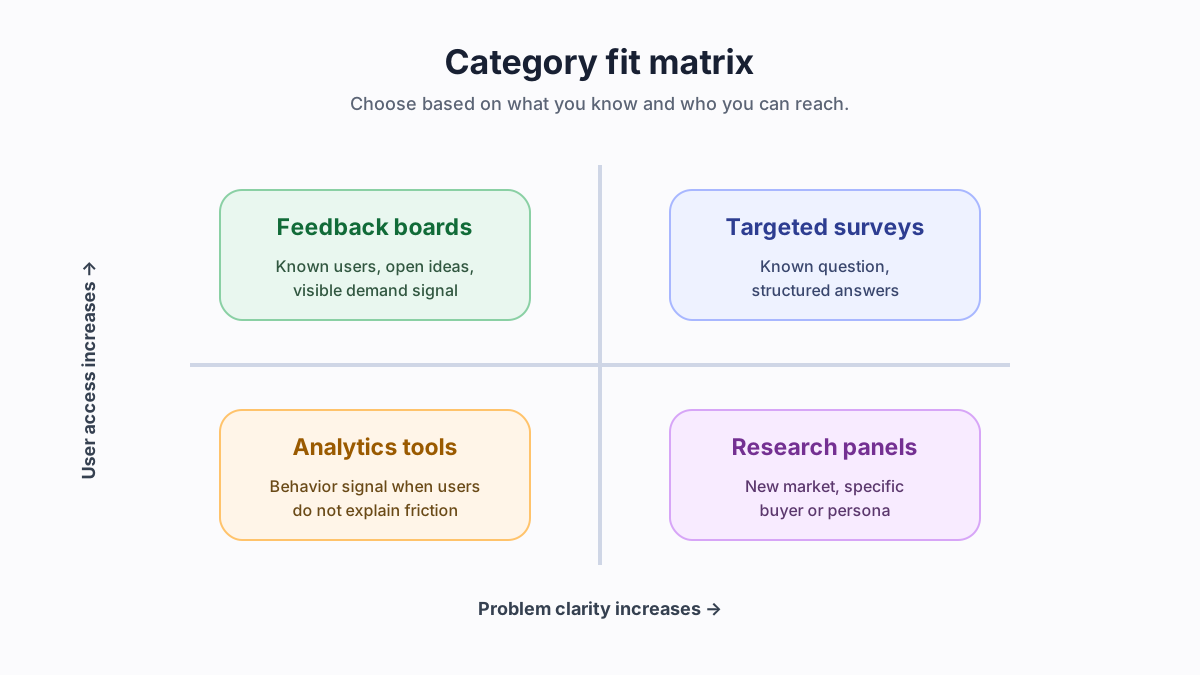
If you already have active users asking for improvements, start with a feature request board. It gives customers a visible place to contribute and gives the team a demand signal. If you have traffic but weak conversion, start with website feedback and session replay. If you have a confusing product funnel, start with analytics. If you are exploring a new market, start with research panels or interviews.
The mistake is buying for a future process you do not yet run. A five-person SaaS team does not need a complex enterprise feedback operation on day one. It needs a reliable habit: collect requests, group duplicates, review demand, make a decision, ship or decline, and tell customers what happened.
FeaturAsk fits that first operating habit. Create a simple feedback board with one month free and no credit card, keep customer voting organized, and stay at $29.95/year if it solves the job.
A practical feedback stack for small SaaS teams
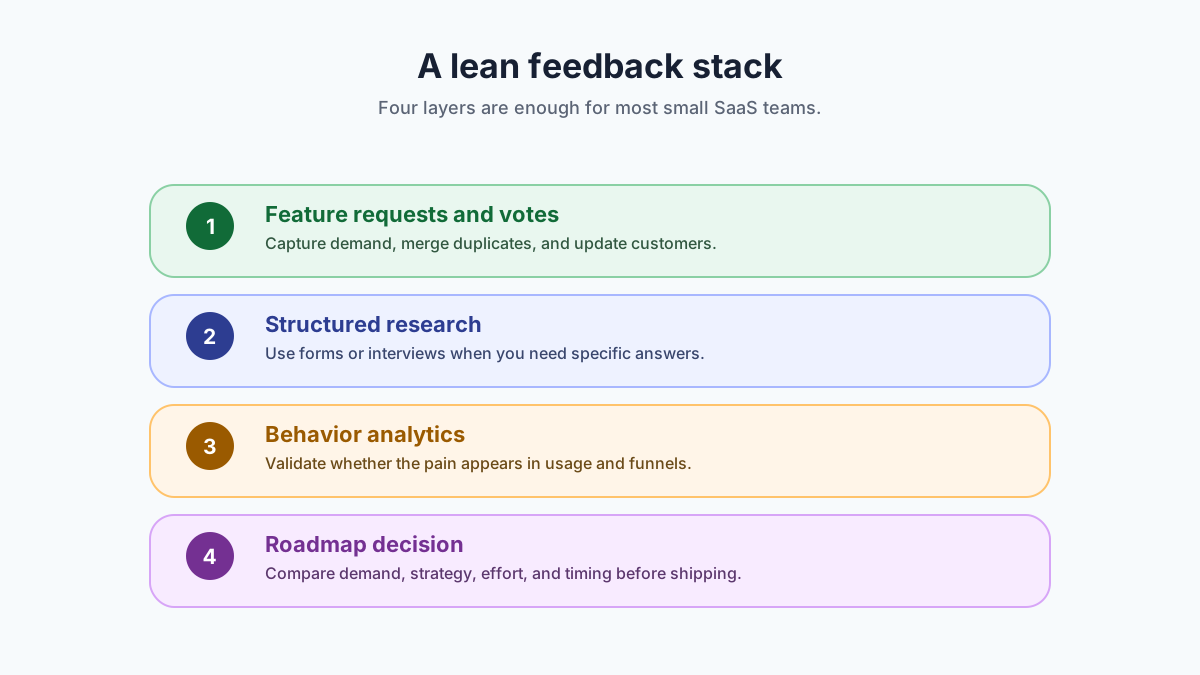
A lean stack can be very effective: FeaturAsk for feature requests and voting, a form tool for structured research, and a behavior analytics tool for usage patterns. Add session replay only when you have a specific friction question. Add a product management suite when prioritization, portfolio planning, and stakeholder reporting become the bottleneck.
This approach also makes internal conversations healthier. Sales can point to account requests. Support can group repeated pain. Product can compare votes with strategy. Engineering can see why a request matters before estimating it. Marketing can use release notes and changelog updates to close the loop.
Related FeaturAsk reading can help you build that operating system: use the product brief guide to define evidence before committing work, the innovation roadmap guide to connect feedback to planning, and the release notes best practices guide to tell customers what changed.
Evaluation criteria before you buy
Review every tool against six criteria. First, capture: can customers submit feedback where the pain occurs? Second, organization: can you merge duplicates, tag requests, and find patterns? Third, prioritization: can the team connect requests to segments, revenue, effort, and strategy? Fourth, communication: can you update customers when the request is planned, shipped, or declined? Fifth, integration: does the tool fit your support, CRM, analytics, or delivery workflow? Sixth, cost: will the plan still make sense when your team and customer base grow?
Also check data privacy and consent. Session replay, analytics, and survey tools can collect sensitive information if configured poorly. Review masking, retention, access controls, and whether the vendor supports your compliance needs. The right tool should improve trust, not create risk.
Common mistakes when rolling out feedback software
The first mistake is collecting feedback without assigning an owner. If nobody reviews the board, customers will stop believing it matters. The second mistake is treating votes as the whole prioritization model. Votes show demand, but strategy, revenue, risk, and effort still matter. The third mistake is failing to close the loop. Even a short “not planned right now” is better than silence when it is honest and respectful.
The fourth mistake is using too many tools too early. Fragmented feedback creates duplicate work and weak decisions. Pick one home for product requests, one way to analyze behavior, and one rhythm for review. Add tools only when the current process has a clear gap.
FAQ
What is product feedback software?
Product feedback software helps teams collect, organize, analyze, and act on customer input. Depending on the category, it may include idea boards, votes, surveys, product analytics, session replay, roadmap planning, or research panels.
What features matter most for small teams?
Small teams usually need request capture, voting, duplicate merging, status updates, basic prioritization, and an easy way to share decisions. Advanced portfolio management can wait until the feedback volume justifies it.
Is a survey tool enough for product feedback?
A survey tool is enough for structured questions, but it is not ideal for ongoing feature requests. Surveys are episodic. A feedback board creates a persistent home for ideas and lets customers see existing requests before submitting duplicates.
How often should product teams review feedback?
Review new feedback weekly and look for larger patterns monthly. Strategic roadmap decisions can happen quarterly, but customers should not wait a quarter for acknowledgment.
What is the most affordable way to start?
Start with one dedicated request board and a simple review habit. If you want that without enterprise overhead, try FeaturAsk for one month free with no credit card. It is $29.95/year and built for straightforward feature request collection, voting, and follow-up.