Effective Practices for Continuous Feedback
Quick answer
Continuous feedback is the practice of listening all the time without letting feedback interrupt every decision. It works when customers have a simple place to share ideas, the team has a rhythm for review, and decisions are visible. FeaturAsk gives small teams that loop with a copy-paste widget, voting, moderation, analytics, and request management for $29.95/year. Sign up for FeaturAsk to start a 30-day free trial with no credit card required.
9 practices that make continuous feedback work
1. Keep one primary intake channel
Pick one place for product and website requests so customers do not have to guess whether to email support, fill a survey, or post in chat.
2. Ask for context, not just opinions
Ask what the customer was trying to do, how often the problem happens, and what outcome would make the improvement valuable.
3. Deduplicate without deleting customer language
Merge duplicate ideas, but preserve the words users used. Customer language often explains positioning and onboarding problems better than internal labels.
4. Review feedback on a fixed cadence
A weekly review is enough for most teams. The point is a dependable habit, not constant interruption.
5. Use votes as evidence, not orders
Votes show demand, but they are not strategy. Compare votes with customer fit, revenue impact, retention risk, and implementation cost.
6. Combine feedback with behavior data
Use analytics, support history, and interviews to validate high-demand ideas. Feedback is strongest when several evidence types point the same way.
7. Publish statuses and decisions
Use statuses such as under review, planned, shipped, or not planned. Visible decisions build trust even when the answer is no.
8. Revisit declined ideas when context changes
A declined idea can become sensible after pricing, strategy, or customer segment changes. Review old high-signal requests quarterly.
9. Keep the process affordable and simple
A lightweight board that the team actually reviews beats an expensive platform that becomes another neglected inbox.
Why continuous feedback beats occasional surveys
Surveys capture a moment. Continuous feedback captures demand as it appears. A user who hits a missing feature, a confusing setup step, or a product-page objection can submit the request immediately. Other users can vote instead of sending duplicate messages. The business can review the board on a schedule rather than reacting randomly.
Evidence and context
Nielsen Norman Group usability articles support observing and improving real user tasks. Baymard Institute ecommerce research shows why small experience problems matter, especially in purchase journeys. McKinsey on experience-led growth connects systematic customer-experience improvement with business value.
FeaturAsk continuous feedback setup
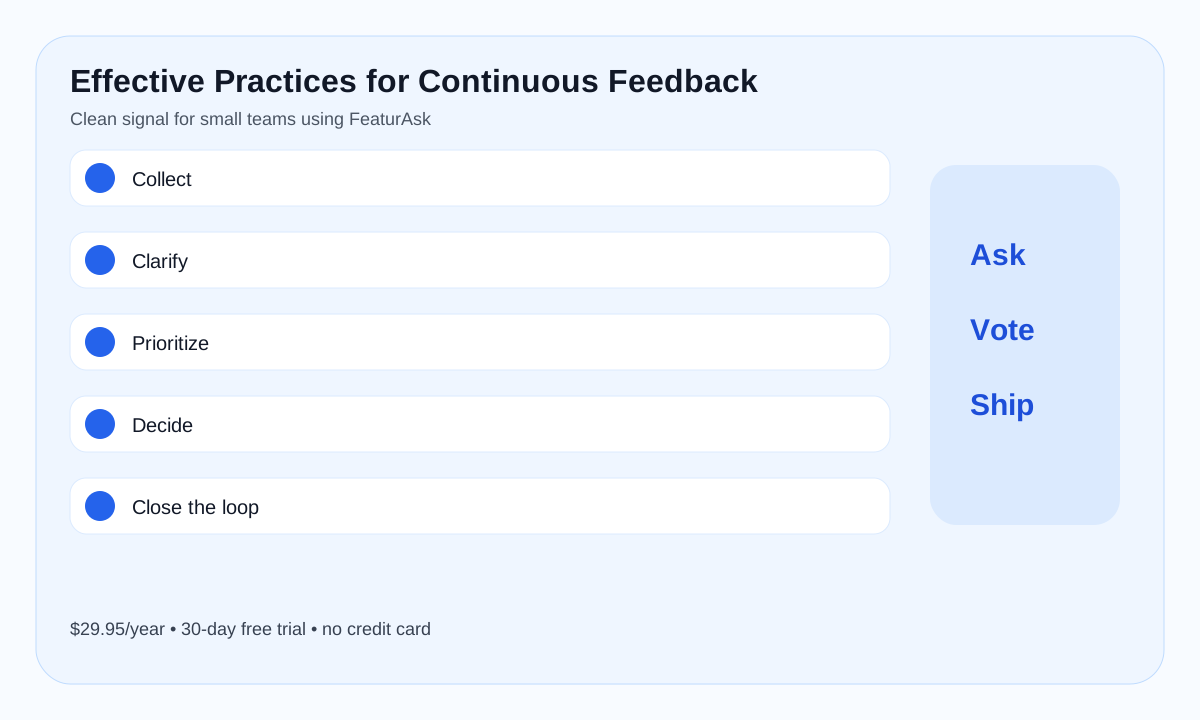
Add the widget to the highest-signal page: app dashboard, pricing page, help center, product page, or creator resource hub. Seed the board with known requests. Review new submissions weekly. Merge duplicates, tag themes, and publish a status for decisions. Read customer feedback strategy, feature voting, and customer feedback software if you want the broader operating model. Sign up for FeaturAsk if you want a feedback board that costs $29.95/year instead of another monthly enterprise subscription.
Cultural rules
Do not punish users for unclear feedback. Ask follow-up questions. Do not promise every popular idea. Explain tradeoffs. Do not let internal opinions outrank repeated customer evidence without a reason. Continuous feedback should make the roadmap calmer, not louder.
Implementation plan for an always-on loop
Start with one intake channel and one weekly meeting. In the meeting, review new requests, merge duplicates, tag themes, and choose the next action. The action might be shipping a quick fix, scheduling research, updating documentation, or declining the request with a clear reason. The process should be light enough that a founder, creator, store owner, or small SaaS team can keep it alive.
Continuous feedback should also reduce noise. When a customer can vote on an existing request, the team receives validation without another support thread. When the owner publishes a status, customers stop wondering whether anyone is listening. When analytics confirms the pattern, the team can invest with more confidence.
Keep the loop affordable. FeaturAsk covers the core workflow — submit, vote, discuss, manage, and update — without forcing a small business into a large monthly subscription.
Practical review scorecard
For continuous feedback, score every request by clarity, repeated demand, strategic fit, effort, and owner. If there is no owner, the request should not sit in limbo; mark it as research needed, later, or not planned. Visible status is part of the practice.
The scorecard should make meetings shorter. If it becomes a complex ritual, simplify it. Continuous feedback works because the team can maintain it every week.
Continuous feedback examples
A SaaS dashboard can collect requests for integrations, exports, permissions, and onboarding help. An ecommerce site can collect demand for variants, bundles, shipping choices, and product information. A creator can collect votes for topics, templates, community events, or course modules. A service business can gather requests for appointment times, packages, locations, or communication improvements.
The common pattern is not the industry; it is the loop. Customers submit ideas where the need appears, other customers validate the demand, the owner reviews evidence, and the business publishes a decision. That loop turns continuous feedback from background noise into a practical operating system.
Building the cadence
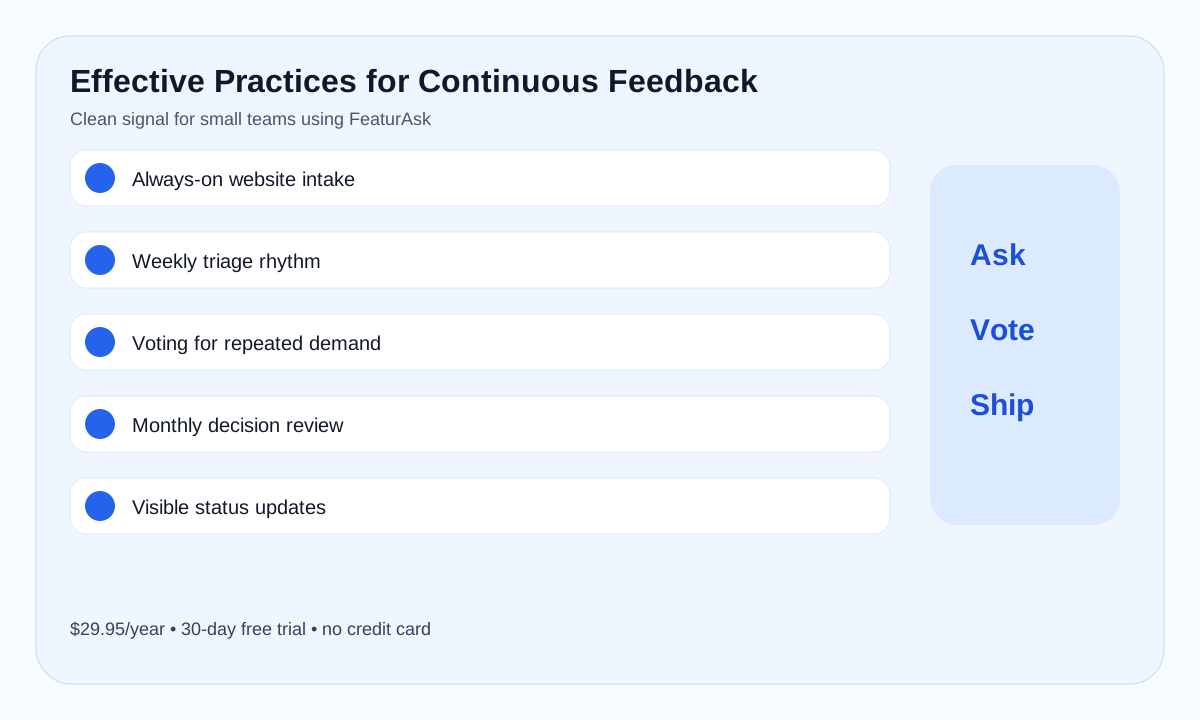
A continuous feedback program needs a cadence that is frequent enough to stay current and light enough to survive busy weeks. For most small teams, weekly triage and monthly prioritization work well. Weekly triage keeps spam, duplicates, and urgent requests under control. Monthly prioritization gives the team enough time to see patterns before making roadmap changes.
During triage, merge duplicates, clarify vague requests, and tag themes. During prioritization, compare the highest-signal requests against strategy, effort, and business impact. This separation prevents the team from turning every new comment into an emergency.
Roles in a small team
A solo founder can own the entire loop in thirty minutes a week. A small SaaS team might have support tag incoming themes, product review requests, and marketing watch for language that improves positioning. An ecommerce owner might review product requests before inventory planning. A creator might check votes before planning the next content batch. The process scales because the same board can support different review habits.
The important rule is that somebody owns the next step. Feedback without ownership becomes an archive. Feedback with ownership becomes a decision system.
How to prevent feedback overload
Set expectations with statuses. “Under review” means the team is learning. “Planned” means the request has a likely path. “Shipped” means customers should know what changed. “Not planned” means the idea was considered and declined. These labels reduce anxiety because users can see that requests are not ignored.
Also separate bugs, support issues, and product ideas. A bug may need immediate support handling. A product idea may need votes and research. A service complaint may need an operations fix. FeaturAsk is best for requests and ideas, while support channels should still handle urgent private issues.
Making feedback useful for strategy
Continuous feedback should not turn the roadmap into a popularity contest. It should reveal demand, language, edge cases, and missed opportunities. The team still needs judgment. A request with fewer votes may matter more if it comes from ideal customers or blocks activation. A highly voted request may be declined if it pulls the product away from its core promise. The value of a visible board is that these tradeoffs can be made with evidence rather than memory.
Continuous feedback examples by operating model
Founder-led product
The founder reviews FeaturAsk weekly, replies to unclear requests, and chooses one improvement to research or ship. The process stays personal but no longer depends on memory.
Small SaaS team
Support tags recurring complaints, product reviews voted requests, and marketing studies customer language. The board becomes a shared source of truth instead of another private inbox.
Ecommerce business
The owner reviews product and shopping-experience requests before inventory and merchandising decisions. Repeated votes for variants, bundles, or shipping options can reduce guesswork.
Creator business
Audience suggestions become a ranked backlog for videos, guides, templates, and paid products. The creator can explain why one topic is next and another is later.
Quality control for continuous listening
Continuous feedback should create calmer decisions, not endless reaction. Review patterns on a schedule, ask for clarification when requests are vague, and publish statuses so customers understand the outcome. The loop is only healthy when listening leads to visible decisions.
Signals to review every month
At the end of each month, review the top voted requests, the newest requests from ideal customers, the requests tied to churn or support pain, and the requests you declined. This review prevents the board from becoming a popularity contest. It also helps you notice when old decisions should change because strategy, customer mix, or capacity has changed.
Monthly review is also a good time to clean the board. Merge duplicates, clarify vague titles, archive spam, and update statuses. A tidy board invites more participation because customers can understand what others have already asked for.
Board maintenance rhythm
Keep the board easy to understand. Rewrite vague titles without changing the customer meaning, merge duplicates into the strongest version, and add short internal notes when a request needs research. Remove spam quickly. If a request is too broad, ask a clarifying question before it collects misleading votes.
Good maintenance increases participation. Customers are more likely to vote when they can find existing ideas and understand the status of previous requests.
Decision communication rhythm
Communicate decisions in plain language. “Planned” should explain the intended outcome, not promise every detail. “Not planned” should give a respectful reason when possible. “Shipped” should link the improvement to the original request so users see that their input mattered.
This communication rhythm turns continuous feedback into trust. Even when customers do not get everything they ask for, they can see that the business is listening and making deliberate choices.
One simple rule keeps the system healthy: every request should either teach the team something, influence a decision, or receive a clear status. Anything else becomes noise.
Final continuous feedback review prompt
Choose one request to clarify, one to decide, and one to close. That rhythm keeps the board alive without turning every comment into a roadmap interruption.
Final continuous feedback operating check
Before the next monthly review, clean the board and choose the decision each high-signal request should influence. Some requests belong in quick fixes, some in research, some in roadmap planning, and some in not-planned status. Continuous feedback stays useful when every item has a next step. FeaturAsk keeps that process visible because votes, comments, and statuses remain attached to the request.
A feedback review should leave the board cleaner than it started. Clarified titles, merged duplicates, and updated statuses are signs the process is working. Archive stale requests with a reason so the board stays clean while preserving the learning for future planning conversations.
Assign one person to the archive review, even if the business is only a solo operation. Ownership keeps continuous feedback from becoming continuous clutter. The final review should record decisions in plain language so the next planning cycle starts with evidence, not memory.
A useful final feedback review leaves one clarified request, one visible status update, and one owner for the next decision.
Bottom line
Continuous feedback works when it is visible, reviewed, and connected to decisions. Start with one board, one weekly review, and one habit of closing the loop. FeaturAsk keeps that system affordable for small businesses, SaaS teams, ecommerce stores, and creators. Sign up for FeaturAsk and invite visitors to submit and vote on requests this week.