Menu Suggestion Box: Let Guests Tell You What They Would Order Next
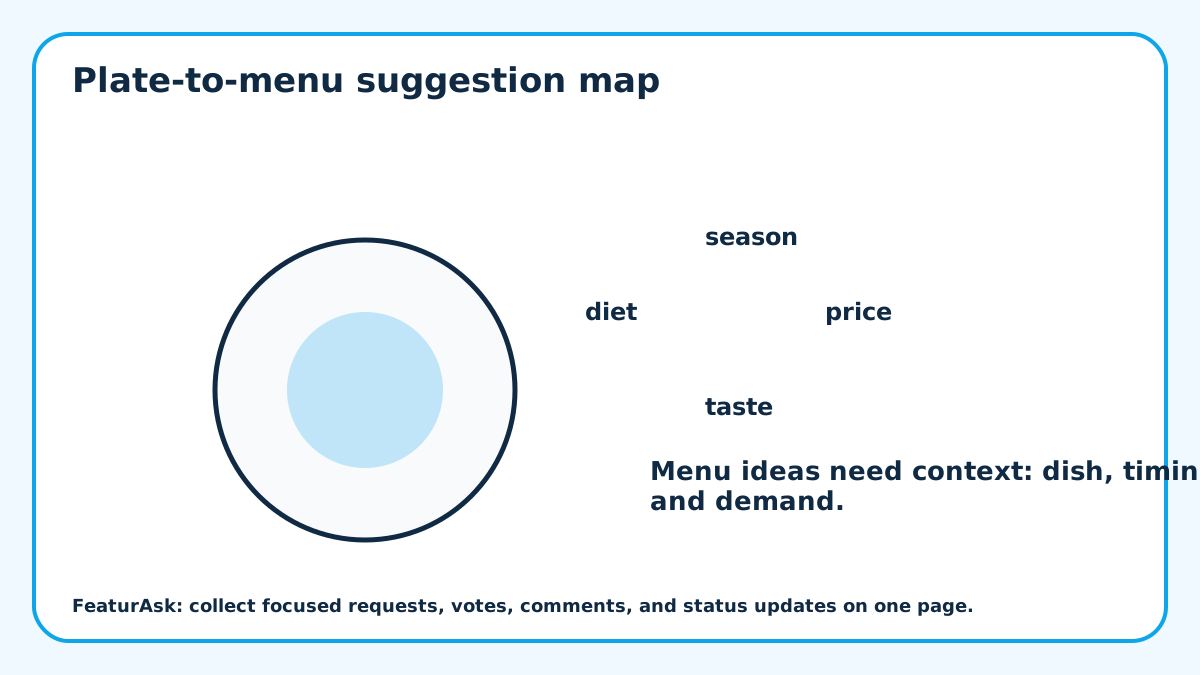
A menu suggestion box is useful when it helps a restaurant decide what to test next. It is not useful when it becomes a novelty jar full of dishes the kitchen cannot prep, price, or sell consistently.
Guests have strong opinions because they know their cravings, dietary needs, favorite specials, and frustrations with the current menu. The owner still has to compare those ideas with ingredients, prep time, margin, staff training, seasonality, and brand fit.
A good suggestion box sits between those two realities. It lets guests share demand and gives the restaurant a simple way to sort that demand before changing the menu.
Ask for the dish and the buying moment
A request for “more vegan options” is a start, but it is not enough. Ask what the guest would order, when they would order it, and what current item it might replace or complement. That context helps the kitchen decide whether the idea belongs at lunch, dinner, catering, specials, or seasonal planning.
The buying moment matters. A weekday office lunch suggestion has different economics from a weekend brunch idea or a catering tray request.
Keep kitchen constraints in the review
Every menu idea has an operational cost. Before testing a suggestion, compare it with ingredient overlap, prep complexity, station capacity, staff training, shelf life, allergen handling, and expected margin.
That does not make the process less guest-centered. It makes the best guest ideas more likely to become real. A dish that fits existing ingredients and solves repeated demand is easier to test than a creative item that breaks the line.
Use votes to separate cravings from patterns
Votes help reveal whether a suggestion is shared by more than one guest. They can show demand for spice levels, portion sizes, kids options, dietary labels, seasonal drinks, or family bundles.
Do not treat votes as the menu plan. Compare them with sales data, staff observations, supplier availability, and waste. Restaurant research from groups such as the National Restaurant Association is a reminder that demand and operations have to be read together.
Make the suggestion box specific to the page
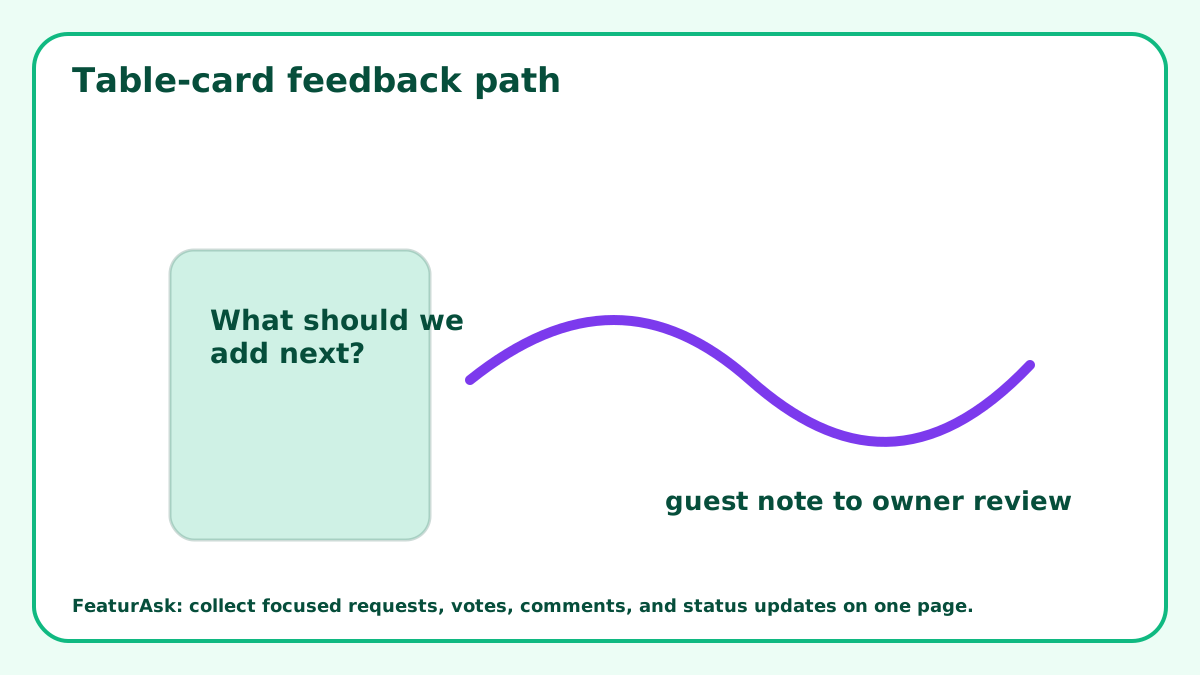
A menu page can ask for dish ideas. A catering page can ask what tray or package is missing. A specials page can ask which seasonal item guests want to see again. A generic “send feedback” form blurs those decisions together.
Page-specific prompts lead to better ideas because the guest is looking at the relevant offer. That also makes review easier for the owner.
How FeaturAsk fits restaurant feedback
FeaturAsk lets a restaurant add a request widget to the exact webpage where menu feedback belongs. The generated code goes into that page body, and the subscription is tied to the assigned URL. You can customize the wording, colors, fonts, comments, status/date display, reCAPTCHA v2, and optional fields.
The dashboard gives you search, status filters, comments, moderation, request details, and statuses such as Pending, Under Consideration, In Progress, Completed, and Declined. FeaturAsk has a 30-day no-card trial and costs $29.95/year, which is easier for a restaurant to test than a monthly enterprise feedback tool.
Sort requests into testable lanes
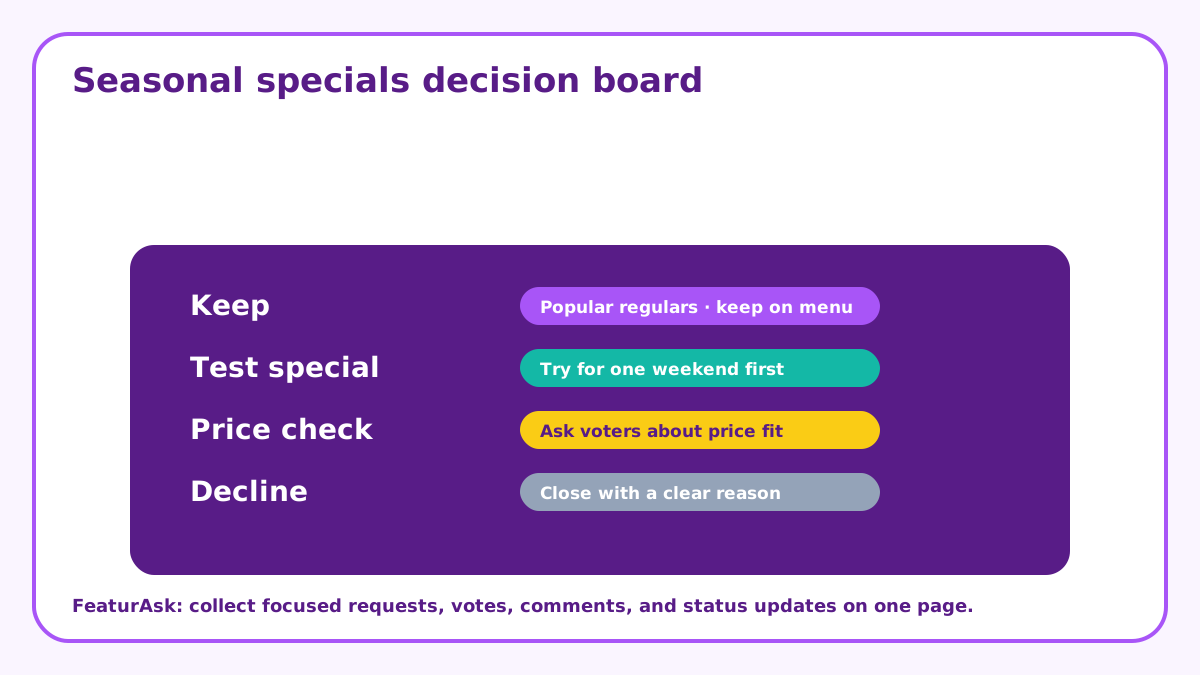
A menu review does not need to be complicated. Label ideas as quick special, seasonal candidate, catering option, needs more demand, operations problem, or not a fit. This turns a loose list into a test plan.
Quick specials are good for ideas that use current ingredients. Seasonal candidates can wait. Catering ideas should be reviewed separately from dine-in requests. Some requests should become clearer menu copy rather than new dishes.
Close the loop with guests
If a suggestion becomes a weekend special, mark it completed and mention that guests asked for it. If an idea is declined because it does not fit the kitchen or brand, a visible declined status is still better than silence.
For adjacent examples, compare customer feedback tool for small business, customer idea board, and online suggestion box for customers.
Watch for non-menu feedback hiding in dish requests
Some menu suggestions are really service feedback. “Add a lunch bowl” may mean the current lunch options take too long. “Add clearer spice levels” may mean guests are afraid to order. “Offer smaller portions” may point to price sensitivity or leftovers.
During review, ask what problem the suggestion reveals. The answer might change the menu, the descriptions, the ordering flow, or staff recommendations.
Ask staff what the request would cost to execute
Guest demand is only half the picture. Before testing a menu suggestion, ask the people who would prep, cook, serve, and explain it. Staff often know which ideas will slow down the line, create confusion, or require ingredients that spoil quickly.
That does not mean staff should veto every new idea. It means guest enthusiasm should be paired with operational knowledge. The best menu tests usually satisfy both sides: people want the item, and the kitchen can execute it without hurting service.
Use the box for descriptions, not only dishes
Guests may not always ask for a new item. Sometimes they need clearer spice notes, allergen labels, portion guidance, pairing suggestions, or photos. Those requests can improve sales without changing the menu itself.
Review suggestion-box entries for language that belongs in the menu. If people keep asking whether a dish is spicy, filling, shareable, vegan, kid-friendly, or available for takeout, the menu copy may need to answer that question sooner.
Test before making a permanent menu change
A suggestion can become a weekend special, limited catering item, seasonal drink, or preorder option before it becomes permanent. That staged approach lets the restaurant measure demand with less risk.
When a test runs, connect it back to the suggestion box. Mark the idea in progress, then completed if the special launches. If the test fails, record what happened. That history helps future reviews avoid repeating the same experiment without evidence.
Compare requests with sales mix
A menu suggestion becomes more useful when you compare it with what people already buy. If guests request a new lunch bowl and lunch sales are growing, the idea may deserve a test. If they request an item that conflicts with your strongest sellers, it may need a smaller experiment first.
Sales mix does not replace guest input. It gives the input context. The best menu changes usually sit where customer interest, operational fit, and business performance overlap.
Keep the prompt seasonal
Restaurants change with the calendar. A static suggestion prompt can collect ideas that are badly timed. Adjust the wording for seasons, holidays, catering windows, patio months, school schedules, or local events.
Seasonal prompts also make guests more specific. “What summer drink should we test?” is easier to answer than “What should we add?” The narrower question gives the owner cleaner demand to compare.
Use suggestion patterns to improve menu categories
Sometimes guest suggestions reveal that the menu category is unclear. People may ask for lighter options because the lunch section feels heavy, or they may request family meals because the takeout page does not explain bundles. Those patterns can lead to better organization, not only new dishes.
During review, ask whether the request points to a missing item, unclear description, awkward category, or hidden offer. A menu suggestion box can improve how guests read the menu before it changes what the kitchen cooks.
Keep a history of tested ideas
Restaurants repeat experiments when there is no record. Keep a simple note for suggestions that became specials, catering tests, or seasonal items. Record when the test ran, what sold, what staff noticed, and whether guests asked for it again.
That history makes future planning smarter. If an idea failed because the timing was wrong, it may deserve another try later. If it failed because prep was too slow or margin was poor, the next version needs a different design.
Keep the loop grounded in service reality.
Review the box with both the menu and the kitchen schedule open. A guest idea that sounds perfect on paper may fail on a Friday night line, while a quieter request may fit prep, margin, and repeat demand beautifully. The review process should catch that difference before the test starts.
Make menu feedback testable
A menu suggestion box should turn guest ideas into practical tests. Ask for the buying moment, compare ideas with kitchen reality, use votes as one signal, and show visible outcomes. The best system respects the guest’s appetite and the operator’s constraints. Keep the loop grounded in service reality. A good suggestion should be easy to understand, possible to test, and connected to a guest need the restaurant can serve profitably more than once.
A restaurant can also use suggestions to decide what not to test. If guests ask for something that conflicts with the kitchen’s identity, slows down the line, or requires ingredients that would spoil between orders, the right answer may be a polite decline. Capturing that reasoning prevents the same idea from being reconsidered every month without new evidence.