Key SEO Metrics for SaaS Businesses
SEO for SaaS is not finished when organic traffic goes up. A software company needs to know whether search visitors become qualified trials, activate in the product, ask for the same features as paying users, and eventually create recurring revenue. A blog post with 20,000 visits can be a distraction if it attracts students and competitors. A smaller page can be a growth engine if it brings high-intent buyers who understand the problem and start using the product.
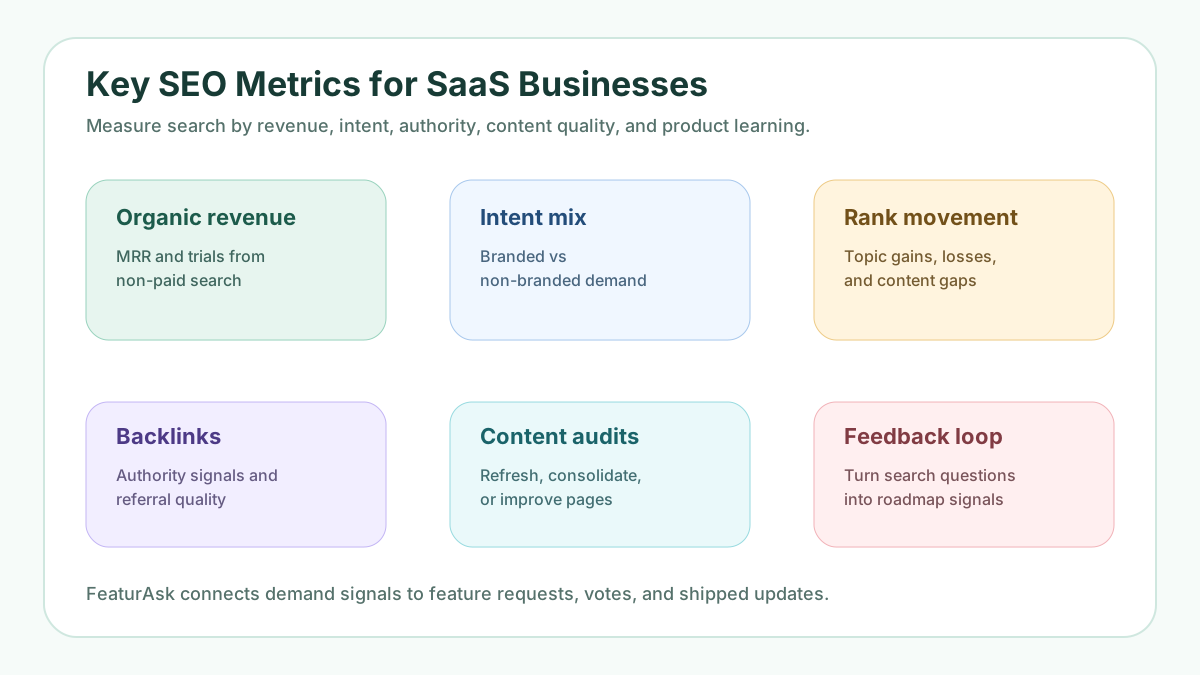
The useful question is not “Did rankings improve?” It is “Which search demand is teaching us what to build, sell, and explain next?” That is why SaaS SEO metrics should include revenue, intent, keyword movement, links, content quality, organic traffic, and feedback loops. Search data shows what the market asks for. Product feedback shows what customers still need after they arrive. Together, they create a better growth system than either one alone.
This guide covers the metrics that matter most for SaaS companies, how to read them, common traps, and how to connect SEO reporting to your public roadmap and release communication. For the surrounding workflow, pair this with FeaturAsk guides on how to use SEO to promote your feedback and roadmap pages, growth teams and customer feedback, and customer feedback strategy. SEO should not live in a spreadsheet separate from product learning.
Quick answer: what SEO metrics should a SaaS business track?
A SaaS business should track organic MRR, trial or signup conversions from organic search, branded versus non-branded traffic, keyword movements by intent, backlink quality, content audit status, organic traffic quality, engagement with feedback or roadmap pages, and retention or expansion by acquisition source. Traffic and rankings are leading indicators. Revenue, activation, and customer demand are the metrics that prove search is helping the business.
Google Search Central’s guidance on creating helpful, reliable, people-first content is a useful baseline: pages should satisfy real users, not just search engines. For SaaS measurement, that means your content should answer the problem, guide the next step, and connect to the product honestly. Google Analytics 4 also treats measurement as event-based; its documentation on Analytics events is a practical reference for tracking signups, activation actions, votes, and other product behaviors.
If you want organic visitors to tell you what they need next, try FeaturAsk free for one month with no credit card required. It gives small teams a feedback widget, voting, moderation, and analytics for $29.95/year after the trial, so search interest can become product evidence instead of anonymous traffic.
1. Organic MRR and pipeline from search
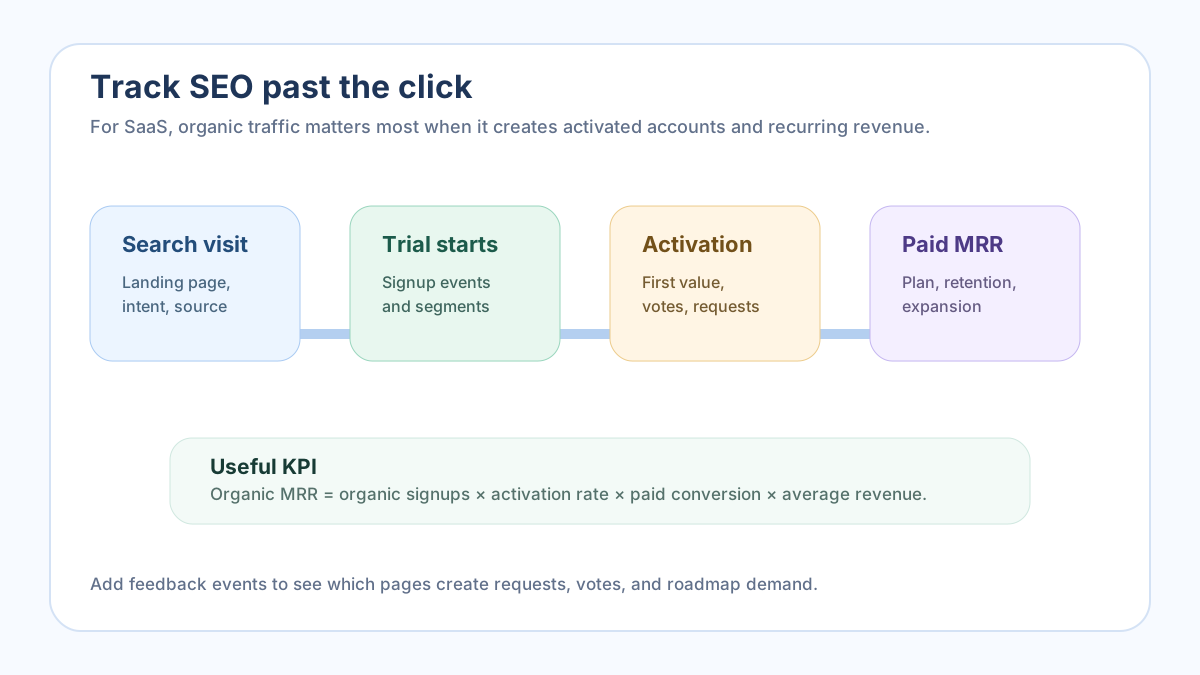
Monthly recurring revenue from organic search is the most important SaaS SEO metric because it prevents vanity reporting. To calculate it, connect landing page, source, signup, activation, plan, and revenue data. The exact model can be simple at first: organic visits, organic signups, activated organic accounts, paid conversions, average revenue, and retained revenue after a defined period.
Do not stop at first-touch attribution. Many SaaS buyers read several pages, compare alternatives, visit a pricing page, and return later through branded search or direct traffic. First-touch organic reporting is useful for proving discovery. Assisted conversion reporting is useful for seeing how SEO supports the buying journey. Cohort analysis is useful for discovering whether organic customers stay, expand, or churn differently from customers acquired through ads or outbound.
A practical dashboard can answer four questions. Which organic pages create trials? Which trials reach activation? Which activated accounts become paid customers? Which topics produce customers who stay? When a page ranks well but produces weak activation, the problem may be search intent, onboarding, product fit, or the call to action. When a lower-traffic page produces strong MRR, protect it, update it, and link to it more often.
2. Branded versus non-branded traffic
Branded search shows demand for your company, product, or named features. Non-branded search shows demand for the category, problem, use case, comparison, or job to be done. Both matter, but they answer different questions. Branded growth can mean your wider marketing is working. Non-branded growth can mean your content is reaching people before they know you.
For SaaS, split reporting into at least three groups: branded terms, product-category terms, and problem-led terms. Branded terms include your company name plus words like pricing, roadmap, changelog, release notes, alternatives, and login. Category terms include “feature request software,” “feedback board,” or “roadmap tool.” Problem terms include “how to prioritize feature requests,” “collect website feedback,” or “write release notes.”
Watch the ratio over time. A young company may rely heavily on non-branded discovery. A company with strong word of mouth may see branded traffic grow faster. If branded traffic rises but non-branded traffic is flat, search may be capturing existing demand rather than creating new demand. If non-branded traffic rises but branded follow-up never grows, the content may be helpful but not memorable enough.
Public feedback and roadmap pages can support both groups. Branded searchers often want proof that the product is active. Non-branded searchers often want a solution to a specific workflow. A maintained board, clear status labels, and shipped updates can turn both search types into trust.
3. Keyword movements by intent, not just position
Rank tracking is useful only when keywords are grouped by intent. A move from position 12 to 4 for a low-intent informational term may be less valuable than a move from position 8 to 5 for a comparison term. Track keywords in clusters: alternatives, comparisons, jobs-to-be-done, feature requests, integrations, templates, best tools, and support questions.
For each cluster, watch three signals. First, visibility: are you gaining impressions and average position? Second, click-through rate: does the search snippet match the promise of the page? Third, business action: do visitors sign up, view pricing, open the feedback widget, or read the changelog? A keyword movement without a downstream action is a clue, not a win.
Search intent also changes. A term that was once educational can become commercial when new products enter the market. A feature term can become more important after several customers request it. Review your keyword clusters alongside support tickets, feedback votes, sales objections, and product roadmap decisions. If users keep asking for the same integration and search impressions are rising for that integration, you have both market demand and customer evidence.
4. Backlinks and credibility quality
Backlinks still matter, but SaaS teams should care more about relevance and trust than raw domain counts. A link from a respected integration partner, developer guide, industry newsletter, or customer story can be more valuable than dozens of generic directory links. The best links send qualified referral traffic, support topical credibility, and make your product easier to discover in the right context.
Measure referring domains, linked pages, anchor language, link quality, and referral behavior. Which content earns links naturally? Which pages attract links but no product engagement? Which topics deserve more original research, templates, benchmarks, or examples? Backlink analysis can also uncover product positioning. If people link to you as a “feedback widget” but your messaging emphasizes “roadmap tool,” you may need to clarify the relationship.
Avoid link building that creates future cleanup work. Thin guest posts, irrelevant directories, paid link networks, and over-optimized anchors can damage trust. Build assets worth citing: practical templates, comparison frameworks, public examples, changelog formats, data-backed guides, and useful product workflows.
5. Keyword research and content audits
Keyword research is not a one-time launch task. SaaS products change, markets shift, and customer questions evolve. Every quarter, review keywords from search tools, Search Console, support tickets, demo calls, in-app searches, user feedback, roadmap comments, and competitor pages. The best opportunities often appear where multiple sources agree.
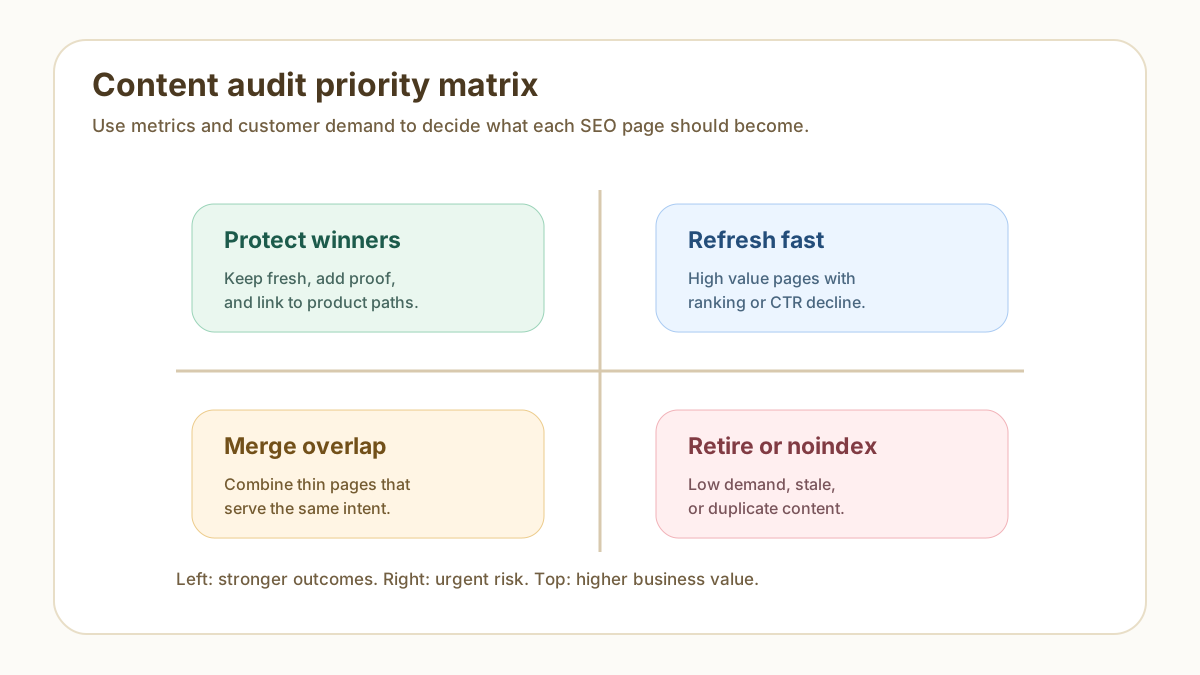
A content audit turns that research into action. Label pages as protect, refresh, merge, expand, or retire. Protect pages that create revenue or high-quality trials. Refresh pages with declining rankings, old screenshots, outdated examples, or weak conversion paths. Merge overlapping articles that compete for the same intent. Expand pages where search demand and product demand are both rising. Retire or noindex thin pages that no longer serve users.
When auditing, check content quality and product usefulness together. A post may rank but fail to explain the current product. A feedback page may contain valuable phrases but be too messy to index. A changelog may show momentum but lack internal links from relevant feature pages. The goal is a connected knowledge system: educational content, feedback pages, roadmap status, and release notes should reinforce each other.
6. Organic traffic quality
Organic traffic is still worth tracking, but traffic alone is too blunt. Segment by landing page type, query intent, device, geography, new versus returning visitors, and product action. A documentation page, comparison page, blog article, roadmap item, and changelog entry should not be judged by the same conversion rate.
Useful quality metrics include engaged sessions, scroll depth, pricing views, demo or trial starts, activation events, feedback submissions, votes, comments, and return visits. For product-led SaaS, an organic visitor who submits a feature request may be more valuable than a visitor who reads one article and leaves. Feedback is a conversion when it improves the product and reveals demand.
Track negative signals too. High traffic with very short engagement may indicate a mismatch between query and content. A spike from irrelevant countries or bot-like sources can distort reporting. A page that attracts free-tool seekers may not help paid conversion unless the product has a clear path from free use to value.
7. Feedback and roadmap engagement from SEO
This is the metric many SaaS SEO dashboards miss. If your public roadmap, feedback board, or release notes receive organic visits, track what those visitors do next. Do they vote? Add comments? Subscribe to an update? Click to a related doc? Start a trial? Return when the status changes? These actions show whether search is feeding product learning.
For example, a visitor searching “does product X support Slack notifications” may land on a public request. If they vote, explain their workflow, and join the trial, you have a clearer signal than a simple pageview. If dozens of search visitors repeat that pattern, product and marketing can agree that the integration deserves attention. When the feature ships, the release note can link back to the request and capture more long-tail demand.
This is where a lightweight feedback system helps. FeaturAsk lets you collect and prioritize feature requests without buying a complex enterprise stack. For $29.95/year after a one-month free trial with no credit card required, a small SaaS team can give search visitors a place to vote, add context, and see what is planned.
How to build a simple SaaS SEO dashboard
Start with one page, not twenty charts. Include organic sessions by landing page group, organic signups, activation rate, organic paid conversion, organic MRR, top non-branded queries, branded demand, ranking gains and losses, pages needing refresh, backlink wins, and feedback actions from organic users. Add notes next to the metrics so the dashboard explains what changed and what decision follows.
Use weekly checks for fast-moving operational issues and monthly reviews for strategic decisions. Weekly, look for technical drops, indexing problems, ranking volatility, broken links, and sudden traffic changes. Monthly, review content priorities, conversion quality, revenue, and customer feedback themes. Quarterly, revisit keyword strategy, topic ownership, and whether your content still matches the product.
Tie each metric to an action. A declining high-MRR page gets refreshed. A high-impression low-CTR page gets a better title and meta description. A high-traffic low-conversion article gets a clearer next step. A repeated feature question gets a public request or roadmap entry. A shipped request gets a release note and internal links.
Common SaaS SEO measurement mistakes
The first mistake is celebrating total traffic without qualification. More visitors can hide weaker buyer intent. The second is treating all conversions equally. A free signup that never activates is not the same as a trial user who completes the core action. The third is ignoring retention. SEO can bring customers who buy for the wrong reason and churn quickly if the content overpromises.
Another mistake is separating SEO from product communication. Searchers often want to know what exists, what is planned, what changed, and whether the team listens. If content, roadmap, feedback, and release notes are disconnected, the visitor has to assemble the story alone. Internal links and status updates are not just SEO tactics; they reduce uncertainty.
Finally, avoid measuring only what tools make easy. Keyword position and traffic are easy. Product activation, feedback quality, and organic MRR require more setup, but they are closer to the truth.
Conclusion
The best SEO metrics for SaaS connect search visibility to product value. Track organic MRR, branded and non-branded demand, keyword movement by intent, backlink quality, content audit actions, traffic quality, and feedback engagement. Use those metrics to decide which pages to protect, which topics to improve, which product questions deserve clearer answers, and which feature requests are becoming market signals.
If you want a simple way to turn search visitors into product insight, start with FeaturAsk. The widget helps users submit and vote on requests, the dashboard helps you prioritize demand, and the pricing stays small-team friendly at $29.95/year after a one-month free trial with no credit card required.