How to Organize Customer Feedback in 10 Effective Steps
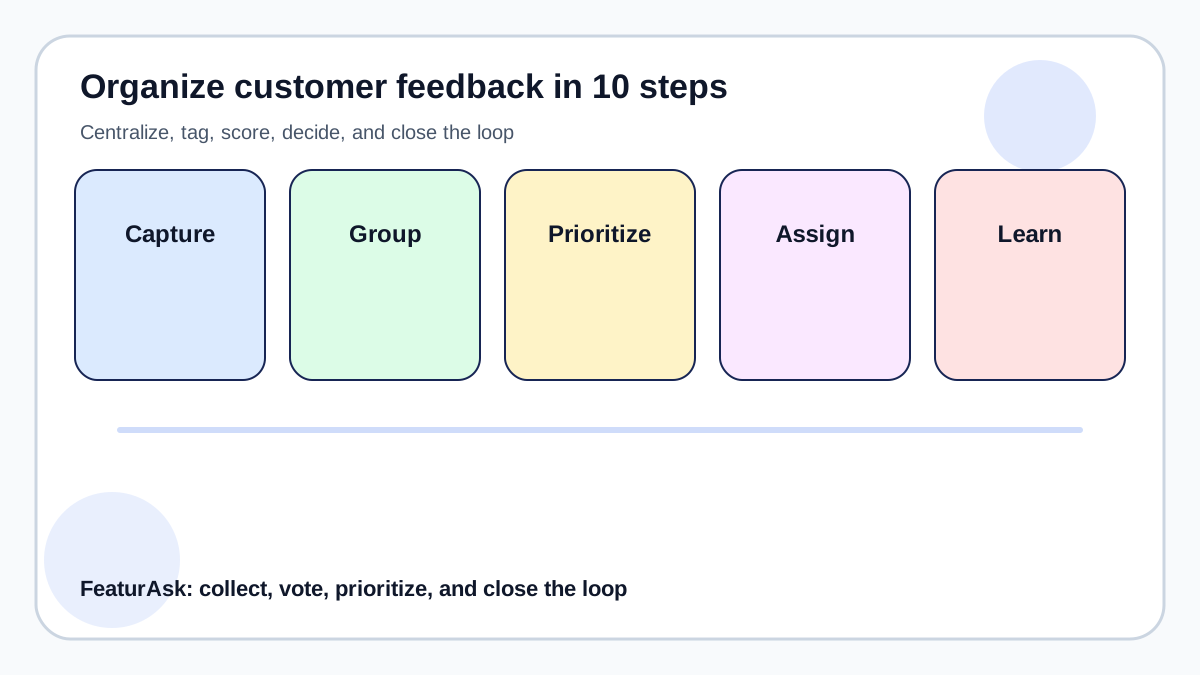
Organizing customer feedback is the difference between a useful signal library and a pile of disconnected comments. A customer may mention the same problem in a support ticket, a sales call, a public request, and a survey response. If those signals are not merged, the team underestimates demand and repeats the same discussion. A strong 2026 workflow keeps the original language, groups related problems, and makes status visible.
FeaturAsk is useful when the center of your feedback system should live on the website itself. Customers submit ideas, vote on similar requests, and see status changes while your team reviews demand in the dashboard. You can try FeaturAsk for one month free with no credit card required and continue for $29.95/year.
This guide turns scattered feedback into an operating process for small teams: capture the raw signal, keep useful context, choose priorities, and show customers what changed. For related setup decisions, see FeaturAsk's guides to feedback board software, the feature request process, and the feature prioritization matrix.
Current context matters. Miro summarizes affinity mapping as a way to cluster observations into themes. ProductPlan explains that roadmap communication works best when it connects strategy, priorities, and tradeoffs. McKinsey highlights that customer-experience leaders connect feedback to measurable operating improvements. Those sources point to the same conclusion: feedback and communication work best when they are specific, timely, and connected to decisions customers can understand.
Step 1: centralize the raw signal
Customer feedback becomes unmanageable when every channel has its own memory. Start by creating one place where feedback is captured or mirrored: website widget, support labels, sales notes, review snippets, survey comments, and call summaries. The aim is not to erase context. The aim is to make the team able to find repeat patterns without searching five tools.
For small teams, a public request board can be the center of gravity because customers can submit ideas directly and vote on existing ones. Private notes can still be added internally, but public demand becomes visible. This reduces duplicate requests and helps the team separate a loud one-off complaint from a repeated need.
Step 2: preserve customer language
Do not translate every comment into internal jargon too quickly. The original words reveal urgency, confusion, and use case. A user saying “I cannot tell which requests came from paid customers” is more useful than a tag called analytics. Keep the quote, then add categories beside it. 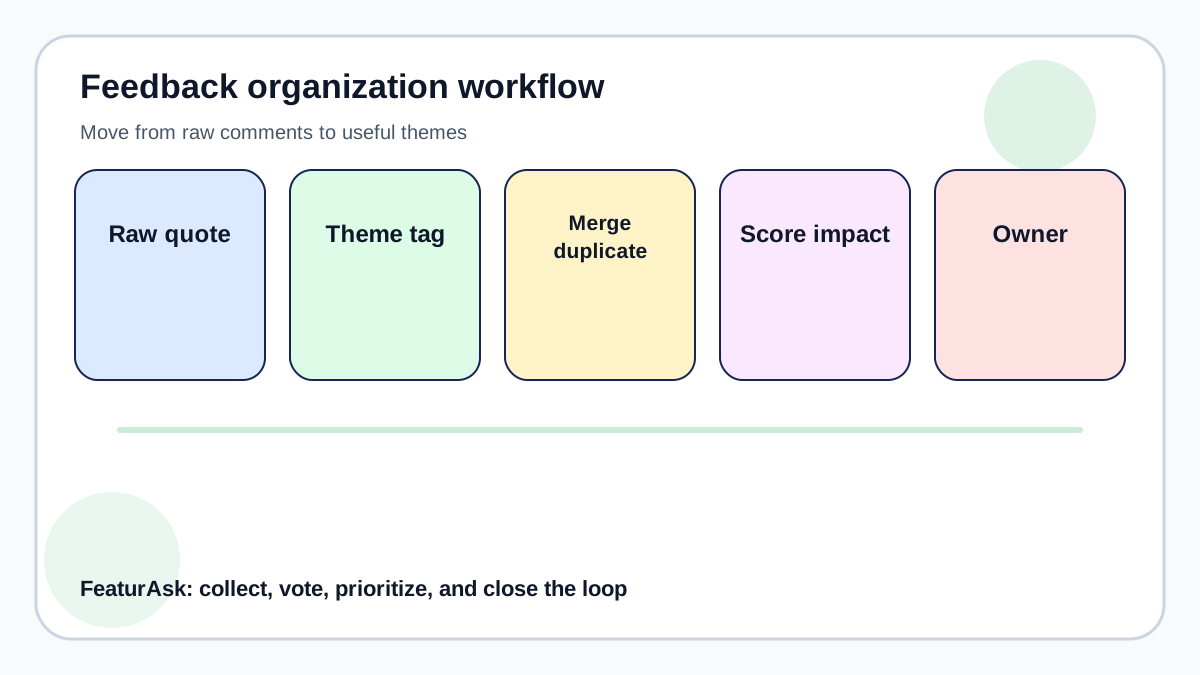
Preserving language also helps announcements later. When you ship an improvement, you can explain it in the same terms customers used when asking for it. That makes the update easier to recognize and trust.
Steps 3 to 5: tag, deduplicate, and score
Use a small tag set first: bug, usability, integration, reporting, admin, pricing, onboarding, and content. Add product-specific tags only after patterns repeat. Deduplicate requests by merging similar ideas and keeping links to the originals. Then score each theme with a simple formula: customer count, customer value, strategic fit, confidence, and effort.
Avoid over-engineering the first scoring model. A spreadsheet can work for a week, but it breaks when customers need visibility and voting. A lightweight board is usually better because the evidence remains connected to the idea. If you want that on a site without complex setup, FeaturAsk includes request submission, voting, moderation, and analytics with a 30-day free trial and no credit card required.
Steps 6 to 8: assign ownership, route decisions, and close the loop
Every feedback theme needs an owner, even if the decision is “not now.” Ownership does not mean immediate action; it means someone checks evidence, adds context, and makes sure customers are not ignored. Route bugs to support or engineering, strategic ideas to product review, content requests to marketing, and pricing confusion to the person responsible for packaging.
Close the loop in public when possible. Mark requests as planned, in progress, shipped, or declined with a short explanation. Customers do not need every internal debate, but they appreciate knowing whether an idea is being considered. FeaturAsk’s guides to feedback board software, feature request process, and how customer feedback drives content strategies show how to keep this communication practical.
Steps 9 and 10: review monthly and improve the system
A feedback system decays unless it is reviewed. Once a month, inspect stale requests, duplicate tags, silent categories, and ideas with high votes but no decision. Ask whether the board reflects current strategy. Remove spam, merge duplicates, and update statuses. This keeps the system trustworthy.
The tenth step is measuring whether organized feedback changed outcomes. Track time to decision, number of duplicate support tickets reduced, shipped requests with visible demand, and customer responses after closing the loop. 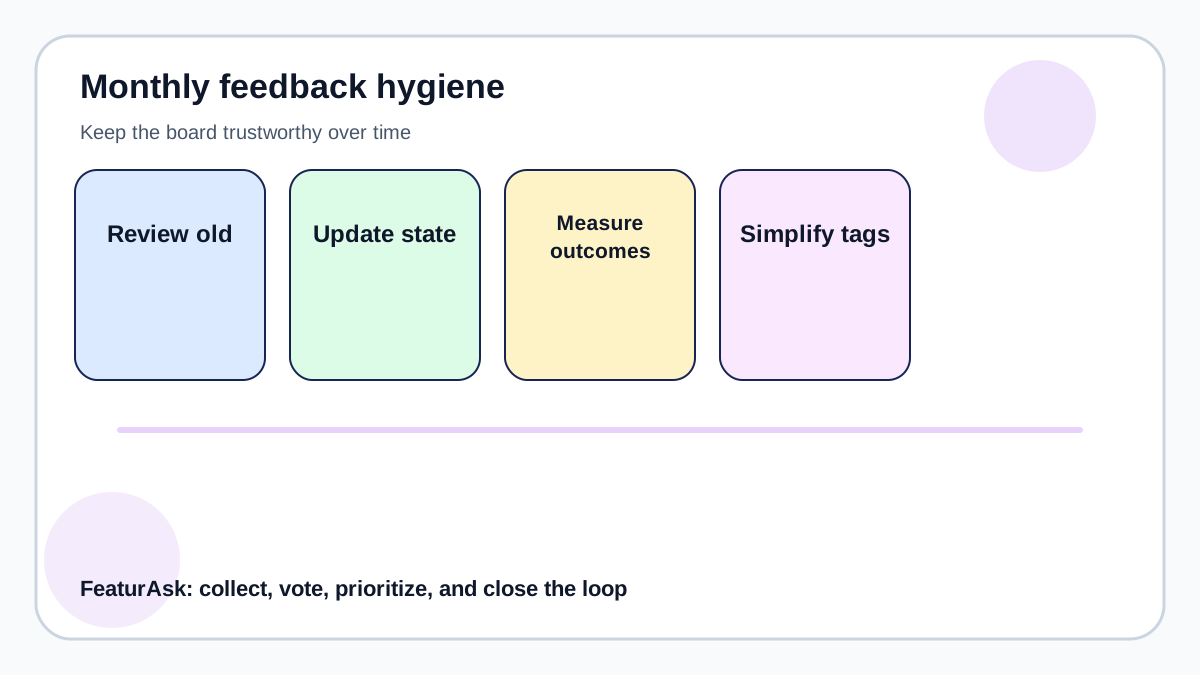 If the process does not improve decisions, simplify it. A smaller accurate system beats a large stale database.
Five methods for analysis
Useful analysis methods include affinity mapping, feedback boards, weighted prioritization, sentiment review, and roadmap mapping. Affinity mapping clusters raw comments into themes. Feedback boards expose demand. Weighted models compare tradeoffs. Sentiment can highlight urgency but should not replace reading the comments. Roadmap mapping connects themes to strategy.
The best method depends on the decision. If you are trying to understand confusion, read quotes. If you are deciding what to build next, combine votes with effort and fit. If you are planning communication, look for phrases customers repeat. Organizing feedback is not a paperwork exercise; it is how a team protects customer evidence while still making strategic choices.
Make organization visible to customers
A private tagging system helps the team, but a public request board helps customers participate in the cleanup. When someone starts to submit a duplicate idea, they can find the existing request and vote instead. When a request moves from new to under review, customers know the team is listening. When an idea is declined, a short explanation prevents the same request from returning every week.
If your current organization method is a spreadsheet plus memory, FeaturAsk gives you a public request board, voting, moderation, and analytics with a 30-day free trial and no credit card required. The $29.95/year plan is enough for one webpage integration, which fits many small sites and SaaS teams.
Use the board as the customer-facing layer and keep private notes only where they add context. Start FeaturAsk on the FeaturAsk homepage when you want feedback organization to be visible, searchable, and easier to maintain.
Keep the system clean enough to trust
An organized feedback system should feel current. If a customer opens the board and sees duplicate ideas, stale statuses, or vague categories, trust drops. Schedule a short weekly cleanup and a deeper monthly review. Merge similar ideas, clarify titles, update statuses, and write one summary of what the team learned.
The goal is not a perfect archive. The goal is a living decision tool. A small business can run this with FeaturAsk, a few tags, and a recurring review habit: collect requests publicly, let customers vote, compare evidence, and close the loop when something ships or is declined.
What changed for 2026 planning
The current challenge is not getting feedback; it is separating durable signal from constant noise. AI summaries, support automation, and more customer channels can increase the amount of text a team sees, but they do not automatically create better decisions. Teams still need clear ownership, public status, and a simple way to compare repeated demand against strategy.
That is why a visible request board remains useful even when other tools summarize conversations. It gives customers a place to self-organize around ideas, and it gives the team a concrete record of demand that can be checked against actual product goals.
Channel-by-channel organization rules
Support tickets usually contain urgent friction. Tag them by problem and severity, then link repeated themes to public requests when they represent broader product demand. Sales notes usually contain objections and desired outcomes. Keep the exact phrasing because it reveals what buyers value. Survey responses often contain sentiment and context. Group them into themes, but do not let a score hide the written explanation. Public request boards contain visible demand and should be cleaned regularly so votes stay meaningful.
Reviews and social comments can be noisy, but they are useful for language. Customers often describe the product differently in public than they do in a support ticket. Capture phrases that repeat because they can improve product messaging, help docs, and launch announcements. Customer interviews are the richest source, but they are expensive in time; summarize them into themes and link them to existing requests instead of creating disconnected notes.
Turning organization into decisions
Once feedback is organized, run a decision meeting with a fixed agenda. Start with new high-urgency issues. Review the top voted themes. Compare those themes with the current product goal. Choose which items need discovery, which are ready for scoring, which are not aligned, and which need a public update. End by assigning owners and dates.
This meeting should be short because the organization work happened beforehand. If the team spends the whole meeting trying to understand what customers said, the system is not organized enough. If the team can see the themes, evidence, and status quickly, the meeting can focus on tradeoffs.
How to prevent taxonomy sprawl
Every team eventually wants more tags. Resist that urge until a new tag would change a decision. “Mobile” is useful if mobile feedback has a different owner or roadmap path. “Blue button” is probably not useful unless button color is a real product category. Audit tags monthly, merge synonyms, and retire tags that no longer guide action.
Customer-facing status definitions
Use status labels customers can understand. “New” means the idea was received. “Under review” means the team is gathering evidence. “Planned” means the team intends to work on it. “In progress” means active work has started. “Shipped” means a usable version is available. “Not planned” means the idea does not fit current strategy or constraints.
Define these labels publicly or in a short help note. Clear definitions reduce confusion and protect the team from accidental promises. They also make feedback organization visible to customers, which is what turns a private backlog into a trust-building loop.
For feedback organization, the practical standard is whether each theme has a clean title, merged duplicates, useful tags, owner context, and a status customers can understand.
A new teammate should be able to inspect the board and understand why top requests matter, which ones were merged, and what review cadence keeps the taxonomy clean.
End each feedback-cleanup session by asking which category, status, or ownership rule prevented confusion. If the same duplicate appeared again, rename the core request. If an idea sat untouched, assign a clearer owner or close it with a reason.
When the cleanup habit works, customers stop submitting the same vague idea repeatedly because they can find the existing theme, vote for it, and read the latest status. That saves support time and gives product planning a cleaner signal.
For a monthly review, bring only the evidence that changes decisions: highest-voted themes, new urgent patterns, duplicate clusters, stale planned items, and recently shipped requests. This keeps the meeting focused on action instead of rereading every comment.
If feedback volume grows, add structure gradually. Start with five to eight tags, one owner, and weekly cleanup. Add more fields only when the missing field would change a real decision, such as whether a request affects paid accounts, new trials, or a strategic segment.