11 Best Software Tools for Enterprise Feedback Management
What enterprise feedback management means
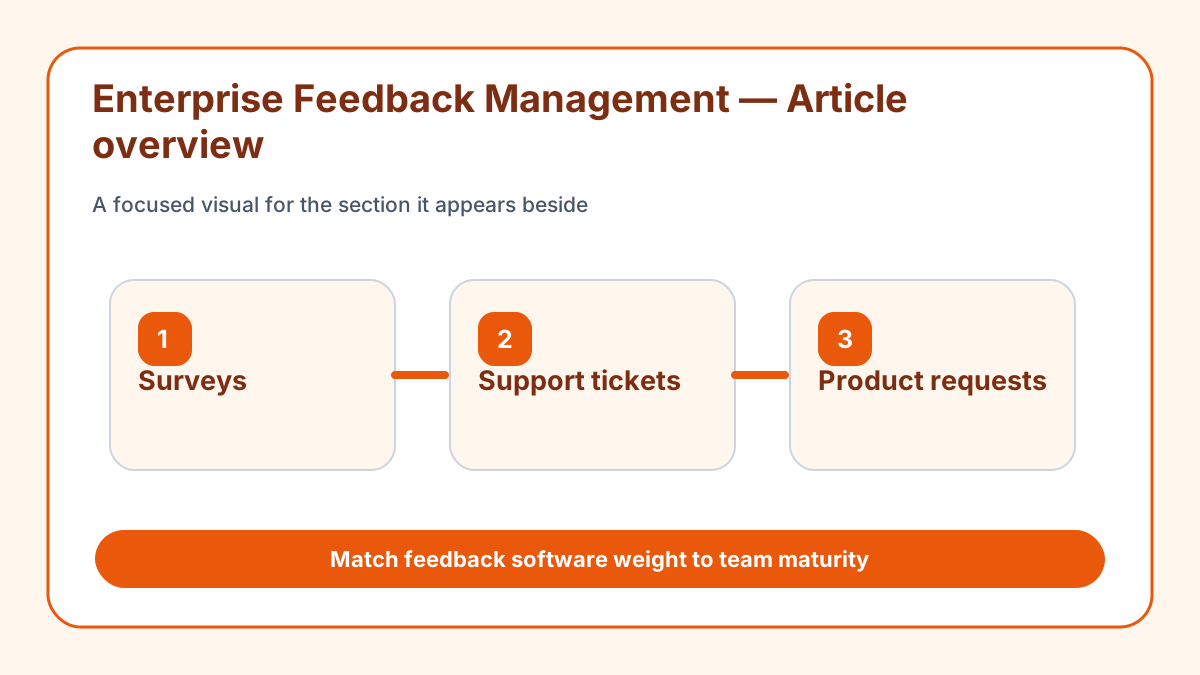
Enterprise feedback management, often shortened to EFM, is the system an organization uses to collect, organize, analyze, prioritize, and act on feedback from customers, employees, partners, and stakeholders across many channels. In a large company, that can include surveys, support tickets, sales notes, community posts, product analytics, account reviews, app-store reviews, and internal employee input.
The promise is a single feedback operating system. Instead of every department keeping its own notes, an EFM process creates shared visibility and governance. Product teams can see what customers request, customer success can see which accounts are affected, leadership can connect feedback to business goals, and operations can identify recurring friction.
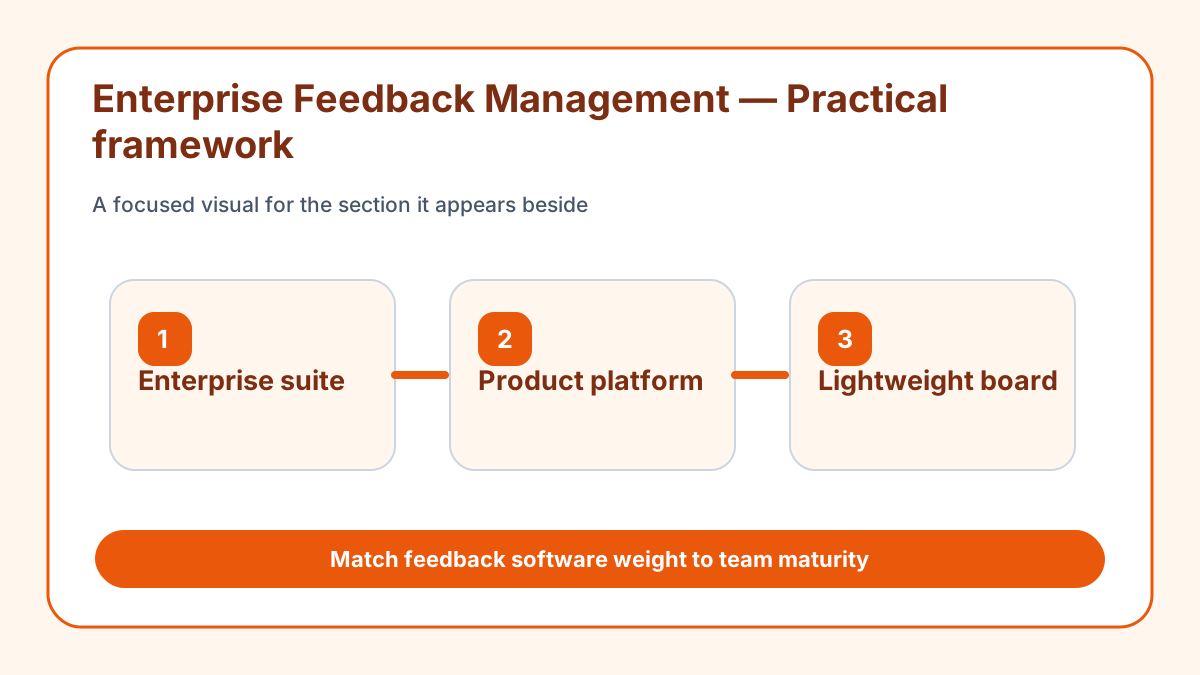
But enterprise feedback management is not only for enterprises. The same principles help smaller teams: centralize input, preserve context, prioritize transparently, and close the loop. The difference is tool weight. A 10-person SaaS or ecommerce team usually needs a focused request board before it needs a full experience-management suite.
What makes EFM different from basic feedback collection
Scale is the first difference. Enterprises receive feedback from thousands or millions of users across regions, products, segments, and teams. A spreadsheet collapses under that volume because it cannot maintain ownership, deduplication, permissions, reporting, and workflow history.
Integration is the second difference. Enterprise tools often connect with CRMs, data warehouses, support systems, analytics platforms, and identity tools. That context helps teams understand whether feedback came from a strategic account, a high-value segment, a new user cohort, or an internal stakeholder group.
Governance is the third difference. Large organizations need roles, approval paths, privacy controls, taxonomy, audit trails, and reporting. Smaller teams should borrow the discipline without buying unnecessary bureaucracy. If your immediate need is public feature requests and voting, start with feature request tools rather than a heavyweight suite.
11 best software tools for enterprise feedback management
-
FeaturAsk. FeaturAsk is the lightweight choice for small SaaS teams, websites, creators, ecommerce stores, service businesses, and internal teams that want request collection, voting, moderation, and prioritization without enterprise pricing. It is not trying to replace a full research warehouse; it gives teams the always-on idea board they can actually maintain for $29.95/year.
-
Qualtrics. Qualtrics is a broad experience-management platform for organizations that need advanced survey programs, journey insights, and enterprise reporting. It fits mature CX and EX teams with dedicated owners. For background on the category, see <a href="https://www.qualtrics.com/experience-management/" rel="nofollow">Qualtrics experience management resources</a>.
-
Medallia. Medallia is commonly evaluated by large customer-experience teams that need omnichannel feedback, text analytics, and operational follow-up. It can be powerful when feedback is tied to frontline action across many locations or business units.
-
UserVoice. UserVoice focuses on product feedback, account-level context, and prioritization workflows. It makes sense for B2B software companies with many customers, product managers, and stakeholder reporting needs.
-
Productboard. Productboard connects customer feedback to product discovery, prioritization, and roadmaps. It is best when teams need a broader product management workspace, not just a feedback portal.
-
Aha! Ideas. Aha! Ideas fits organizations already using formal roadmap and product planning processes. It is useful when idea management must connect to strategy, releases, and portfolio planning.
-
Canny. Canny is a popular feedback board and changelog platform for SaaS teams that want public voting, status updates, and product communication. It can be a strong mid-market option when budget and process are ready.
-
Featurebase. Featurebase combines feedback boards, roadmaps, and changelog workflows. It is worth evaluating when community-style product feedback and product updates belong in the same hub.
-
Usersnap. Usersnap is strong for visual feedback, screenshots, bug reports, and QA-related input. Choose it when website or app feedback needs visual context rather than only request voting.
-
Dovetail. Dovetail is a research repository for interview notes, tagging, analysis, and insight sharing. It complements feedback tools when qualitative research volume becomes hard to synthesize.
-
Bettermode. Bettermode supports community-led feedback and customer engagement. It can fit companies that want feedback inside a branded community rather than a standalone request board.
How to choose an EFM tool without overbuying
Start with the decision you need to improve. If the problem is “we do not know which feature requests matter,” choose a tool with request collection, voting, comments, and prioritization views. If the problem is “we cannot analyze survey sentiment across regions,” choose an experience platform. If the problem is “research insights are trapped in interviews,” choose a repository.
Map the channels you already have. Support tickets, sales calls, surveys, public boards, internal suggestions, and app feedback may not need to live in one tool immediately, but there should be one review ritual that connects them. Smaller teams often get more value from a clean monthly feedback review than from buying a platform nobody has time to configure.
If you want the practical first layer, try FeaturAsk for a simple request widget, voting, moderation, and analytics. It is $29.95/year with a one-month free trial and no credit card required, which makes it easy to validate the workflow before considering more complex EFM software.
Enterprise feedback management best practices
Centralize enough to see patterns, but not so much that every team loses context. A good taxonomy includes source, segment, problem area, urgency, status, owner, and decision. Avoid creating dozens of required fields before you know how people will use the data.
Segment by stakeholder type. Customer feedback, employee feedback, partner feedback, and executive requests should be comparable but not identical. A feature idea from a strategic account may need account context. A request from a public website visitor may need voting and comments. Internal process suggestions may need team ownership.
Close the loop publicly when possible. Roadmaps, changelogs, and status updates reduce duplicate requests and show that feedback is alive. For examples of how product communication can work after decisions are made, see changelog examples and product launch communication plans.
A small-team version of EFM
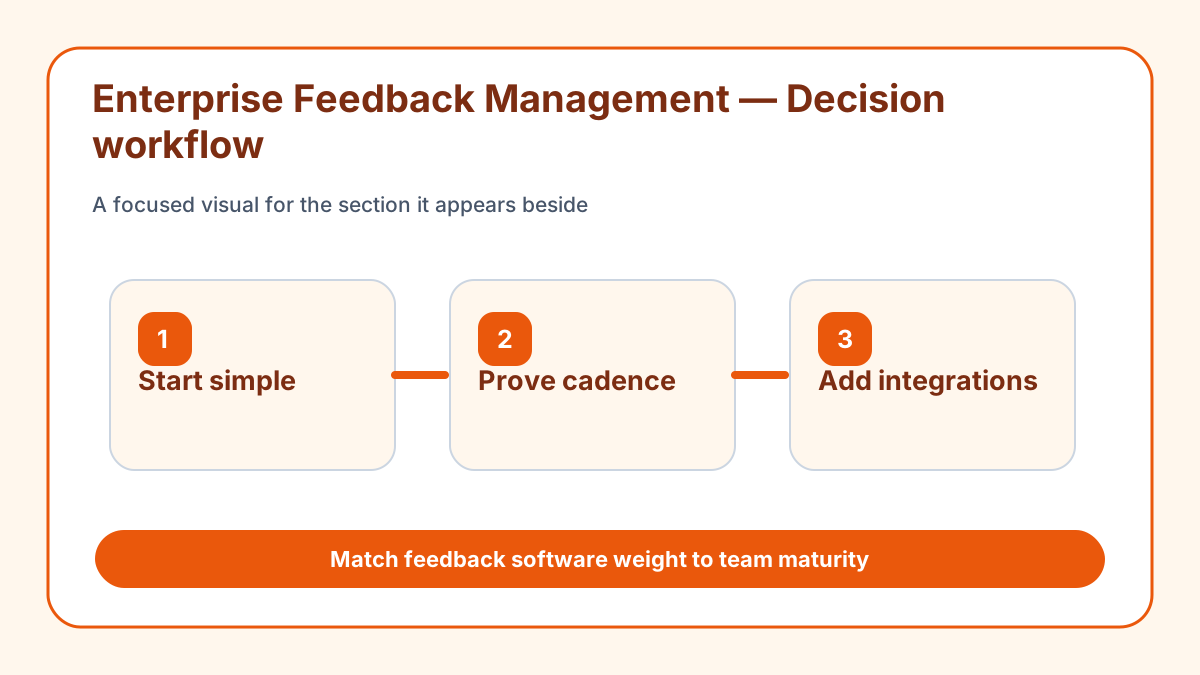
Small teams can build an EFM habit with three assets: one collection point, one prioritization view, and one communication rhythm. The collection point might be a website widget. The prioritization view might rank ideas by votes, strategic fit, and effort. The communication rhythm might be a monthly update that says what changed.
This approach avoids the common EFM trap: collecting more feedback than the organization can process. A smaller, visible, well-maintained board is better than a giant platform with stale statuses. Users and employees trust systems that respond.
FeaturAsk is built for that smaller version: feature request collection, voting, moderation, and analytics at $29.95/year, with a 30-day free trial and no credit card required. Use it as the affordable front door for product ideas, then add enterprise tools later only if the workflow truly demands them.
Enterprise feedback management evaluation criteria
Before comparing vendors, define the feedback jobs you need the software to perform. Collection is only one job. Others include deduplication, segmentation, sentiment analysis, account context, workflow routing, prioritization, privacy controls, reporting, and public communication. A tool that is excellent for surveys may be weak for feature voting; a tool that is excellent for product requests may not replace an enterprise CX platform.
Evaluate ownership as carefully as features. Who reviews incoming feedback? Who merges duplicates? Who tags segments? Who decides which items become roadmap candidates? Who communicates status changes? Enterprise systems fail when every department contributes input but no team owns the workflow.
Budget should also match maturity. Buying a large EFM platform before defining taxonomy and review rituals often creates an expensive archive. Smaller teams can begin with a focused feedback board, prove the review cadence, and then add integrations when volume demands it.
Comparison table: best fit by team need
| Need | Best-fit category | Example tools |
|---|---|---|
| Public feature requests and voting | Lightweight request board | FeaturAsk, Canny, Featurebase |
| Enterprise survey and journey programs | Experience management suite | Qualtrics, Medallia |
| Product discovery and roadmaps | Product management platform | Productboard, Aha! Ideas |
| Visual bug and website feedback | Visual feedback tool | Usersnap |
| Research synthesis | Research repository | Dovetail |
| Branded customer community | Community platform | Bettermode |
The table is intentionally category-based because pricing and packaging change. Validate current vendor pages before buying, and compare the product against the workflow your team can maintain.
How FeaturAsk fits beside enterprise tools
FeaturAsk is best viewed as the affordable request-collection and voting layer. It gives smaller teams a clear place for users to submit ideas, vote, add context, and help admins prioritize. It does not pretend to be a full enterprise survey warehouse, but it can prevent a young company from overbuying before the feedback process is mature.
This matters for small SaaS products, content businesses, ecommerce websites, agencies, service providers, and internal teams. They often need the discipline of enterprise feedback management without the cost or implementation project. Starting with a public or private request board creates the habit: collect, clarify, prioritize, and close the loop.
If that is your stage, try FeaturAsk before committing to a complex EFM stack. The product costs $29.95/year, includes a one-month free trial, and requires no credit card, so the decision can be based on actual feedback volume rather than a sales demo.
Implementation plan for a lighter EFM rollout
A practical rollout begins with inventory. List every place feedback currently arrives: support inboxes, chat tools, sales notes, review sites, surveys, product analytics, internal meetings, and website forms. Then choose one shared intake path for product requests and one owner for triage. This prevents the common problem of five teams discussing the same issue with five different labels.
Next, define a small taxonomy. Start with source, segment, theme, status, owner, and urgency. Avoid building twenty fields on day one. The taxonomy should help people review feedback faster, not create administrative work that discourages participation.
Then schedule a recurring review. Weekly triage can clean up intake, while monthly prioritization can compare high-signal themes. Publish a short decision note after each review. Enterprise feedback management becomes valuable when people see decisions, not when the database grows.
Red flags when buying EFM software
Be careful when a tool requires a long implementation before a single user can submit feedback. That may be normal for a global enterprise deployment, but it is unnecessary for a small team trying to validate product requests. Also watch for pricing that scales faster than your ability to act on feedback.
Another red flag is analytics without ownership. Dashboards are useful only when someone is responsible for turning patterns into decisions. Ask vendors how feedback moves from intake to review to action, and who typically owns each step. The answer should match your team, not an ideal enterprise org chart.
FAQ about enterprise feedback management
What is the difference between EFM and customer feedback software?
Customer feedback software may focus on one channel, such as surveys, reviews, or feature requests. Enterprise feedback management connects multiple channels, stakeholders, workflows, and reporting needs across a larger organization.
Do small teams need enterprise feedback management?
They need the principles, not necessarily the software. Centralizing input, preserving context, prioritizing transparently, and closing the loop are useful at any size. A lightweight tool is often enough at the beginning.
What is the biggest EFM mistake?
The biggest mistake is collecting feedback without an action process. If there is no owner, cadence, taxonomy, or communication plan, the system becomes a storage location instead of a decision tool.