Top 26 Customer Feedback Software to Use in 2026
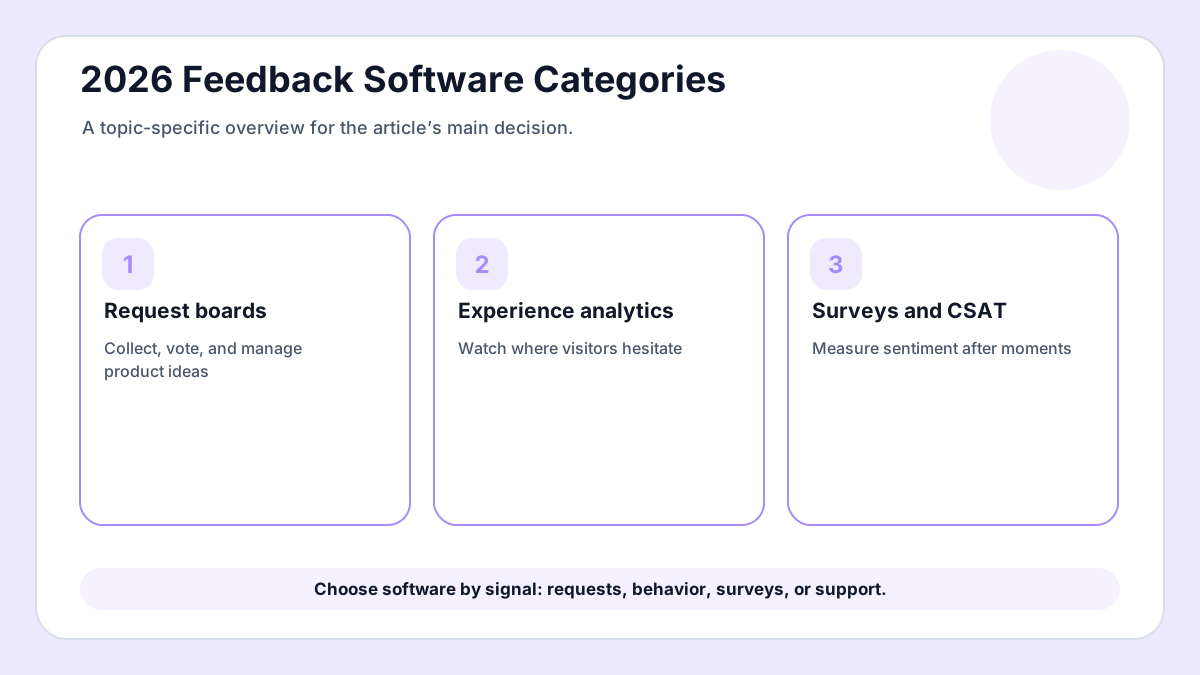
Customer feedback software is no longer one category. In 2026, the phrase can mean request boards, surveys, session replay, support tagging, product analytics, review mining, or a simple form connected to a spreadsheet. Frill’s original list intent is useful, but a better version starts by separating the job each tool performs so a small team does not buy analytics when it really needs request voting.
If the missing piece is feature requests rather than a broad research suite, FeaturAsk gives small teams a focused widget, voting, analytics, and request management for $29.95/year, with a 30-day free trial and no credit card required.
FeaturAsk has deeper companion guides on best feature request tools, feedback board software, and customer feedback tools if you want to compare specific categories after scanning the list. For market context, see G2’s customer feedback software category and Capterra’s customer feedback software listings.
How to evaluate the options
Use this filter before reading any vendor page: what question are you trying to answer this month? “What should we build?” points to request boards. “Where do users get stuck?” points to behavior analytics. “How satisfied are customers?” points to surveys. “Which accounts asked for this?” points to CRM-connected feedback.
1. FeaturAsk
FeaturAsk is the lean feature-request choice for small sites that want visitors to submit ideas, vote, and give the owner a practical dashboard. It is especially useful when a team has demand signals but not enough time for a complex product-ops suite. Best fit: teams evaluating FeaturAsk for a clearly defined customer-feedback lane. Check whether this option shortens the path from customer signal to team decision for this specific use case in the 2026 software shortlist.
2. Frill
Frill earns a place in a 2026 customer feedback stack when its main signal matches the decision in front of the team. Treat Frill as a focused part of the stack, not as a universal container for every customer thought. Best fit: teams evaluating Frill for a clearly defined customer-feedback lane. Ask whether the workflow can stay organized when feedback volume doubles and another teammate joins the review in the 2026 software shortlist.
3. UseResponse
UseResponse earns a place in a 2026 customer feedback stack when its main signal matches the decision in front of the team. Treat UseResponse as a focused part of the stack, not as a universal container for every customer thought. Best fit: teams evaluating UseResponse for a clearly defined customer-feedback lane. Confirm that customers understand what to submit, how the team responds, and where status will appear later in the 2026 software shortlist.
4. Usersnap
Usersnap earns a place in a 2026 customer feedback stack when its main signal matches the decision in front of the team. Treat Usersnap as a focused part of the stack, not as a universal container for every customer thought. Best fit: teams evaluating Usersnap for a clearly defined customer-feedback lane. Evaluate the admin view with real examples, because clean sample data often hides daily maintenance work in the 2026 software shortlist.
5. Hotjar
Hotjar earns a place in a 2026 customer feedback stack when its main signal matches the decision in front of the team. Treat Hotjar as a focused part of the stack, not as a universal container for every customer thought. Best fit: teams evaluating Hotjar for a clearly defined customer-feedback lane. Look for export access and clear ownership rules before committing historical feedback to a new system in the 2026 software shortlist.
6. Mouseflow
Mouseflow earns a place in a 2026 customer feedback stack when its main signal matches the decision in front of the team. Treat Mouseflow as a focused part of the stack, not as a universal container for every customer thought. Best fit: teams evaluating Mouseflow for a clearly defined customer-feedback lane. Test the mobile experience and notification flow with a real visitor rather than relying only on screenshots in the 2026 software shortlist.
7. GetFeedback
GetFeedback earns a place in a 2026 customer feedback stack when its main signal matches the decision in front of the team. Treat GetFeedback as a focused part of the stack, not as a universal container for every customer thought. Best fit: teams evaluating GetFeedback for a clearly defined customer-feedback lane. Decide whether the tool clarifies priority or merely creates another inbox for unranked comments in the 2026 software shortlist.
8. Instabug
Instabug earns a place in a 2026 customer feedback stack when its main signal matches the decision in front of the team. Treat Instabug as a focused part of the stack, not as a universal container for every customer thought. Best fit: teams evaluating Instabug for a clearly defined customer-feedback lane. Review how duplicates, spam, and partial requests are handled before the public collection point goes live in the 2026 software shortlist.
9. Shake
Shake earns a place in a 2026 customer feedback stack when its main signal matches the decision in front of the team. Treat Shake as a focused part of the stack, not as a universal container for every customer thought. Best fit: teams evaluating Shake for a clearly defined customer-feedback lane. Make sure the reporting view answers the question your next planning meeting will ask in the 2026 software shortlist.
10. Mixpanel
Mixpanel earns a place in a 2026 customer feedback stack when its main signal matches the decision in front of the team. Treat Mixpanel as a focused part of the stack, not as a universal container for every customer thought. Best fit: teams evaluating Mixpanel for a clearly defined customer-feedback lane. Prefer a tool that makes follow-up easy, because silence after collection weakens trust in the 2026 software shortlist.
11. Pendo
Pendo earns a place in a 2026 customer feedback stack when its main signal matches the decision in front of the team. Treat Pendo as a focused part of the stack, not as a universal container for every customer thought. Best fit: teams evaluating Pendo for a clearly defined customer-feedback lane. Score setup time honestly and include the weekly effort required to keep the space tidy in the 2026 software shortlist.
12. Woopra
Woopra earns a place in a 2026 customer feedback stack when its main signal matches the decision in front of the team. Treat Woopra as a focused part of the stack, not as a universal container for every customer thought. Best fit: teams evaluating Woopra for a clearly defined customer-feedback lane. Check whether the platform fits your privacy, branding, and customer-communication expectations in the 2026 software shortlist.
13. Heap
Heap earns a place in a 2026 customer feedback stack when its main signal matches the decision in front of the team. Treat Heap as a focused part of the stack, not as a universal container for every customer thought. Best fit: teams evaluating Heap for a clearly defined customer-feedback lane. Use one pilot workflow to reveal friction before migrating every feedback source in the 2026 software shortlist.
14. FullStory
FullStory earns a place in a 2026 customer feedback stack when its main signal matches the decision in front of the team. Treat FullStory as a focused part of the stack, not as a universal container for every customer thought. Best fit: teams evaluating FullStory for a clearly defined customer-feedback lane. Compare the result with your current workaround, not only with the vendor feature checklist in the 2026 software shortlist.
15. Typeform
Typeform earns a place in a 2026 customer feedback stack when its main signal matches the decision in front of the team. Treat Typeform as a focused part of the stack, not as a universal container for every customer thought. Best fit: teams evaluating Typeform for a clearly defined customer-feedback lane. Keep the trial narrow so the team can judge signal quality without process noise in the 2026 software shortlist.
16. SurveyMonkey
SurveyMonkey earns a place in a 2026 customer feedback stack when its main signal matches the decision in front of the team. Treat SurveyMonkey as a focused part of the stack, not as a universal container for every customer thought. Best fit: teams evaluating SurveyMonkey for a clearly defined customer-feedback lane. Ask what decision this feedback will influence before adding another collection point in the 2026 software shortlist.
17. Qualtrics
Qualtrics earns a place in a 2026 customer feedback stack when its main signal matches the decision in front of the team. Treat Qualtrics as a focused part of the stack, not as a universal container for every customer thought. Best fit: teams evaluating Qualtrics for a clearly defined customer-feedback lane. Verify that the tool supports the context fields needed for this feedback type.
18. Google Forms
Google Forms earns a place in a 2026 customer feedback stack when its main signal matches the decision in front of the team. Treat Google Forms as a focused part of the stack, not as a universal container for every customer thought. Best fit: teams evaluating Google Forms for a clearly defined customer-feedback lane. Choose the simplest workflow that still preserves enough evidence for the next action.
19. Canny
Canny earns a place in a 2026 customer feedback stack when its main signal matches the decision in front of the team. Treat Canny as a focused part of the stack, not as a universal container for every customer thought. Best fit: teams evaluating Canny for a clearly defined customer-feedback lane. Look for clear status handling so customers are not left guessing after they contribute.
20. FeatureOS
FeatureOS earns a place in a 2026 customer feedback stack when its main signal matches the decision in front of the team. Treat FeatureOS as a focused part of the stack, not as a universal container for every customer thought. Best fit: teams evaluating FeatureOS for a clearly defined customer-feedback lane. Use a sample review meeting to see whether the data creates action or only discussion.
21. Productboard
Productboard earns a place in a 2026 customer feedback stack when its main signal matches the decision in front of the team. Treat Productboard as a focused part of the stack, not as a universal container for every customer thought. Best fit: teams evaluating Productboard for a clearly defined customer-feedback lane. Check how the system separates urgent operational issues from longer-term product ideas.
22. Savio
Savio earns a place in a 2026 customer feedback stack when its main signal matches the decision in front of the team. Treat Savio as a focused part of the stack, not as a universal container for every customer thought. Best fit: teams evaluating Savio for a clearly defined customer-feedback lane. Make sure the chosen lane has an owner, a cadence, and a visible definition of done.
23. Intercom
Intercom earns a place in a 2026 customer feedback stack when its main signal matches the decision in front of the team. Treat Intercom as a focused part of the stack, not as a universal container for every customer thought. Best fit: teams evaluating Intercom for a clearly defined customer-feedback lane. Treat integration promises as secondary until the core collection experience works.
24. Zendesk
Zendesk earns a place in a 2026 customer feedback stack when its main signal matches the decision in front of the team. Treat Zendesk as a focused part of the stack, not as a universal container for every customer thought. Best fit: teams evaluating Zendesk for a clearly defined customer-feedback lane. Confirm that labels and filters match the language your team already uses.
25. Delighted
Delighted earns a place in a 2026 customer feedback stack when its main signal matches the decision in front of the team. Treat Delighted as a focused part of the stack, not as a universal container for every customer thought. Best fit: teams evaluating Delighted for a clearly defined customer-feedback lane. Remove any workflow that requires more discipline than the team can realistically maintain.
26. Airtable
Airtable earns a place in a 2026 customer feedback stack when its main signal matches the decision in front of the team. Treat Airtable as a focused part of the stack, not as a universal container for every customer thought. Best fit: teams evaluating Airtable for a clearly defined customer-feedback lane. Prefer evidence you can act on this cycle over broad dashboards that postpone decisions.
What small teams should do after choosing
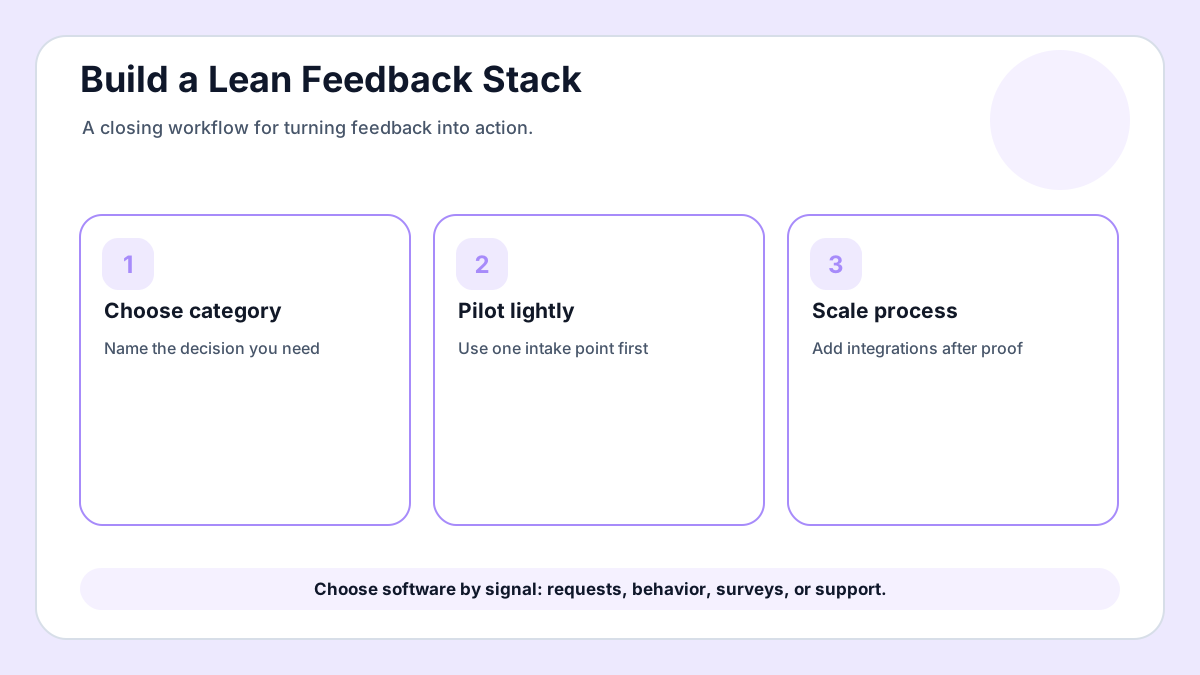
After choosing a category, build one intake rule. Every piece of feedback gets a source, a theme, a segment, and a next action. Without that rule, even good software becomes another place where comments sit untouched.
Teams that outgrow spreadsheets can test FeaturAsk first because the setup is light enough to prove whether customers will actually submit and vote before adding heavier systems.
Final recommendation
Do not crown one customer feedback product for every team. Build a stack by signal: request boards for product demand, analytics for behavior, surveys for sentiment, support tools for service recovery, and review systems for public reputation. Start with the category connected to the decision you must make this quarter.
For founders comparing software categories, FeaturAsk is the budget-friendly request layer that can sit beside analytics, support, or survey tools rather than replacing everything.