The Early Stage SaaS Toolkit: Tools, Resources & Advice
Quick answer
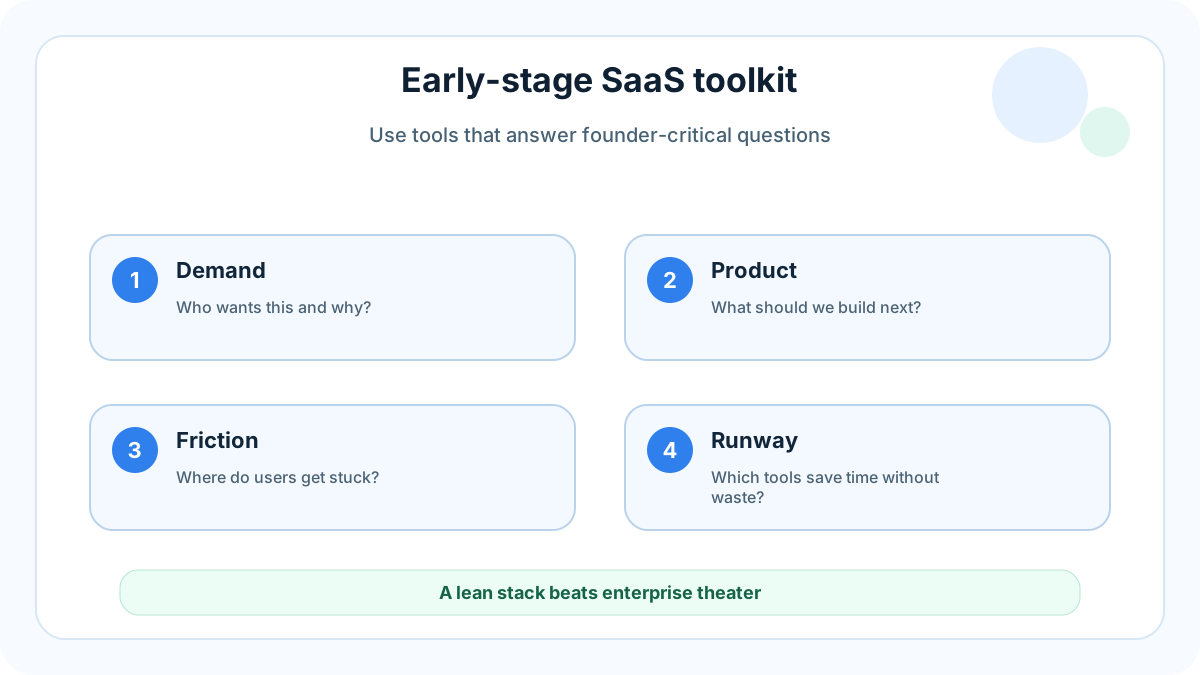
An early-stage SaaS toolkit should help a founder answer four questions: who wants this, what should we build next, where are users getting stuck, and how do we keep the business alive long enough to learn? The stack does not need to look like an enterprise software catalog. It needs to be affordable, easy to maintain, and close to the customer. FeaturAsk belongs in that toolkit because it turns feature requests into a visible, votable board for $29.95/year with one month free and no credit card required. FeaturAsk is useful when you need customer signal before product operations gets complicated.
Core tools
Feedback and roadmap signal
Start with a request board before you create a complicated product operations system. A board gives customers one place to suggest improvements, vote on existing ideas, and explain their use case. FeaturAsk is useful here because the widget can be added to a marketing site, dashboard, help center, or onboarding flow without custom development.
Analytics
Use product analytics to see activation, retention, feature adoption, and drop-off. Analytics tells you what happened; feedback tells you why it may have happened. The two are strongest together.
Support and documentation
A lightweight help desk and clear docs reduce founder interruptions. Support conversations should feed the feedback board when they reveal product gaps.
Billing, CRM, and email
Choose boring, reliable tools. Early founders lose time when they over-customize billing or CRM workflows before they have repeatable sales motion.
Research and founder education
Use communities, customer interviews, and teardown content to improve judgment, but do not let learning replace shipping.
Resources and communities
Good resources teach patterns; your customers decide priorities. Use founder communities for distribution ideas, pricing feedback, and emotional stamina. Use customer feedback for roadmap choices. Read our guides to building better products with user feedback, feature voting, and customer feedback strategy to build this loop without heavy tooling.
Current evidence to factor in
Nielsen Norman Group is useful for onboarding and usability principles because early products often fail from confusion, not lack of features. McKinsey's experience-led growth work reinforces the need to connect experience improvements to business outcomes. Gartner customer experience insights are a reminder that customer expectations are shaped by every digital product users touch, not only your category.
Budget discipline
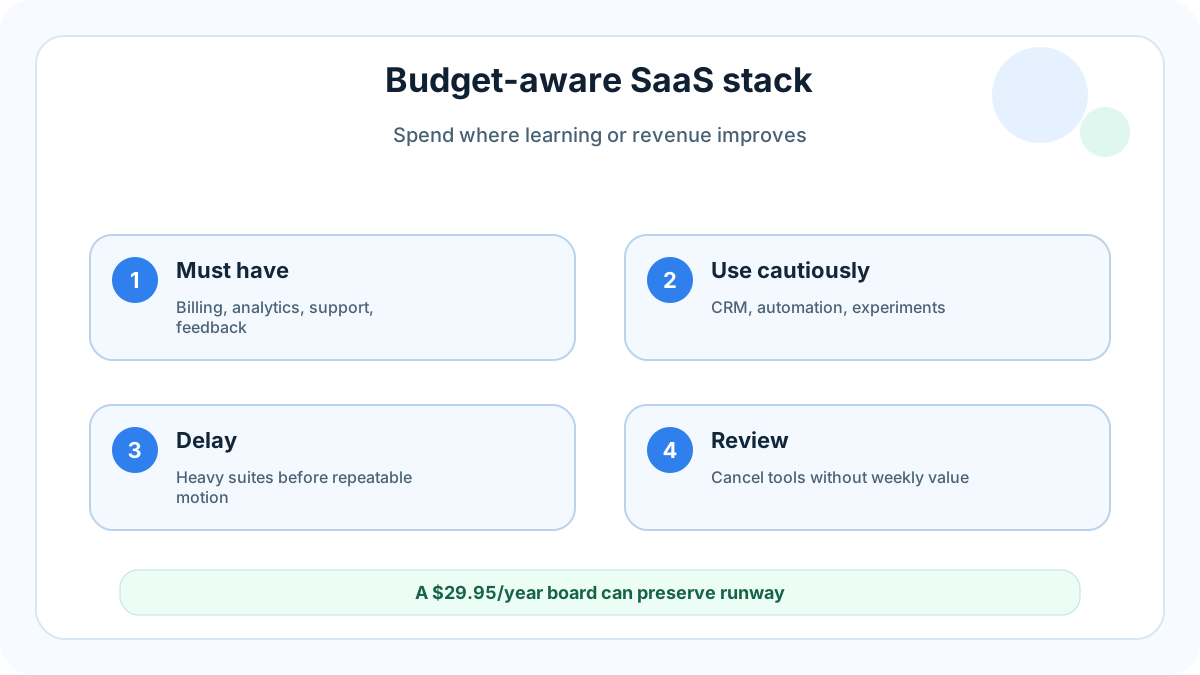
Every recurring subscription should earn its place. A $99/month product may be rational later, but at the earliest stage it can be wasteful if a $29.95/year feedback board solves the current problem. The goal is not to look mature; it is to learn quickly without burning runway. FeaturAsk fits when you want a feedback board that costs $29.95/year instead of another monthly enterprise subscription.
Founder operating cadence
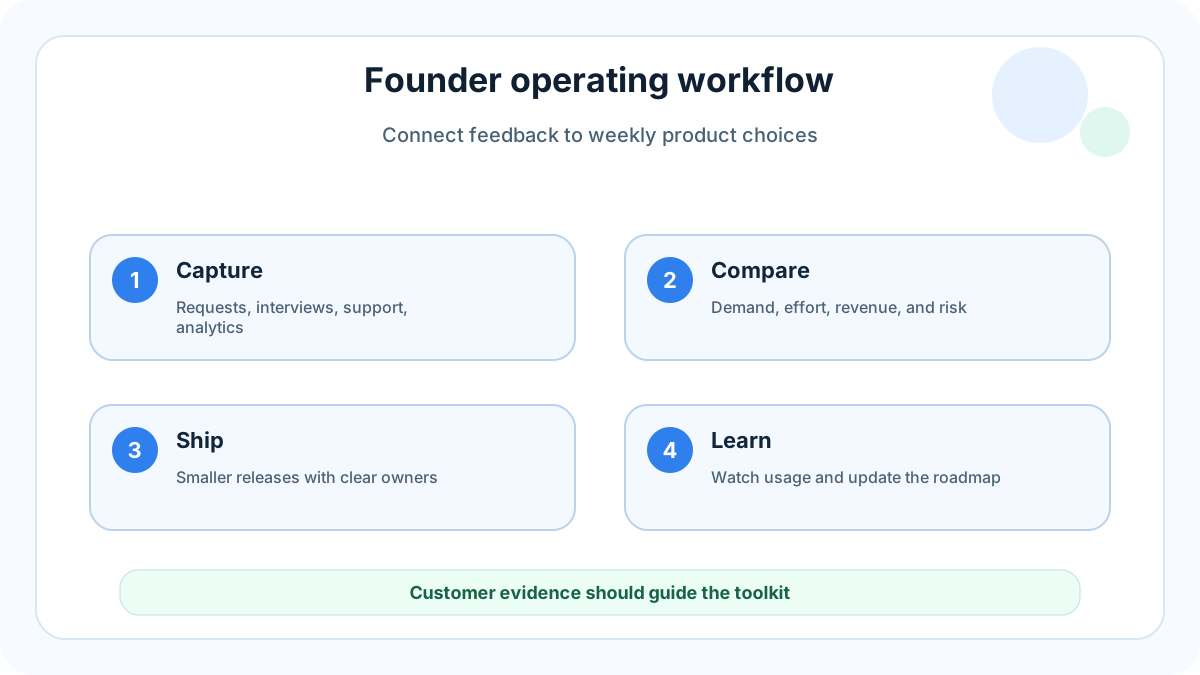
Run a weekly feedback review. Sort requests into now, next, later, and not planned. Ask whether each high-vote idea supports activation, retention, revenue, or strategic focus. Publish status changes when you make a decision. This habit compounds because users see that feedback matters, and the founder sees repeated evidence instead of isolated opinions.
Advice
Do fewer things with more proof. Launch smaller features, watch how customers respond, and let repeated demand guide the next bet. Avoid the trap of copying a mature SaaS stack before you have mature problems. Use simple tools that preserve customer context and make decisions easier.
Implementation plan for the first 90 days
In month one, focus on signal capture. Install FeaturAsk, add analytics, set up support, and talk to customers weekly. Do not build a complicated roadmap yet; collect repeated requests and learn which users are most engaged.
In month two, connect feedback to activation. If new users repeatedly ask for the same template, integration, or explanation, decide whether fixing that gap would improve conversion or retention. Use votes and comments to separate broad demand from isolated preferences.
In month three, formalize the review rhythm. Keep the stack small, assign ownership, and publish decisions. A founder who can explain why a request is planned, later, or not planned is already operating with more discipline than many larger teams.
Practical review scorecard
For an early-stage SaaS company, score each request by activation impact, retention impact, target-customer fit, and founder effort. A request from an ideal customer who is blocked during setup should usually outrank a flashy feature from a poor-fit prospect. Keep the scoring lightweight: one sentence per request and a weekly decision is enough.
Also review tooling cost every month. If a tool does not improve learning, revenue, support speed, or product quality, cancel it. The founder stack should stay boring until the business has enough repeatable demand to justify specialization.
Founder examples
A solo SaaS founder might use FeaturAsk for public requests, a help desk for support, analytics for activation, and a payment tool for billing. That is enough to learn whether users want integrations, templates, imports, exports, or clearer onboarding. A two-person team can add customer interviews and a simple CRM, but the core loop remains the same: collect signal, review it, ship the highest-confidence improvement, and tell users what changed.
The advantage of this approach is focus. Founders do not need a huge operating system to make better roadmap decisions. They need customer evidence that survives beyond one conversation.
Tool choices by stage
In the earliest stage, choose tools that shorten the distance between a customer signal and a product decision. A feedback board belongs near the top of that list because it captures ideas while the visitor is already thinking about the product. Analytics belongs beside it because it shows whether the requested improvement connects to activation or retention. Support and documentation tools come next because every repeated support question is either an education gap, a usability gap, or a positioning gap.
Once the product has paying customers, the toolkit can grow. Add lifecycle email when onboarding needs consistent follow-up. Add a CRM when sales conversations become too many to remember. Add a research repository when interviews become frequent enough that notes need synthesis. Add roadmap software only when the roadmap has enough stakeholders to justify a heavier planning process.
What to avoid
Avoid tools that create work before they create learning. A complex roadmapping suite can make a tiny team feel organized while hiding the fact that very few customers have validated the next feature. A large survey program can produce charts while missing the customer language that explains the real job. A support platform can collect hundreds of tickets without a process for turning repeated issues into product improvements.
The safer path is to keep the system small and visible. A founder can review FeaturAsk requests every Friday, check activation metrics, tag support themes, and pick one improvement. That simple rhythm is enough to create a customer-led roadmap without pretending the company is larger than it is.
Example founder stack
A bootstrapped SaaS founder might run the first year with FeaturAsk for feature requests, Stripe for billing, a lightweight help desk, a simple email tool, product analytics, and a documentation site. The stack is not glamorous, but it covers the work that matters: get paid, help users, learn what they want, watch whether they activate, and explain how the product works.
A funded team can use the same logic with more volume. The difference is not the principle; it is ownership. One person owns feedback triage, one owns onboarding metrics, one owns support themes, and one owns roadmap communication. FeaturAsk remains valuable because it keeps the customer voice visible even as more internal conversations appear.
Advice for prioritizing the toolkit
Buy the tool that removes the current bottleneck. If nobody knows what users want next, buy or install feedback collection. If users sign up but do not activate, improve onboarding analytics and feedback prompts. If support is overwhelming the founder, organize the inbox and docs. If prospects ask the same pre-sale questions, fix the website and pricing copy. This order keeps the toolkit connected to business reality.
SaaS toolkit examples by founder stage
Pre-revenue prototype
At this stage, the toolkit should reveal whether anyone cares. Put FeaturAsk on the landing page or demo site, collect requests from early users, and watch which promises create questions. Use a simple analytics tool to see whether visitors reach signup, and keep support in one inbox so patterns are visible.
First paying customers
Once customers pay, the toolkit should protect retention. Track activation, document repeated support questions, and use the feedback board to rank integrations, templates, and workflow improvements. Do not add heavy planning tools until the number of requests exceeds what a weekly review can handle.
Growing niche SaaS
When a niche product starts attracting multiple customer types, the toolkit should preserve focus. Tag requests by segment and prioritize the users the company wants more of. FeaturAsk votes are useful, but customer fit matters too.
Quality control for founder tools
A founder tool should either create customer evidence, reduce manual work, improve conversion, or protect retention. If it does not do one of those jobs, it is probably a distraction. Review the stack monthly and remove tools that no longer support the current stage.
Runway-aware decision rules
A founder should ask two questions before adding any tool: will this help us learn faster, and will it still feel affordable if growth is slower than expected? FeaturAsk passes that test for feedback because $29.95/year is small enough for bootstrapped teams, side projects, and niche SaaS products. A tool that costs more each month than the problem is worth solving should wait.
Runway-aware does not mean cheap at all costs. It means spending where the business gets evidence. Customer requests can prevent wasted development, analytics can reveal activation problems, and support tools can preserve founder time. Those are good reasons to pay. Buying a complex suite because larger companies use it is not.
Tool ownership rules
Assign an owner before you add a tool. If feedback belongs to nobody, requests turn stale. If analytics belongs to nobody, dashboards become decoration. If support themes are never reviewed, tickets become a private archive instead of a learning source. Ownership can be simple: the founder reviews FeaturAsk every Friday, support tags repeated issues, and product decisions are recorded once a month.
This is why early-stage teams should prefer tools with obvious workflows. A request board has a clear owner and cadence. A sprawling platform with ten modules may create ambiguity before the company has enough people to run it.
Final founder review prompt
Ask which tool helped the founder avoid the most wasted work this month. If the answer is unclear, simplify the stack and move attention back to customer conversations, request voting, onboarding evidence, and support patterns.
Final toolkit operating check
Before the next planning session, list the three tools that created the most useful customer evidence this month. Keep those habits strong. Then list any subscriptions that did not change a decision, save time, or improve customer experience. Early-stage teams win by protecting focus. FeaturAsk should feed the roadmap, analytics should validate behavior, support should reveal friction, and documentation should reduce repeated questions. If a tool does not have that kind of job, it can wait.
A final review should record the decision in plain language so the next planning cycle starts with evidence, not memory.
Bottom line
The best early-stage SaaS toolkit is affordable, customer-led, and easy to run every week. Put feedback near the product, connect it to analytics and support, and build only what repeated evidence justifies. FeaturAsk can handle the request-voting layer while you keep the rest of the toolkit lean.