Crafting a Clear Product Vision for Success
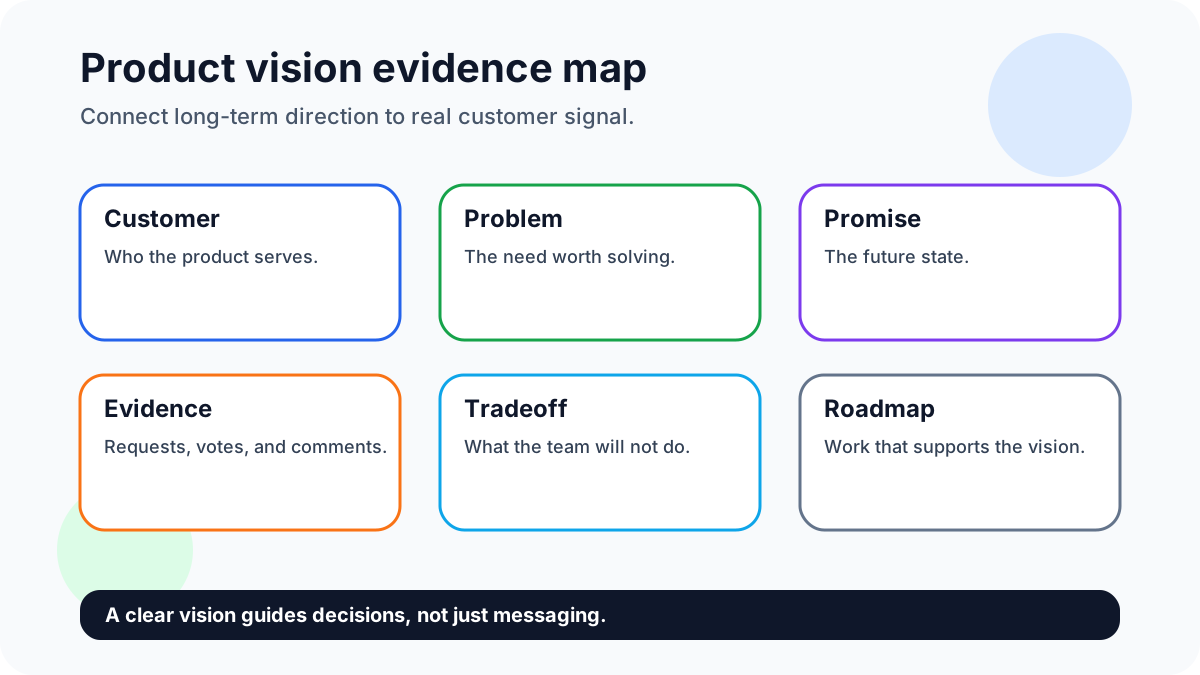
A product vision is the clear, memorable direction that explains who the product serves, what problem it will solve, and why the chosen approach deserves focus. It is not a slogan for a slide deck. It is a decision tool. When a team debates features, roadmap tradeoffs, pricing, onboarding, or customer segments, the vision should help everyone choose the next best action.
For small teams, the hard part is not writing a lofty statement. The hard part is proving that the statement matches real customer demand. That is where feedback systems matter. Use feature voting, building better products with user feedback, and feature request tools to connect the vision with requests people actually make.
Quick answer: a strong product vision names the audience, the painful problem, the future state, and the product’s distinct promise. It is short enough to remember and specific enough to reject distractions. Sign up for FeaturAsk to collect the customer requests that sharpen your product vision — one month free, no credit card required, and the plan is $29.95/year after the trial.
What is a product vision?
A product vision describes the future your product is trying to create for a specific group of users. It gives the team a stable direction while leaving room to change tactics. A roadmap says what may happen next; a vision explains why those choices matter. A feature request board shows what users ask for; a vision helps decide which requests fit the product’s promise.
The best vision statements are practical. They do not claim to serve everyone. They make a choice about audience, pain, and value. A creator tool might focus on helping independent educators collect course ideas. A Shopify app might focus on helping merchants discover product demand before buying inventory. A SaaS dashboard might focus on helping admins prioritize requests without a weekly spreadsheet meeting.
Why product vision matters
A clear product vision improves focus, communication, and prioritization. It prevents roadmap drift because every idea can be compared against a shared destination. It also improves morale because the team can see how small releases support a larger promise. Without that direction, product work becomes a queue of urgent opinions.
Research from CB Insights on startup failure reasons repeatedly shows that lack of market need is a major failure pattern. Product vision cannot fix weak demand by itself, but it can force a team to define the customer and test the need earlier. The ProductPlan guide to product vision also emphasizes vision as a guiding statement for strategy and roadmap decisions.
How to craft a compelling product vision
Step 1. Start with alignment
Gather the people who shape the product: product lead, founder, support, sales, design, engineering, and anyone who speaks with customers. Ask each person to describe the customer, the painful problem, and the promised outcome in one sentence. Differences are useful because they reveal hidden assumptions before the roadmap locks in.
Step 2. Identify the core problem or need
Do not start with features. Start with the expensive, frequent, or emotional problem customers want solved. Look for repeated requests, support tickets, churn reasons, and sales objections. FeaturAsk helps here because submitted ideas and votes give the team a visible record of demand instead of scattered anecdotes.
Step 3. Define the long-term goal
Describe the future state in customer language. “Help small ecommerce shops learn what customers want next before investing in inventory” is stronger than “build an AI-powered merchandising platform.” The first statement guides decisions; the second mostly describes technology.
Step 4. Articulate the unique value proposition
Explain why your approach is different. It might be simpler setup, lower cost, faster workflow, better privacy, narrower focus, or a friendlier experience for a specific audience. FeaturAsk’s own position is a good example: a simple feature request widget for small sites, with voting, moderation, analytics, and custom branding, not a heavy enterprise suite.
Step 5. Write the vision statement
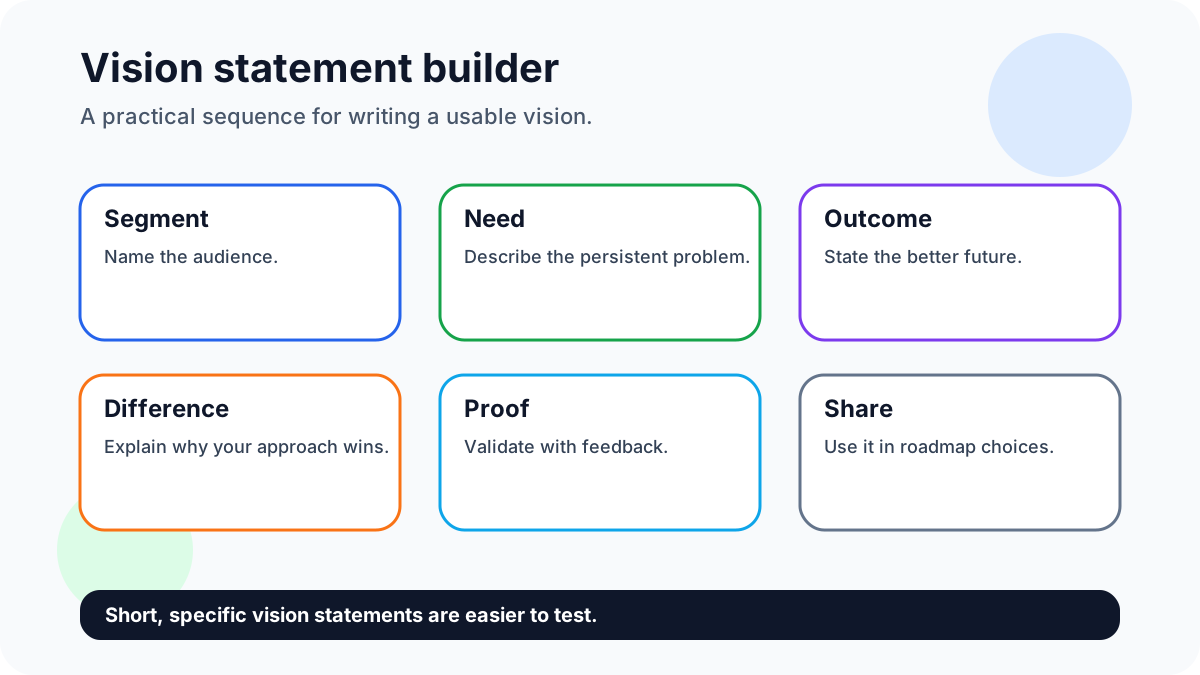
Use this structure: “For [audience], we help [solve problem] so they can [desired outcome], unlike [alternative], through [distinct approach].” Then cut words until the statement can be remembered in a meeting. If it takes a paragraph to explain, it is probably still a strategy note rather than a vision.
Step 6. Involve customers and stakeholders
Customers do not need to vote on every word, but they should validate the substance. Ask whether the stated problem matches their experience. Ask which promised outcome would change their behavior. Ask what would make the product not worth using. That last question often produces the most honest signal.
Step 7. Validate and refine
A product vision should be stable, not frozen. Review it when customer segments change, product usage shifts, or repeated requests point to a clearer opportunity. Validation can include interviews, analytics, feature votes, support themes, and win-loss notes. The goal is to keep the direction alive without rewriting it every week.
Best practices for communicating the vision
Visualize the idea with a simple map: customer, problem, promise, proof, and next bets. Repeat the statement in roadmap planning, onboarding, release notes, and product reviews. Translate it for each audience. Engineers may need tradeoff clarity. Customers need the benefit. Partners need the market position. Support needs the promise and the boundaries.
Avoid vague statements like “make work easier” or “empower teams.” Those phrases are too broad to guide decisions. A useful vision should reject some ideas. If every feature request fits, the vision is not doing enough work.
How FeaturAsk supports product vision
FeaturAsk gives the team a low-friction way to hear from users continuously. Visitors can submit ideas, vote on existing requests, and discuss what matters. The admin dashboard helps review popularity and manage requests. That feedback does not replace strategy, but it gives strategy a reality check.
Try FeaturAsk free for one month and validate your product vision with real requests with no credit card. At $29.95/year, it is affordable enough for a small product, creator site, ecommerce store, or service business that wants customer signal without enterprise overhead.
Example product vision statements
For a course creator platform: “Help independent educators discover the lessons their audience wants most so they can build courses with less guessing.” For a local service business: “Help customers request and vote on new services so the business can expand around proven demand.” For a small SaaS: “Help lean product teams prioritize improvements from real user votes without managing a complex feedback suite.”
Each statement names a customer, a problem, and a direction. None of them lists every feature. That is the point. A vision should guide roadmap choices, while requests and votes help decide which specific improvements move the vision forward.
Common mistakes
Do not confuse a mission, slogan, roadmap, and vision. Do not write a statement so broad that competitors could use it unchanged. Do not ignore customer evidence because the vision sounds inspiring internally. Do not let every loud request become a strategy change. Use the vision as the filter and feedback as the signal.
FAQ
How long should a product vision be?
One or two sentences is ideal. Supporting strategy can be longer, but the vision itself should be short enough for the team to repeat and apply.
Who should create the product vision?
Leadership may own the final call, but the best input comes from customers, support, product, design, engineering, and sales. The more customer-facing evidence you include, the stronger the statement becomes.
How often should the vision change?
Not often. Review it when the market, customer segment, or product promise changes. Update tactics more frequently than the vision.
Where does FeaturAsk fit?
FeaturAsk helps validate and refine the vision with ongoing requests and votes. Sign up for FeaturAsk and start collecting product vision signal today — one month free, no credit card, then $29.95/year.
Sources
Monthly vision review cadence
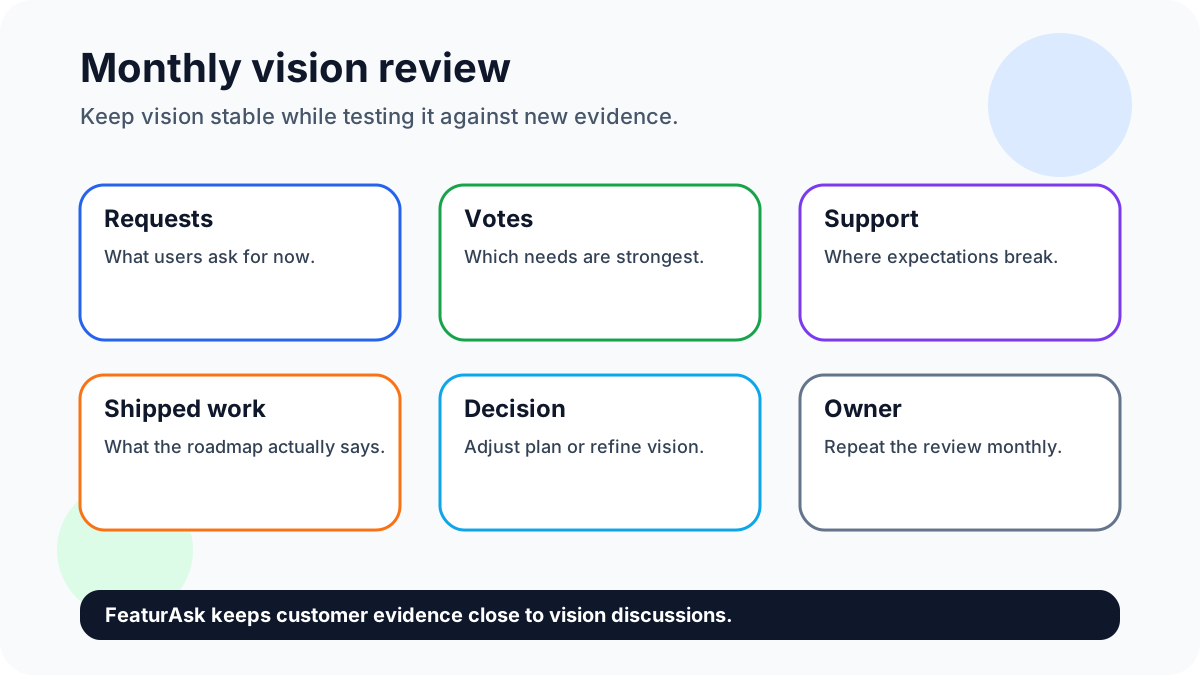
A product vision should not change every week, but it should be tested against fresh evidence. Once a month, compare the statement with the newest customer requests, vote patterns, support themes, and shipped work. If the roadmap no longer supports the promise, either adjust the roadmap or admit that the vision needs refinement.
Keep the review concrete: one customer segment, one measurable behavior, and one roadmap decision. FeaturAsk helps by keeping requests, comments, and voting history close to the discussion, so the team can separate real demand from internal preference.
Product vision scorecard
Use a simple scorecard before presenting a vision to the team. First, clarity: can a new teammate explain the intended customer and outcome after one reading? Second, focus: does the statement imply real tradeoffs, or could every competitor claim the same thing? Third, evidence: can you point to customer requests, interviews, usage patterns, or support themes that make the problem worth solving? Fourth, action: does the vision help prioritize the next roadmap decision?
A weak vision usually fails one of those tests. "Build the best platform for teams" is too broad because it avoids audience, problem, and tradeoff. A stronger version names the audience and change: "Help small SaaS teams turn scattered customer requests into visible product decisions without buying a heavy product suite." That sentence is not perfect for every company, but it is specific enough to guide product choices.
Turning feedback into vision evidence
Customer feedback should inform the vision without turning the company into a request machine. Use FeaturAsk to collect the raw signal: what users ask for, which ideas gather votes, which comments explain urgency, and which requests keep returning after releases. Then look for the underlying job rather than copying the exact feature wording.
For example, if users repeatedly ask for exports, filters, and dashboard summaries, the deeper need may be confidence in reporting. The vision should address that customer outcome, not promise every requested field. This keeps the product direction stable while still respecting real demand.
Communicating the vision without ceremony
Once the statement is clear, use it in normal product rituals. Add it to roadmap reviews, sprint planning, changelog decisions, and support triage. When a new request arrives, ask whether it supports the promise, expands the promise, or distracts from it. That one question prevents the vision from becoming a decorative slide.
Small teams do not need a long strategy deck. They need a sentence that helps them say yes, no, or not yet. If the vision cannot survive those daily decisions, rewrite it until it can.
Vision-to-roadmap examples
Consider a creator platform whose vision is to help educators choose course topics with less guessing. A request for better lesson voting fits because it improves topic confidence. A request for a full accounting module probably does not, even if one customer asks loudly. The vision protects focus while feedback reveals the strongest supporting features.
For an ecommerce app, the vision might be to help merchants validate product demand before buying inventory. Requests for wishlists, preorder interest, and product voting all support that direction. Requests for unrelated store design features may be valuable, but they belong lower on the roadmap unless they clearly support demand validation.
For a small SaaS admin tool, the vision might be to help teams prioritize customer improvements without a heavy product suite. A simple request board, voting, moderation, analytics, and changelog loop fit. Complex portfolio planning may wait until the audience changes. These examples show why the vision should be specific enough to filter requests, but flexible enough to learn from real users. The best statement gives the team a default answer when priorities compete: choose the request that most clearly advances the promised customer outcome and strengthens long-term positioning.