Top 11 AnnounceKit Alternatives to Try in 2026
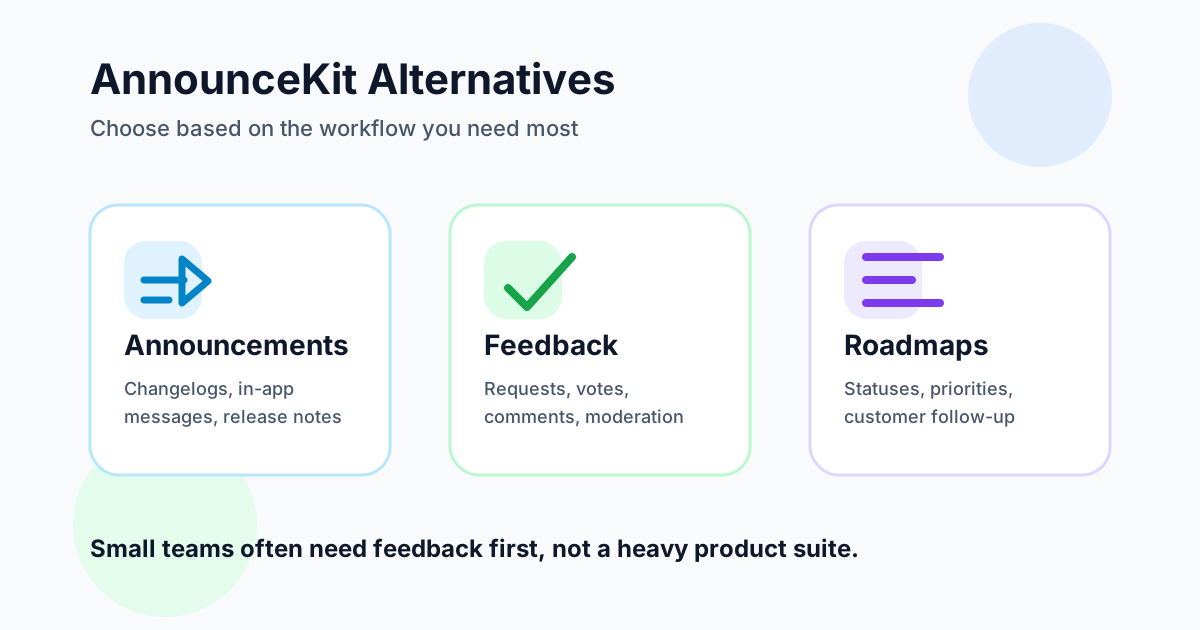
AnnounceKit is a well-known product announcement tool. Teams use it to publish changelogs, show in-app widgets, segment release notes, and keep users aware of product updates. If your only problem is that users miss announcements, AnnounceKit may be enough.
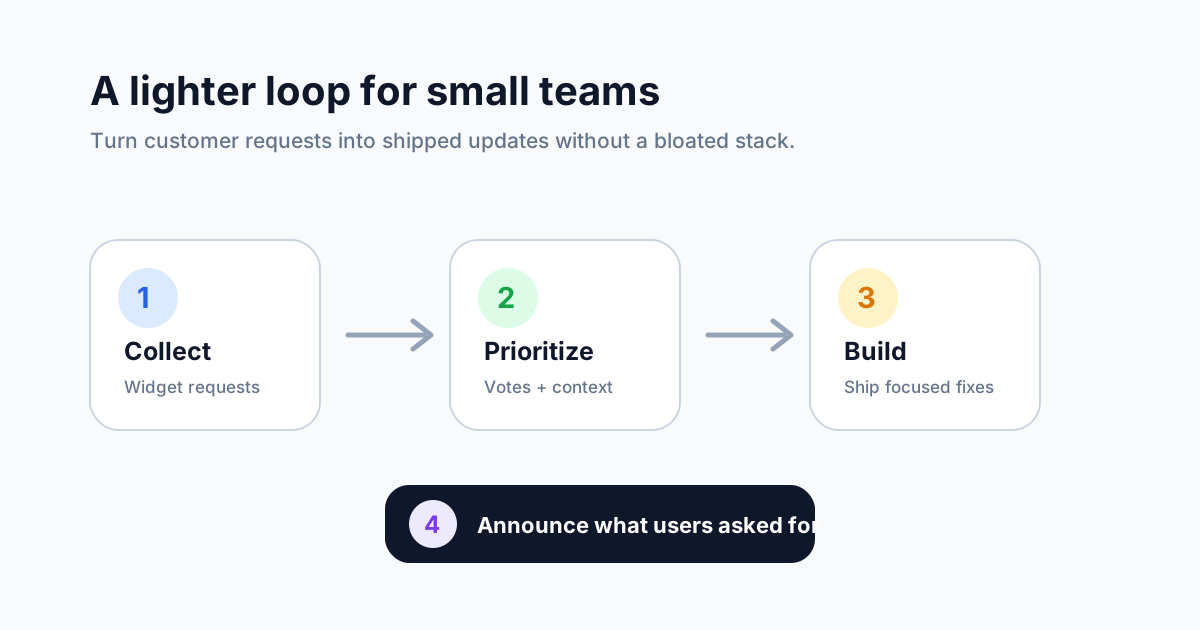
But many teams searching for AnnounceKit alternatives are trying to solve a bigger workflow problem. They do not just want to broadcast updates. They want to collect feature requests, understand what customers want next, prioritize requests, show progress, and then announce what shipped. That is a different loop.
This guide compares 11 AnnounceKit alternatives for product updates, feedback collection, voting, public roadmaps, and user communication. The angle is practical: which tool fits which situation, what to check before buying, and when a simpler option is better than a larger product management suite.
What to look for in an AnnounceKit alternative
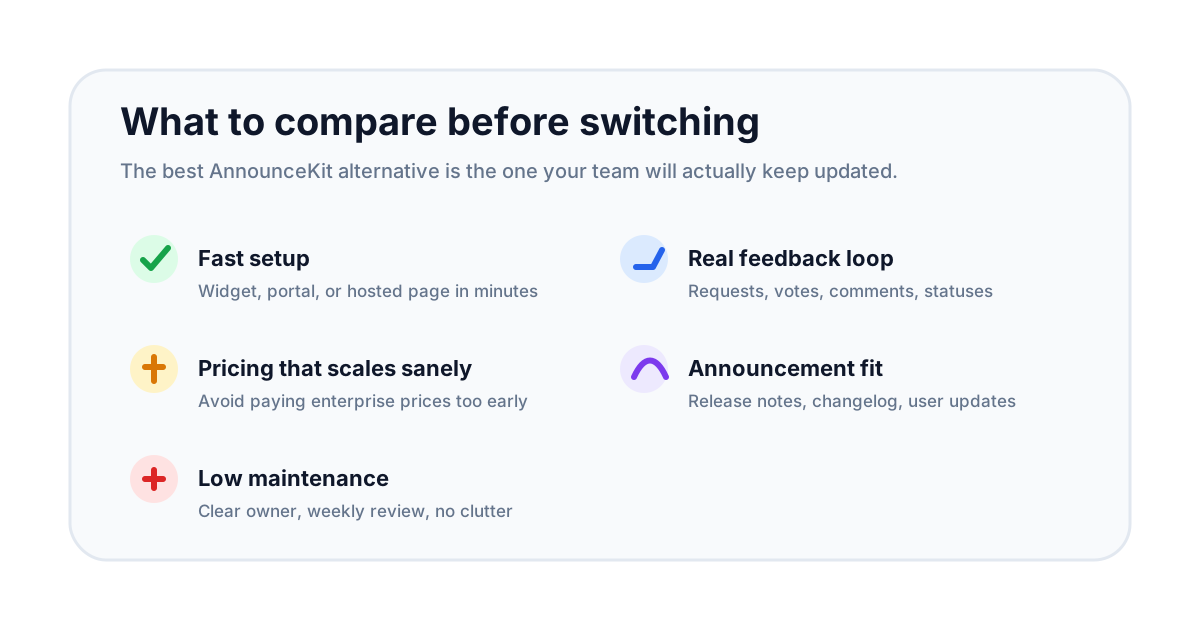
The best AnnounceKit alternative depends on the job you need done. If your product team only needs a polished changelog, prioritize announcement design, segmentation, email delivery, and analytics. If your users also ask for features, report gaps, or keep repeating the same requests in support conversations, choose a tool that captures feedback before it becomes a scattered mess.
Start with the announcement workflow. Look for a widget, hosted changelog, in-app notifications, email options, segmentation, and the ability to highlight important launches. Pricing pages for tools such as AnnounceKit, Beamer, and Frill show how quickly packaging can vary by monthly visitors, seats, workspaces, languages, integrations, or branding controls, so always confirm the live plan limits before you commit (<a href="https://announcekit.app/pricing" rel="nofollow">AnnounceKit pricing</a>, <a href="https://www.getbeamer.com/pricing" rel="nofollow">Beamer pricing</a>, <a href="https://frill.co/pricing" rel="nofollow">Frill pricing</a>).
Then examine feedback depth. A reaction button under a release note is useful, but it is not the same as a feature request board. If you need upvoting, comments, moderation, duplicate handling, analytics, and request statuses, review dedicated systems. FeaturAsk’s guide to feature request tools explains the difference between a feedback inbox, an idea board, and a full product operations platform.
Finally, look at maintenance. A complex customer portal sounds impressive until nobody updates it. Small teams should prefer tools that are easy to install, easy for customers to use, and easy to review weekly. A clean request board that gets maintained beats a sophisticated roadmap that goes stale.
Which AnnounceKit alternatives are free or low cost?
Some tools in this category offer free plans, trials, or limited starter tiers, but “free” rarely means permanently free for a growing product. Visitor limits, branding, seats, boards, custom domains, and integrations often move you into a paid plan. Public review sites such as G2 and Capterra are useful for checking user sentiment before buying, but ratings change over time and should be verified at the source (<a href="https://www.g2.com/products/announcekit/reviews" rel="nofollow">AnnounceKit on G2</a>, <a href="https://www.capterra.com/p/229472/AnnounceKit/" rel="nofollow">AnnounceKit on Capterra</a>).
If your team is early-stage, budget-sensitive, or simply does not need enterprise workflow, the lowest-risk path is usually a lightweight feedback board plus a simple announcement routine. That is where FeaturAsk fits especially well: it focuses on collecting and organizing user requests without making small teams pay for a large suite.
Want the simple version first? Start collecting feature requests with FeaturAsk for $29.95/year, with 1 month free and no credit card required.
Top 11 AnnounceKit alternatives
1. FeaturAsk
FeaturAsk is the best AnnounceKit alternative for small teams whose real need is feedback collection, not another heavy announcement stack. It helps websites, solo SaaS founders, creators, agencies, ecommerce stores, and small software teams add a simple feature request widget, collect ideas, let users vote, review comments, moderate requests, and see what people care about.
The main advantage is simplicity. FeaturAsk is not trying to replace your entire product management process. It gives you a focused way to hear from users and identify repeated demand. If your current workflow is “customers email us ideas and we lose them in Slack,” FeaturAsk solves the highest-value part first.
It is also priced for small teams: $29.95/year after a 1 month free trial, with no credit card required. That matters because many announcement and product feedback tools are priced monthly and can feel expensive before your feedback volume justifies them.
Choose FeaturAsk if you want fast setup, copy-paste widget installation, request management, voting, analytics, custom branding, moderation, and mobile-friendly collection without buying a full enterprise suite.
2. Frill
Frill combines ideas, roadmaps, and announcements. It is one of the closest all-in-one alternatives for teams that want feedback collection and product updates in the same place. Users can submit suggestions, vote on ideas, follow roadmap statuses, and read announcements after updates ship.
Frill is a good fit for SaaS teams that are ready to maintain a public feedback portal and changelog. It is more productized around the full feedback-to-announcement loop than a pure changelog tool. Compare Frill if you want the connection between “users asked” and “we shipped” to be visible.
The tradeoff is scope. If you only need a lightweight request widget, you may not need the full system yet. If you want to compare more tools in this category, see the related FeaturAsk guide to 19 user feedback tools you need to try.
3. Beamer
Beamer is a strong direct AnnounceKit alternative for product announcements, changelogs, and in-app notifications. It helps teams publish product updates, highlight new features, segment messages, and collect reactions. It is especially relevant if your priority is improving feature discovery rather than building a complete feedback board.
Beamer can work well for SaaS products with frequent releases and a marketing or product team that wants polished update communication. Check the current pricing page for visitor limits, seats, localization, segmentation, and integrations because announcement tools often package those features by tier.
Choose Beamer when your biggest problem is that users do not notice what you already shipped. Choose a feedback-first tool when your biggest problem is deciding what to build next.
4. FeedBear
FeedBear focuses on feedback boards, roadmaps, and changelogs. It is a practical choice for teams that want a public place where customers can submit ideas, vote, and track progress. It is less about flashy launch campaigns and more about organizing customer suggestions.
FeedBear is useful when your team wants a simple portal but still needs enough structure to close the loop. Public review pages for FeedBear on G2 and Capterra can help you check current satisfaction and common complaints before you decide (<a href="https://www.g2.com/products/feedbear/reviews" rel="nofollow">FeedBear on G2</a>, <a href="https://www.capterra.com/p/194362/FeedBear/" rel="nofollow">FeedBear on Capterra</a>).
Choose FeedBear if you want feedback and roadmap visibility in one tool and do not need a broader product management platform.
5. Sleekplan
Sleekplan offers feedback boards, roadmaps, changelogs, satisfaction surveys, and widgets. It is a versatile alternative for teams that want several customer communication tools bundled together. Compared with a pure announcement platform, Sleekplan gives you more ways to collect input before you publish updates.
It can be a good fit for SaaS teams that want feedback, roadmap, and changelog functionality without jumping straight to enterprise product planning software. Review current plan limits around boards, users, team members, integrations, custom domain support, and branding controls (<a href="https://sleekplan.com/pricing" rel="nofollow">Sleekplan pricing</a>, <a href="https://www.g2.com/products/sleekplan/reviews" rel="nofollow">Sleekplan on G2</a>).
Choose Sleekplan if you want an integrated customer feedback portal and are prepared to keep multiple modules updated.
6. FeatureOS
FeatureOS, formerly known as Hellonext, is built around feedback boards, roadmaps, changelogs, and customer-facing product updates. It is a more structured alternative for product teams that want a portal for customer ideas and release communication.
FeatureOS is worth comparing when you need a mature feedback workflow, public statuses, internal prioritization support, and product update communication in one system. It may be more than a small website needs, but it can fit growing SaaS teams with enough request volume to justify a more comprehensive portal.
Check current pricing and reviews because packaging, brand names, and feature limits in this category change often (<a href="https://featureos.app/pricing" rel="nofollow">FeatureOS pricing</a>, <a href="https://www.g2.com/products/skcript-technologies-featureos/reviews" rel="nofollow">FeatureOS on G2</a>).
7. Upvoty
Upvoty provides feedback boards, product roadmaps, and changelogs. It is a familiar choice for SaaS companies that want to move beyond scattered customer requests and create a public feedback system with visible progress.
The strength of Upvoty is the classic feedback loop: customers submit ideas, other users vote, the team updates statuses, and shipped work can be announced. That makes it more feedback-oriented than AnnounceKit, while still covering product communication.
Use Upvoty if you want a dedicated portal with voting and roadmap features. Compare current plans carefully, especially if you need custom branding, multiple boards, integrations, or white-label controls (<a href="https://www.upvoty.com/pricing" rel="nofollow">Upvoty pricing</a>, <a href="https://www.capterra.com/p/190497/Upvoty/" rel="nofollow">Upvoty on Capterra</a>).
8. Canny
Canny is one of the better-known platforms for customer feedback, feature voting, and roadmap management. It helps product teams centralize requests, identify demand, communicate statuses, and connect feedback to product decisions.
Canny is usually a stronger fit for SaaS companies with established feedback volume and a clear product owner. It can be too much if all you need is a simple widget for a small site, but it is powerful when you need segmentation, customer context, and a more mature feedback management process.
Review Canny if your team is moving from ad hoc requests to a serious product feedback program. If you are comparing board-style tools, FeaturAsk’s feedback board software guide gives a useful framework for deciding how much structure you actually need.
9. Productboard
Productboard is not a simple AnnounceKit replacement. It is a product management platform for teams that need to collect insights, prioritize opportunities, connect requests to roadmap decisions, and align stakeholders. It is much broader than changelog software.
Consider Productboard when you have multiple product managers, many feedback channels, sales and customer success input, prioritization frameworks, and executive stakeholders who need roadmap visibility. It can be excellent for mature product organizations, but it is usually overkill for a small team that mainly wants customer ideas and announcements.
Productboard’s pricing and review pages are worth checking for current packaging and fit (<a href="https://www.productboard.com/pricing/" rel="nofollow">Productboard pricing</a>, <a href="https://www.g2.com/products/productboard/reviews" rel="nofollow">Productboard on G2</a>).
10. Nolt
Nolt is a clean feedback board tool for collecting suggestions, votes, comments, and status updates. It is a good option for teams that want a straightforward public board without a complicated product suite.
Nolt fits communities, SaaS products, indie tools, and smaller teams that want users to see existing requests before submitting duplicates. It can also reduce support repetition by giving customers a place to follow progress.
Choose Nolt if you value simplicity and public voting. Compare it with FeaturAsk if your main buying criteria are affordability, quick setup, and lightweight collection for a smaller website or product.
11. Usersnap
Usersnap is strongest for visual feedback, bug reports, QA feedback, and user acceptance testing. It is not a direct changelog replacement, but it can be the better AnnounceKit alternative if your real issue is collecting clear problem reports from users and testers.
Usersnap lets users capture screen context, submit feedback, and help teams reproduce issues. That makes it valuable for product and QA teams that need specific visual details rather than general feature ideas.
Choose Usersnap when bug reporting and visual context matter more than public announcements. If you mainly need feature requests and voting, a board-first tool will usually be easier for customers.
Honorable mentions: Feedbackify and Announcefly
Feedbackify and Announcefly appear in older AnnounceKit alternative lists because they cover adjacent needs. Feedbackify is more survey and website feedback oriented, while Announcefly has historically been positioned around simple product announcements and AppSumo-style lifetime deals. Treat both as niche options and verify current availability, pricing, support activity, and recent reviews before relying on them for an important product communication workflow.
Which AnnounceKit competitor is best?
If you want the closest announcement-focused competitor, start with Beamer. If you want feedback plus announcements in one polished portal, compare Frill, Sleekplan, FeatureOS, Upvoty, and FeedBear. If you need enterprise-level product discovery and prioritization, Productboard may be the better category. If visual bug reports matter most, Usersnap is the more relevant option.
If you are a small team, solo founder, creator, ecommerce store, agency, or early SaaS, do not overbuy. Your first priority is often not a complex roadmap suite. It is a reliable way to collect user requests, let people vote, and spot patterns you would otherwise miss. For practical examples of adjacent tools, see FeaturAsk’s comparison of Beamer alternatives for SaaS user feedback and announcements.
That is why FeaturAsk is the best first step for many smaller teams. You can add the widget, collect requests, review votes and comments, and keep your feedback loop visible without committing to expensive monthly software.
Ready to replace scattered customer ideas with one simple feedback loop? Try FeaturAsk free for 1 month with no credit card required. It is $29.95/year after the trial.
Quick selection guide
Use this rule of thumb:
- Choose FeaturAsk if you want simple, affordable feature request collection for a small team.
- Choose Beamer or AnnounceKit if your core need is in-app announcements and changelogs.
- Choose Frill, Sleekplan, FeatureOS, Upvoty, FeedBear, or Nolt if you want a public feedback board plus roadmap-style communication.
- Choose Canny or Productboard if you have a more mature product organization and need deeper prioritization.
- Choose Usersnap if visual bug reporting and QA feedback are the priority.
The best tool is not the one with the longest feature list. It is the one your team will keep using after the first week. For small teams, that usually means fast setup, clear pricing, easy moderation, and a feedback loop users can understand instantly.
If that sounds like what you need, create your FeaturAsk feedback board today and start collecting product ideas before your next release.