When Is the Best Time to Send an NPS Survey?
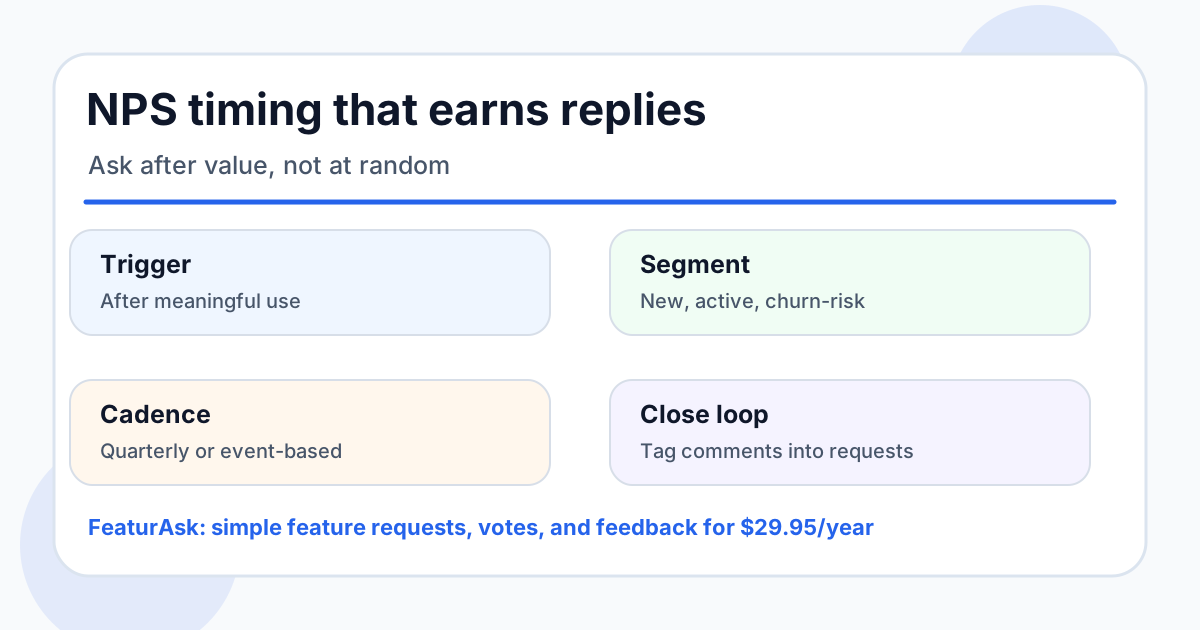
The best time to send an NPS survey is after a customer has experienced enough value to judge your product, but before the memory of that experience fades. That sounds simple, yet many teams send NPS at the wrong moment: immediately after signup, during a support fire, or on a generic calendar date that ignores what the user has actually done.
NPS itself is a relationship signal, not a roadmap by itself. Bain describes the Net Promoter System as a way to learn whether customers are likely to recommend a company and why (<a href="https://www.bain.com/insights/introducing-the-net-promoter-system-loyalty-insights/" rel="nofollow">Bain overview</a>). Qualtrics explains the same core 0-to-10 question and the promoter, passive, and detractor groupings (<a href="https://www.qualtrics.com/experience-management/customer/net-promoter-score/" rel="nofollow">Qualtrics NPS guide</a>). The useful part is not only the score. It is the follow-up comment that reveals what users value, what confused them, and which missing capabilities keep showing up.
For a small SaaS, ecommerce store, creator site, or service business, the goal is not to build an enterprise research program. The goal is to ask at a respectful moment, collect comments, and turn repeated themes into decisions. If those themes are feature requests, connect NPS to a visible request board so users can vote and add context.
The short answer: wait until the user has reached value
Do not send NPS just because a user exists in your database. Send it after the customer has completed the action that proves they understand the product. In a project management app, that may mean creating a project and inviting a teammate. In ecommerce, it may mean delivery plus a few days of product use. In a course or creator business, it may mean finishing the first module or downloading a resource.
This timing matters because early surveys often measure onboarding friction rather than loyalty. That can still be useful, but it is not the same as NPS. If you want to evaluate onboarding, ask a short customer effort or satisfaction question right after setup. If you want recommendation intent, wait until users can judge outcomes.
A practical rule: define one “first value” event and one “sustained value” event. First value is the first meaningful win. Sustained value is repeated use, renewal, reorder, or successful completion. Send relationship NPS after sustained value. Send smaller tactical questions around onboarding, support, or feature interactions.
If you need a simple place to capture the feature requests hiding inside NPS comments, sign up for FeaturAsk and start with a 30-day free trial, no credit card required. FeaturAsk is $29.95/year and gives small teams a lightweight widget, votes, moderation, and a dashboard without adding a research-suite budget.
Best NPS timing by customer journey stage
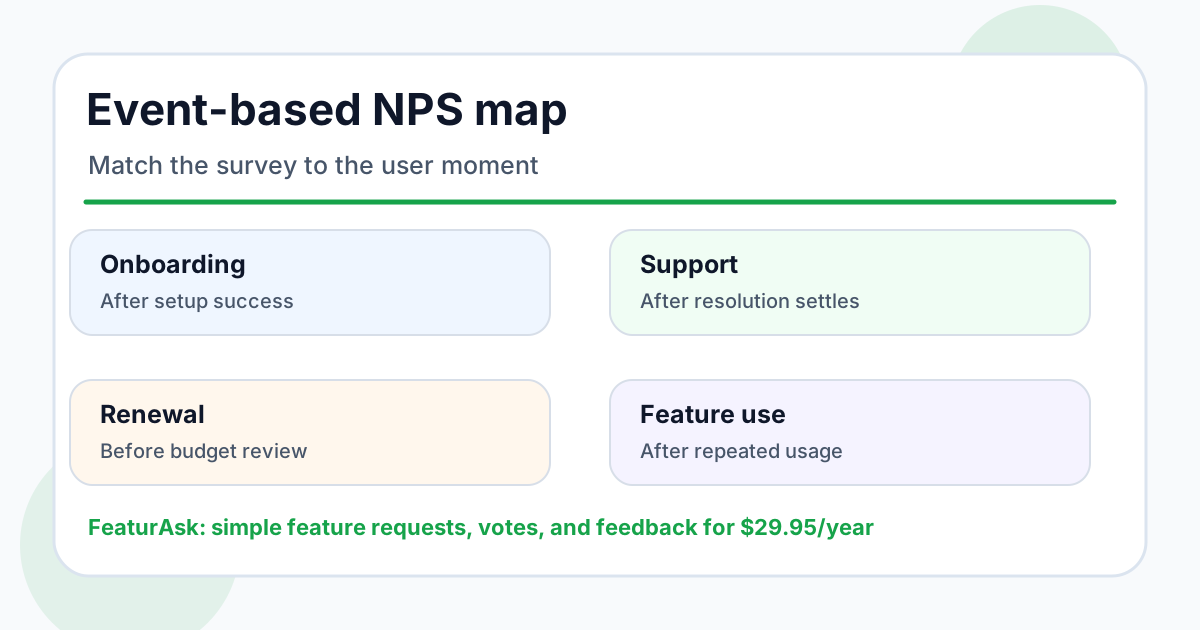
After onboarding success
For SaaS products, wait until onboarding produced an outcome. A user who merely created an account cannot tell you whether the product is worth recommending. A user who imported data, created a first item, published a page, embedded a widget, or invited a teammate has a real basis for judgment.
The insight many generic NPS guides miss is that onboarding NPS should be segmented from mature-customer NPS. New users may mention setup instructions, empty states, import problems, or missing templates. Long-term users may mention reliability, reporting, permissions, or pricing. Mixing those comments into one pile makes the score harder to interpret.
After support resolution, with a delay
Do not ask for NPS while a support issue is still emotional. After a ticket closes, wait long enough for the user to confirm the fix worked. For a minor question, a day may be enough. For billing, outages, or data problems, wait several days.
Also avoid treating post-support NPS as your company-wide score. It is a useful recovery signal, but the sample is biased toward people who had a problem. If the comment includes a product gap, route it into your feedback process rather than letting it disappear in a helpdesk note.
Before renewal or reorder
Renewal-adjacent NPS is useful because it reveals objections before the decision is final. Ask early enough to act. If an annual customer renews in June, asking in late May may be too late. A better approach is 45 to 90 days before renewal, especially for B2B subscriptions where budget and approvals take time.
For ecommerce or memberships, the same logic applies to reorder windows. Ask after the customer has used the product, but before the next purchase decision. The answers can reveal missing bundles, confusing replenishment timing, or features customers expected but did not find.
How often should you send NPS?
Quarterly is a common starting point for active B2B users. Twice a year can work for lower-touch products. Event-based triggers are often better than a rigid calendar because they respect actual usage. The key is to avoid asking the same person too often. If a customer answered recently, suppress the next invitation unless a major milestone occurred.
For small teams, a simple cadence beats a perfect but fragile research design. Pick one relationship survey window, one or two event triggers, and a weekly review habit. Track the score, but spend most of the review time reading the comments.
Document the rule in plain language so marketing, product, and support use the same definition. For example: “Ask active accounts after three successful sessions, then suppress the next invitation for 90 days.” That kind of rule is easy to audit and adjust when response quality changes.
A small website does not need a complex survey stack before it has a feedback loop. If users already send suggestions through chat, reviews, and email, read FeaturAsk’s guide to feature request tools and compare how a public request board changes the conversation. You can also use feature voting to validate whether an NPS complaint represents one loud user or a broader pattern.
What to do with NPS comments after the survey
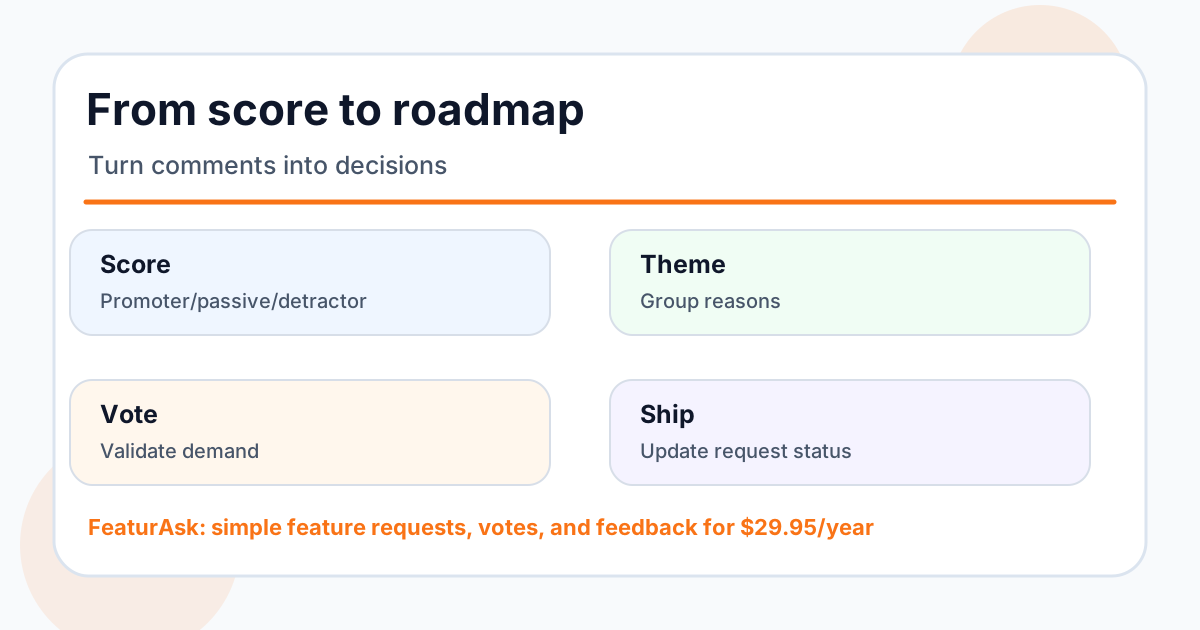
The follow-up question is where the value lives. Ask “What is the main reason for your score?” Then tag the answer. Useful tags include onboarding, missing feature, reliability, support, price, integrations, documentation, performance, and unclear value.
Promoters are not only praise. They reveal what you should protect. If promoters mention fast setup, do not bury setup under enterprise configuration. If they mention a simple widget, avoid turning the product into a complicated workspace before your audience needs it.
Passives often reveal the next growth lever. They like the product but are not excited enough to recommend it. Their comments can point to small improvements: clearer reporting, a missing export, better mobile display, more examples, or simpler billing. Detractors reveal urgent friction, broken expectations, or product-market mismatch.
Turn repeated feature-related comments into request items. Give users a place to vote, add context, and see updates. FeaturAsk’s guide to active vs passive customer feedback explains why you should combine surveys with always-available input channels.
NPS timing mistakes to avoid
The first mistake is surveying too early. Signup excitement or confusion can distort the score. The second is surveying during a negative incident. If the product is down, fix the product first. The third is asking too frequently. A customer who receives constant popups learns to ignore all of them.
The fourth mistake is treating the number as the whole story. A score without comments is a dashboard decoration. A comment without follow-up is a missed opportunity. The fifth mistake is hiding feedback inside spreadsheets. If multiple customers ask for the same improvement, create a visible request, merge duplicates, and show status.
For a low-cost way to connect survey learning to product decisions, try FeaturAsk free for one month with no credit card required. It helps small teams collect requests directly from a website, let users vote, and review demand for $29.95/year.
A simple NPS timing plan for small teams
Start with one relationship trigger: send NPS after sustained value. Add one support trigger if support quality is a major part of the experience. Add one renewal or reorder trigger if churn or repeat purchase matters. Suppress repeat invitations for at least 90 days unless the customer enters a materially different stage.
Review comments weekly. Separate product gaps from service issues. Turn product gaps into request-board items. When an item ships, update the status and tell voters. This turns NPS from a survey metric into a customer-led product loop.
If you want that loop without buying a heavy product operations platform, sign up for FeaturAsk and launch a feature request widget in minutes. The 30-day free trial needs no credit card, and the paid plan is $29.95/year.
Bottom line
The best NPS timing is not a universal weekday or hour. It is the moment after a user has enough experience to give a fair answer. For most teams, that means after onboarding success, after sustained use, after support resolution has settled, or before renewal while there is still time to act. Ask respectfully, read the comments, and connect repeated product themes to a feedback board users can revisit.
Timing examples by product motion
For a self-serve SaaS product, wait until the user completes the first meaningful workflow: importing data, publishing a page, inviting a teammate, creating a report, or receiving the first outcome. Sending NPS immediately after signup measures excitement or confusion, not product value.
For ecommerce or creator businesses, time the survey after delivery, setup, or repeat use. A post-purchase NPS sent before the customer has used the product creates noisy scores. A better trigger is a completed order, finished onboarding email sequence, second purchase, or support interaction that has had time to settle.
For B2B accounts, avoid surveying every user at the same moment. Ask admins after setup, operators after repeated use, and decision-makers before renewal conversations. Segmenting the timing gives each respondent a fair reason to answer.
Segment timing by customer type
A new customer, a long-term account, and a churn-risk user should not always receive the same survey. New customers can tell you whether the setup promise was clear. Long-term customers can tell you whether the product still deserves recommendation after repeated use. Churn-risk users can explain what changed, what disappointed them, or what alternative they are considering. Keep those groups separate in your analysis so one segment does not blur another.
For ecommerce, segment by purchase history and delivery experience. First-time buyers may be judging trust, packaging, shipping, and product expectations. Repeat buyers may be judging consistency, support, loyalty perks, or missing product variants. For creator businesses, segment by free subscribers, paid members, course buyers, and community participants. The best timing is the moment each group can answer from experience.
What many NPS timing guides miss
Many NPS timing guides focus on when to ask, but not where the answer should go. That is the gap. If a detractor says “I would recommend you if you added team permissions,” the useful next step is not only lowering the detractor count. The useful next step is creating a request, collecting more evidence, and deciding whether team permissions fit your roadmap.
Small teams should also watch for silent passives. They may not complain, but they are often one missing improvement away from churn. Tag passive comments carefully and look for patterns that repeat across accounts. These comments often produce practical improvements: clearer templates, better imports, smaller pricing gaps, and documentation that prevents support tickets.
Final timing rule
If you remember one rule, make it this: ask when the user can answer from lived experience and when your team can still act on the answer. That means fewer random blasts, more journey-based triggers, and a clearer path from comment to product decision.
FAQ: best time to send NPS surveys
What day of the week is best for NPS?
There is no universal best weekday. Timing by customer moment is more reliable than timing by calendar. A Tuesday morning survey sent before a user has reached value is still a bad survey. A Friday survey after a successful milestone can be useful if the user has time to respond. Start with journey triggers, then test send windows for your own audience.
Should NPS appear in-app or by email?
Use the channel that matches the relationship. In-app NPS works when the user is already active and the question will not interrupt a critical task. Email works better for renewal, post-support, ecommerce delivery, or customers who are not inside the product every day. Many small teams use both, but suppress duplicate asks.
How do you turn NPS into product improvements?
Tag comments by theme, separate service issues from product requests, and create visible request-board items for repeated feature gaps. Then let users vote and add details. This keeps NPS from becoming a static score and turns it into a roadmap signal.
FAQ: best time to send NPS surveys
What day of the week is best for NPS?
There is no universal best weekday. Timing by customer moment is more reliable than timing by calendar. A Tuesday morning survey sent before a user has reached value is still a bad survey. A Friday survey after a successful milestone can be useful if the user has time to respond. Start with journey triggers, then test send windows for your own audience.
Should NPS appear in-app or by email?
Use the channel that matches the relationship. In-app NPS works when the user is already active and the question will not interrupt a critical task. Email works better for renewal, post-support, ecommerce delivery, or customers who are not inside the product every day. Many small teams use both, but suppress duplicate asks.
How do you turn NPS into product improvements?
Tag comments by theme, separate service issues from product requests, and create visible request-board items for repeated feature gaps. Then let users vote and add details. This keeps NPS from becoming a static score and turns it into a roadmap signal.