Canny vs Aha!: Key Features and Pricing Comparison for 2026
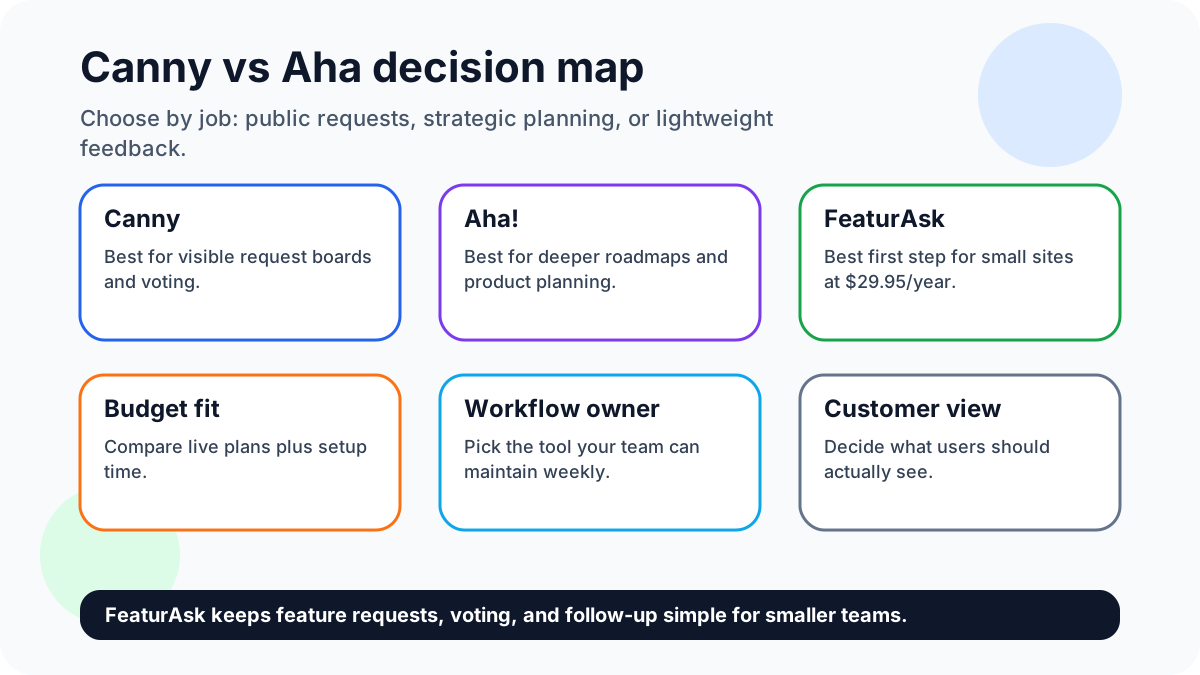
Canny and Aha! both help product teams make better decisions, but they are built around different operating models. Canny is best known for customer feedback, idea voting, roadmaps, and changelog workflows. Aha! is a broader product development suite with products for roadmaps, ideas, discovery, whiteboards, knowledge, teamwork, and development planning.
That difference matters more than any feature checklist. If your team wants a customer-facing feedback portal, Canny may be closer to the job. If your product organization needs a full planning system across strategy, discovery, roadmaps, and delivery, Aha! may fit better. If you run a small SaaS, ecommerce site, creator business, plugin, or service website, both may be more tool than you need at the start.
Current pricing pages show the contrast. Canny’s pricing page frames its platform around building the right features and lists plan tiers for feedback workflows (<a href="https://canny.io/pricing" rel="nofollow">Canny pricing</a>). Aha!’s pricing page lists multiple products across its suite, including Roadmaps, Ideas, Whiteboards, Knowledge, and Teamwork (<a href="https://www.aha.io/pricing" rel="nofollow">Aha! pricing</a>). Pricing and packaging can change, so treat this as a buying framework and verify live pages before purchasing.
Quick verdict
Choose Canny if your main problem is collecting customer ideas, letting users vote, managing public feedback, and showing progress. Choose Aha! if your main problem is product planning across a larger organization, especially when strategy, roadmaps, discovery, and delivery need to live in one system. Choose a lighter tool if you mostly need a website widget for feature requests and votes.
For many smaller teams, the first decision is not Canny vs Aha!. It is whether you need a complex product suite yet. If you simply need users to submit feature requests from your site, sign up for FeaturAsk and start a 30-day free trial with no credit card required. FeaturAsk is $29.95/year and focuses on the practical feedback loop: collect requests, capture votes, moderate ideas, and review demand in a simple dashboard.
Canny overview
Canny is designed around customer feedback management. Teams use it to collect ideas, merge duplicates, understand demand, prioritize requests, publish roadmap statuses, and communicate updates. It is a strong fit when customers expect to see a portal and when the team wants a visible bridge between feedback and release communication.
The benefit is focus. Customer-facing boards, voting, comments, and statuses are central to the product. For SaaS companies with an established user base, that can reduce scattered feedback across email, Slack, sales calls, and support tickets.
The tradeoff is that a feedback portal still needs process. Someone must merge duplicate ideas, keep statuses accurate, explain decisions, and avoid letting votes become the only priority signal. Canny is useful when that ownership exists. Without it, any board can become a graveyard.
Aha! overview
Aha! is broader. It serves product managers who need strategy, roadmap planning, idea management, discovery, documentation, and cross-functional alignment. Aha! can be valuable when product work spans multiple teams, stakeholders, releases, and planning layers.
The benefit is depth. A mature product organization can connect goals, initiatives, features, research, roadmaps, and delivery planning. The tradeoff is setup and operating weight. A solo founder or small website owner may not want to configure a full product management suite before proving which customer requests matter.
This is the core distinction: Canny starts from customer feedback; Aha! starts from product management operating structure. Both can include ideas. They serve different centers of gravity.
Feature comparison
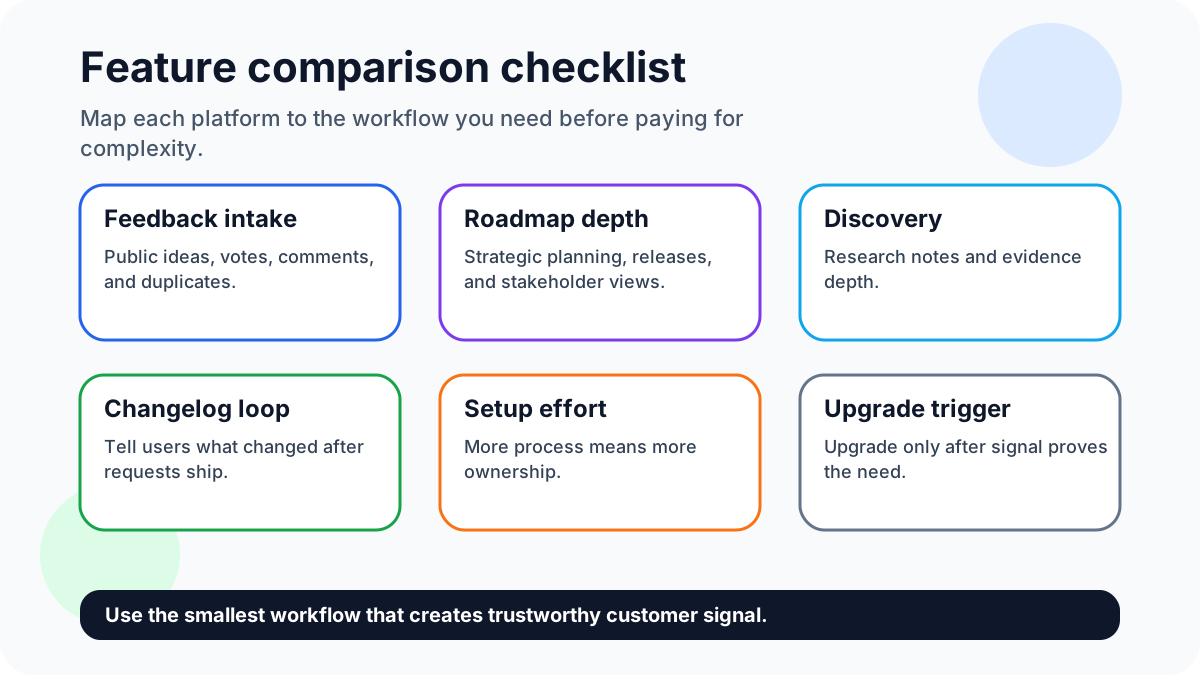
Feedback collection
Canny is usually simpler for a customer-facing feedback portal. Users submit ideas, vote, comment, and follow progress. That makes it strong for SaaS teams that want public or private feedback boards.
Aha! Ideas can support idea intake, scoring, and workflow, but it fits best when feedback is part of a larger product management system. If your organization already uses Aha! Roadmaps, adding Ideas may be logical. If not, the suite can feel heavy for a narrow feedback need.
Roadmaps
Aha! is stronger for strategic roadmapping. It is built for product managers who need portfolio views, releases, initiatives, dependencies, and stakeholder communication. Canny can show roadmap statuses and planned work, but it is not trying to replace a full product planning platform.
For small teams, public roadmap depth can be a trap. Users often need a clear status more than a sophisticated roadmap. A simple “under review,” “planned,” and “shipped” system may create more trust than a detailed plan nobody maintains.
Discovery and research
Aha! has a stronger suite story around discovery and product knowledge. That can matter when teams conduct interviews, map opportunities, and connect evidence to strategic work. Canny is more feedback-board centered.
But discovery is not only a tool category. Small teams can do effective discovery with a request board, follow-up questions, support notes, and lightweight interviews. The process matters more than buying every module on day one.
Changelog and closing the loop
Canny’s feedback-to-update loop is useful for teams that want to tell users when requested features move forward. Aha! can communicate product plans, but its strongest value is internal alignment and structured planning.
FeaturAsk’s guide to product launch communication explains why closing the loop matters: customers are more likely to adopt improvements when they understand that their request led to action.
Pricing and budget fit
Canny and Aha! are usually evaluated by teams with meaningful product budgets. That may be appropriate for a funded SaaS or established product organization. For a small site, early SaaS, creator, agency, or ecommerce business, the bigger risk is paying for a system that is more complex than the process.
Budget fit is not only the subscription price. It includes setup time, training, review habits, integrations, and the cost of maintaining stale boards. A $29.95/year tool that gets used every week can beat a sophisticated platform that nobody owns.
If affordability and simplicity are priorities, try FeaturAsk free for one month with no credit card required. It is intentionally narrow: a feature request widget, votes, analytics, moderation, and custom branding for smaller websites that need signal without a monthly enterprise bill.
When Canny is the better choice
Canny is the better choice when your product has enough users to generate ongoing request volume, you want a polished feedback portal, and your team is ready to maintain it. It also makes sense when public voting and visible statuses are central to your customer communication strategy.
Choose Canny if you need deeper feedback portal functionality than a small widget provides, or if you want feedback, roadmap, and changelog workflows tightly connected in a customer-facing tool.
When Aha! is the better choice
Aha! is the better choice when product management itself is the challenge. If you need strategy documents, portfolio roadmaps, idea scoring, discovery, knowledge, and planning workflows across multiple teams, Aha! has the broader model.
Choose Aha! when the team already has product management maturity and needs a system of record. Do not choose it simply because it has more features. More features help only when they support an existing operating rhythm.
When neither is the right first step
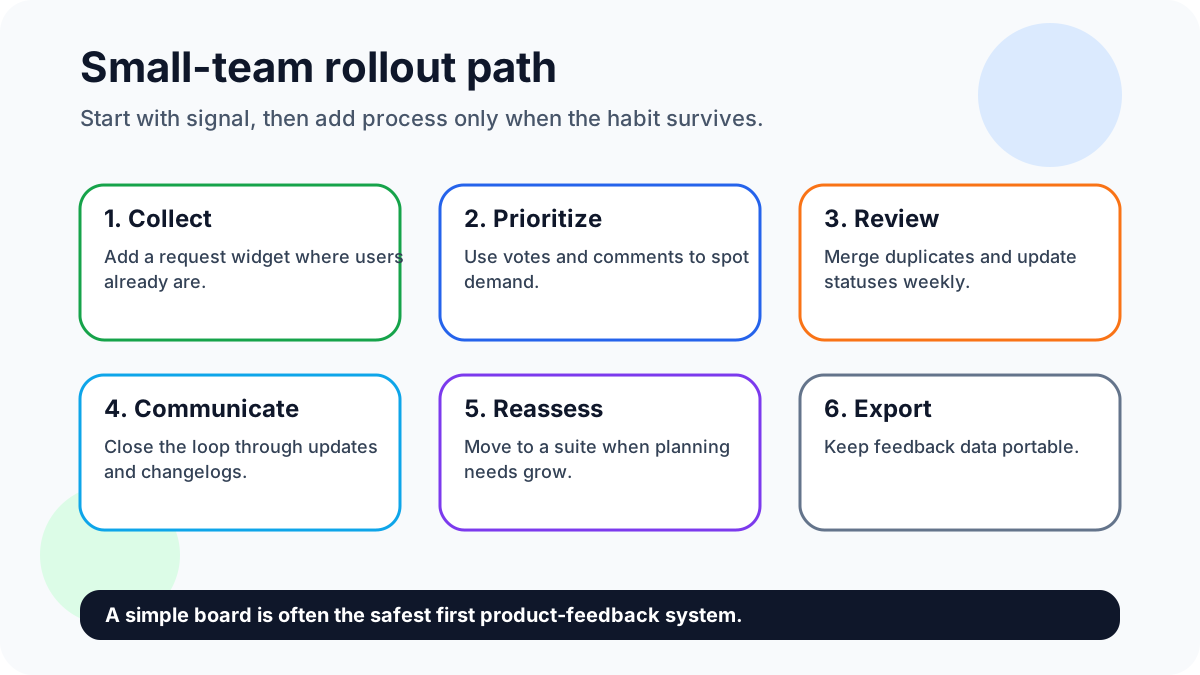
Neither Canny nor Aha! may be the right first step if your immediate problem is basic intake. If users currently send ideas through email, comments, reviews, DMs, and support chat, you may need one simple place to capture demand before you need portfolio roadmaps.
Start with a request widget. Add voting. Review new ideas weekly. Merge duplicates. Tag themes. Tell users what shipped. If the process outgrows the tool, you will have better evidence for buying a larger platform.
For more context, compare FeaturAsk’s guides to feature request tools and active vs passive feedback. Those workflows show how to build a feedback loop before investing in a full product suite.
Initial recommendation
Canny vs Aha! is really a question about operating model. Canny is closer to customer feedback and public request management. Aha! is closer to full product planning and organizational alignment. Small teams should not buy complexity before they have a repeatable feedback habit.
If you want the simplest useful version of that habit, sign up for FeaturAsk. The 30-day free trial requires no credit card, and the annual price is $29.95/year.
Reviews and customer sentiment
Review sites can help, but read them by use case instead of only star rating. For Canny, look for comments about portal usability, voting, duplicate management, integrations, and how easy it is for customers to participate. For Aha!, look for comments about roadmap depth, setup, reporting, stakeholder workflows, and whether the suite helped or slowed daily product work. Public review sites can be a useful starting point for live review patterns, but verify comments directly because ratings and product categories change.
Small teams should pay extra attention to complaints about setup time. A powerful platform can still be the wrong choice if it requires a product operations role you do not have. Positive reviews should also be filtered by company size. What a large product organization loves may be unnecessary for a bootstrapped site.
Support and implementation
Canny implementation is usually about configuring boards, statuses, permissions, integrations, and a habit for responding to requests. Aha! implementation can be broader because it may include product hierarchy, roadmap models, idea workflows, and cross-team reporting. Neither should be installed casually. Decide who owns the system before inviting users into it.
If you cannot name the weekly owner, start smaller. A lightweight board with a clear review ritual is easier to maintain than a full suite with unclear responsibility.
FAQ: Canny vs Aha!
Is Canny cheaper than Aha!?
The answer depends on plan, seats, products, and billing terms, so verify live pricing pages before deciding. More important: compare total operating cost. A tool that needs more setup, training, and internal maintenance may cost more than its subscription suggests.
Which is better for public feature requests?
Canny is generally closer to the public feature request use case. Aha! can support idea workflows, but it is strongest when ideas connect to a broader product planning system.
What should a small SaaS use first?
If the first job is simply collecting ideas from a website, start with the simplest request workflow that users will actually use. Add a larger suite only when the feedback process proves it needs more structure.
Decision matrix for smaller teams
Use three questions before you compare demos. First, where will feedback come from? If the answer is mostly website visitors and existing customers submitting ideas, a focused request board is enough. If the answer includes sales notes, research calls, enterprise accounts, internal stakeholders, and multi-product planning, a broader system may be justified.
Second, who will maintain the workflow? Canny still needs someone to merge duplicates and update statuses. Aha! needs someone to maintain product structure, workflows, and planning views. If ownership is unclear, choose the simpler option and prove the habit first.
Third, what will users see? A public board creates transparency and expectation. A private planning suite creates internal alignment. Some teams need both, but many small businesses only need a visible way for users to request and vote on improvements.
Migration and data ownership
If you are switching from spreadsheets, support tags, or another feedback tool, plan the migration before launch. Import only current requests, merge obvious duplicates, and archive ideas that no longer fit the strategy. A messy migration makes the new board look stale on day one.
Also decide what data you need to export later. Feedback is customer evidence, not just tool content. Before committing to any platform, check export options, integrations, and whether you can preserve request history if your workflow changes. This is especially important for growing SaaS teams that may start simple and later move into a more complete product system.
Budget and review checks before the demo
Before booking demos, compare the live pricing pages and the review patterns that match your company size. Canny publishes plan information at its pricing page, and Aha! publishes pricing for its product suite; both can change, so treat screenshots and old comparison posts as directional only. If your team has fewer than ten people, the practical question is not only subscription price. It is whether the workflow creates enough signal to justify weekly administration.
For reviews, separate portal usability from product planning depth. A Canny review about easy voting is relevant if you need a customer-facing board. An Aha! review about portfolio roadmaps is relevant if you already run a larger product process. If neither review pattern matches your reality, start with a lighter request workflow, prove that customers will submit and vote, and then upgrade with better evidence.