Top 12 UserVoice Alternatives for SaaS Companies
UserVoice alternatives usually appear on the shortlist when a SaaS team wants feedback portals, voting, idea management, and roadmap communication without the complexity or cost profile of a larger customer-feedback program. The practical comparison question is not only which vendors exist; it is which option fits the way your SaaS company actually reviews, moderates, and acts on product demand.
Some teams need a serious enterprise voice-of-customer system. Others need a clean public board where customers can submit ideas, vote, and see progress. Buying the wrong category creates either too much process for a founder or too little governance for a larger product organization.
If UserVoice feels larger than the problem you need to solve, FeaturAsk offers a simpler request board and widget for $29.95/year, including one month free and no credit card required before launch.
For more FeaturAsk context, read about feedback widgets, product feedback tools, and feedback board software while you compare portal depth and setup effort. For outside grounding, see Gartner's voice-of-customer glossary and Nielsen Norman Group's journey mapping overview.
What to look for in a UserVoice replacement
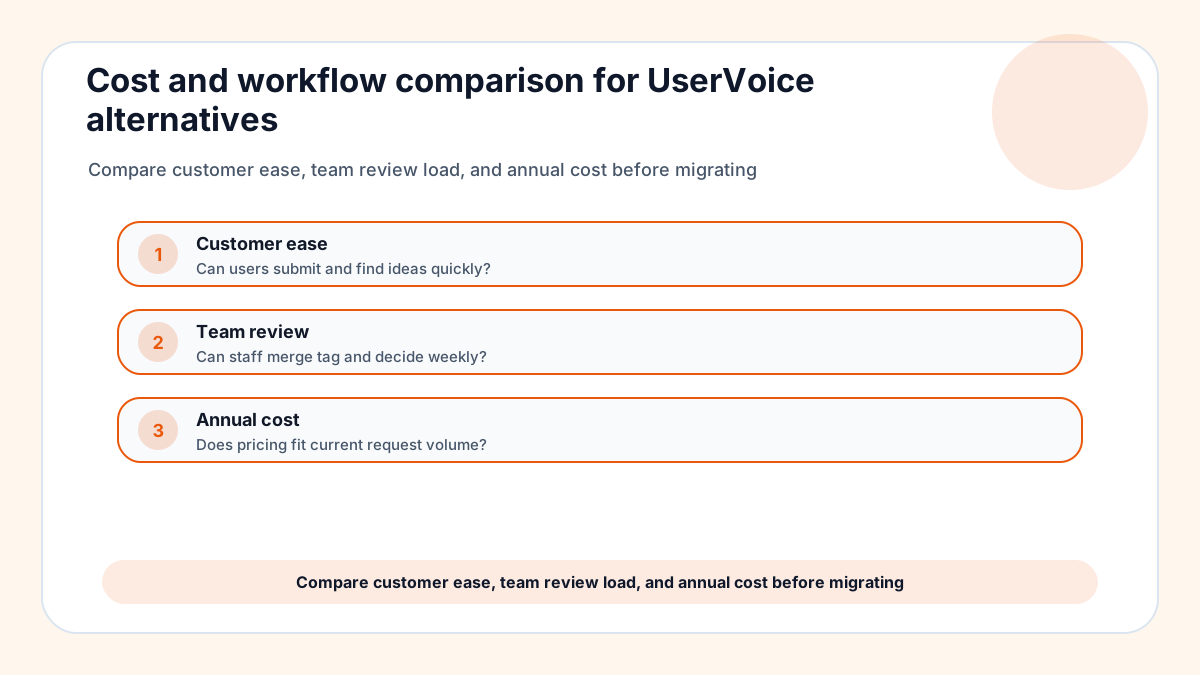
Begin with customer experience. Can users submit ideas without creating unnecessary friction? Can they find existing requests before posting duplicates? Can they vote, comment, and understand what each status means? A portal that customers avoid will not improve roadmap evidence.
Then examine team workflow. The replacement should support moderation, duplicate handling, tagging, segment notes, internal comments, and reporting. If every request still requires manual spreadsheet cleanup, the tool is only a prettier form.
Finally, review cost and governance. Enterprise systems may include advanced account controls, integrations, and analytics, but smaller SaaS companies often need faster setup and lower annual risk.
12 alternatives to compare
FeaturAsk is a strong fit for small teams that want affordable request capture and voting. Canny and Upvoty are common choices for public boards with familiar status workflows. Frill, FeedBear, Hellonext, and FeatureOS combine feedback collection with product-update communication.
Productboard and Aha! Ideas suit teams that connect customer ideas to formal product planning. Pendo adds in-product engagement and analytics. Savio helps teams tie feedback to account and revenue context. ProdPad and Craft.io are broader product-management environments where feedback becomes one part of a larger planning system.
The best alternative is not always the most complete one. It is the one your customers will use and your team will review consistently.
Affordable options for lean SaaS teams
Budget matters because a feedback portal is rarely the only software a SaaS company buys. A founder may also be paying for hosting, analytics, billing, email, support, design, and automation. A monthly enterprise-style feedback tool can feel disproportionate before request volume is proven.
Affordable does not mean unserious. A lean board that captures requests, gathers votes, lets the team moderate, and communicates status can produce better decisions than a sophisticated system nobody maintains.
Use the first month of any trial to test behavior rather than UI preference. Invite actual customers, seed real requests, and see whether the team can review the board without creating another meeting.
Before a SaaS team commits to a heavy portal, FeaturAsk can validate whether customers will submit useful ideas, vote on priorities, and respond to status updates.
When an enterprise alternative is justified
Choose a broader platform when feedback must connect to account hierarchy, sales opportunities, multiple products, advanced permissions, private customer segments, and formal product planning. Those requirements are real for larger SaaS organizations.
The warning sign is buying enterprise process before enterprise complexity exists. If the company has one product lead and a founder making roadmap calls, heavy configuration may slow learning instead of improving it.
A practical path is to start with a focused request portal, learn which signals matter, then graduate to a larger system when the operating model demands it.
Migration checklist from UserVoice
Run the migrated portal beside support inboxes for two weeks, then reconcile missing high-value customer requests before closing the old submission path.
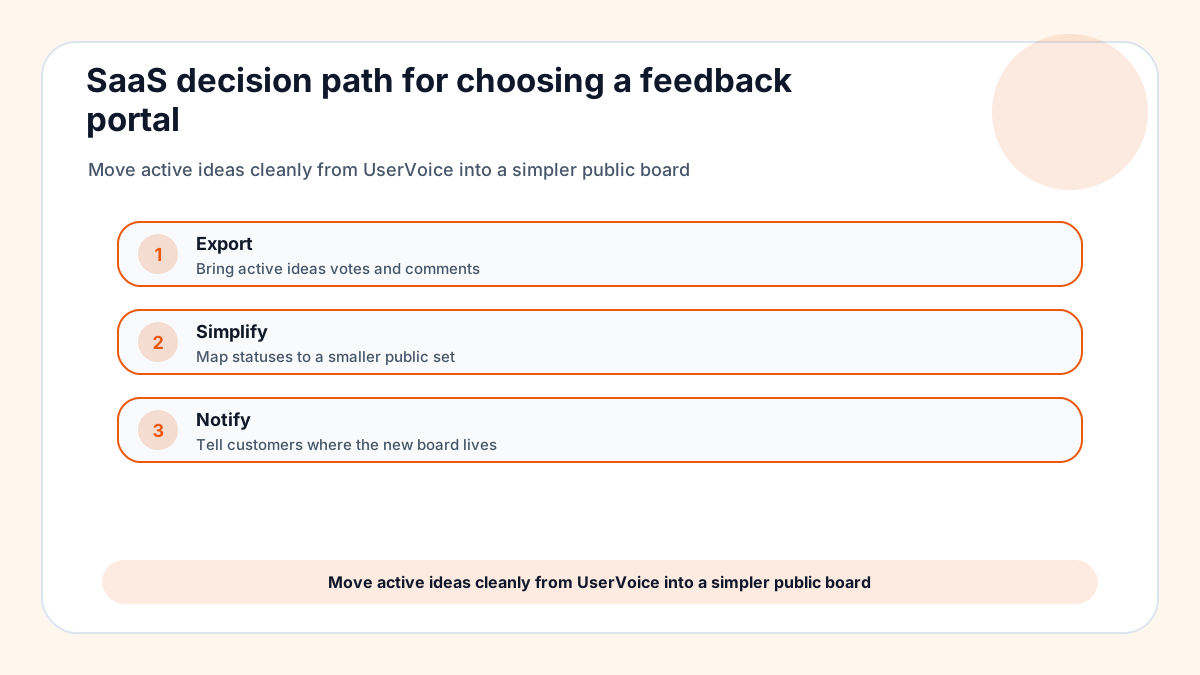
Export active ideas, customer votes, comments, statuses, and category labels. Decide which stale requests should be archived before import so the new portal does not inherit years of ambiguity.
Map old statuses to a simpler set. Too many states confuse customers; too few states make the team look unresponsive. Under review, planned, in progress, shipped, and not planned are usually enough for a lean SaaS board.
Announce the move with a short explanation: what changed, where customers can submit requests, and how the team will review ideas going forward. Preserve top-voted items so longtime users do not feel ignored.
Final selection checks before you migrate
Before choosing a UserVoice alternative, ask one teammate from support, one from product, and one customer-facing founder or account owner to test the same five requests. If they disagree about status, category, or next action, the problem is not only software; the team also needs clearer rules. A short operating note can explain who moderates new ideas, when duplicates merge, which requests become public, and how customers hear back. That note should travel with the migration because the cleanest portal still fails when no one owns review cadence.
Also test the customer side with a small group before announcing the switch widely. Invite a few active requesters, ask them to find an existing idea, add a vote, leave context, and understand the status label. Their confusion will reveal wording and navigation issues that a vendor demo cannot show.
For teams that want customer-facing feedback without a long implementation project, FeaturAsk keeps the portal focused on requests, moderation, votes, and practical follow-up.
How to compare 12 UserVoice alternatives by maturity
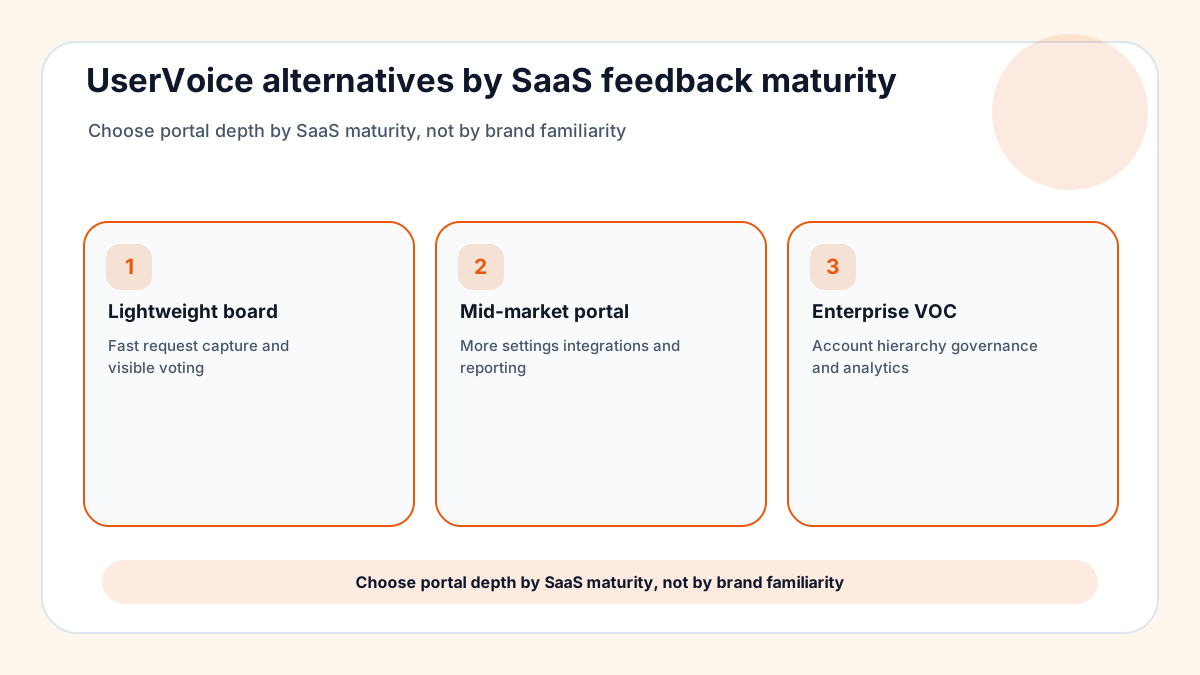
FeaturAsk, Canny, Upvoty, Frill, FeedBear, Hellonext, and FeatureOS are most relevant when the SaaS team wants a customer-facing place for ideas, votes, and visible statuses. They differ in pricing, setup, roadmap communication, customization, and how much product-process depth they expect. The right choice depends on whether the team wants a lightweight request board or a broader feedback hub.
Productboard, Aha! Ideas, ProdPad, and Craft.io belong in a different category. They are better when feedback must connect to roadmaps, product strategy, releases, and internal planning. Pendo and similar platforms add in-product behavior and engagement. Savio focuses on sales and success feedback tied to accounts. These tools can be excellent, but they may be excessive for a small SaaS team that has not yet proven request volume.
A useful comparison includes customer experience, staff workflow, integration needs, and annual cost. Customer experience asks whether users can submit and find ideas quickly. Staff workflow asks whether the team can moderate, merge, tag, and update requests every week. Integration needs ask whether feedback must connect to CRM, support, analytics, or planning tools. Annual cost asks whether the tool is proportionate to the business stage.
Migration details from UserVoice
The migration should clean the feedback system, not only move it. Export active ideas, votes, comments, categories, and statuses. Archive stale items that no longer match the product. Merge duplicates before inviting customers into the new board. Preserve top-voted requests so long-time users do not feel their participation was erased.
Status mapping deserves attention. A large old portal may have many states that made sense internally but confused customers. A smaller SaaS board can often use under review, planned, in progress, shipped, and not planned. Each status should include a short meaning so customers know whether the team is gathering evidence, committed to work, actively building, or declining.
Affordable replacement path
If budget is the main reason to leave UserVoice, avoid replacing it with another oversized system. Start with the portal behavior customers actually use: request submission, voting, comments, moderation, and updates. Add advanced analysis only when the team has enough volume to need it. That sequence gives small SaaS companies a feedback loop now and leaves room to mature later.
Questions to ask each UserVoice alternative vendor
Ask how duplicate requests are merged and whether voters stay attached to the surviving idea. Duplicate handling matters because customers often describe the same need with different words. A poor merge process fragments demand and makes prioritization look weaker than it is.
Ask how customer segments are stored. A vote from a trial user, an admin, a power user, an agency partner, and an enterprise buyer may represent different business value. The alternative does not need enterprise complexity for every team, but it should preserve enough context to avoid flat popularity contests.
Ask what customers see after a status changes. A feedback portal is partly a communication system. If requesters cannot understand why an idea moved to planned, shipped, or not planned, the team loses some of the trust it hoped to build.
Ask how much setup is required before the first public request can be collected. Small SaaS teams should be suspicious of tools that need a long taxonomy project before launch. It is usually better to start with a clean board, learn from real submissions, and refine categories after patterns appear.
Ask how exports work. A team leaving UserVoice already understands why portability matters. The new tool should let the company keep its customer feedback if pricing, ownership, or workflow needs change again.
When to keep UserVoice instead of switching
Keeping UserVoice can be the right decision if the current portal already has strong customer participation, clean categories, trusted statuses, and integrations the team relies on. Switching tools just to reduce annoyance can create more disruption than value. In that case, improve governance first: archive stale ideas, simplify labels, and publish a clearer review cadence.
Switch when the gap is structural. If pricing no longer fits, customers avoid the portal, the team cannot manage duplicates, or the workflow is too heavy for the company stage, a replacement is justified. The key is to name the problem before comparing vendors so the new tool is selected for a real operating need rather than general dissatisfaction.
Choose the portal that matches your maturity
The best UserVoice alternative depends on maturity. Early SaaS companies usually need clear request capture, voting, moderation, and status communication. Growing teams may need account context, integrations, and richer reporting. Larger organizations may need formal product planning and governance. Do not let a vendor category decide the workflow. Decide what customer loop you want to maintain, then choose the tool that lets the team run that loop with the least avoidable complexity.
A final governance rule should be decided before launch: who can change public statuses, and what evidence is required for each change? Without that rule, a new UserVoice alternative can create the same confusion as the old portal. Support may want quick updates, product may want more evidence, and founders may want to avoid promises. A short rulebook lets the team move faster while keeping customer expectations realistic.
The best replacement projects include a sunset plan for the old portal. Keep the old board readable for a short transition period, point customers to the new location, and explain which requests were migrated. This reduces confusion and helps active contributors understand that their past votes still matter.
Migration rehearsal before the announcement
Choose one migrated request, place it in the new portal, set the public status, and decide which customers should hear about the move. If the path feels confusing, simplify the replacement workflow before announcing it widely.
For portal migration, assign one person to monitor the first two weeks of new submissions. Early cleanup prevents customers from learning the wrong way to use the board.
This monitoring window is short, but it catches category confusion, duplicate wording, and status labels before they become habits.
A simple launch checklist prevents avoidable migration confusion.
That checklist should be reviewed before the first public announcement.