UserVoice vs Canny: Features, Pricing, and Fit
Comparing UserVoice vs Canny is really a choice between two levels of feedback operations. Both products help teams collect and act on customer ideas, but the day-to-day experience, buying motion, and cost profile are different. UserVoice now presents itself as a customer-intelligence platform with pricing that starts at $16,000 per year and no per-seat charges, according to its public pricing page. Canny publishes a self-serve pricing page with Free, Core, Pro, and Business options; its structured page data lists Free at $0, Core at $19 per month, and Pro at $79 per month. Those numbers are not the whole story, but they are a useful signal: one option is usually bought as a larger customer-intelligence investment, while the other can be tested more gradually.
This guide is not a recycled feature checklist. It uses public references from UserVoice pricing, Canny pricing, and Canny's published product areas such as feedback boards, roadmaps, and changelogs. It also connects the decision to practical feedback operations: intake, duplicate management, segmentation, prioritization, customer communication, and migration risk. For adjacent comparisons, see UserVoice alternatives, Canny alternatives, and product feedback tools.
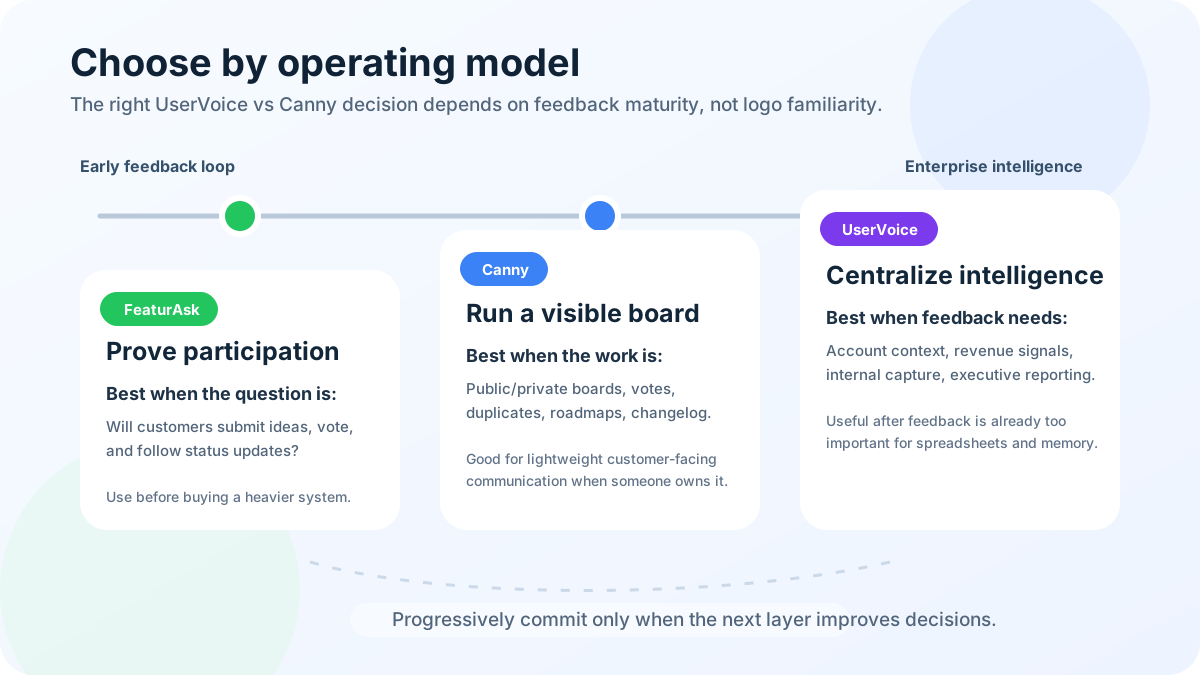
Quick verdict: choose by operating model, not logo
Choose UserVoice when feedback is already important enough to justify a formal customer-intelligence workflow. That usually means a B2B product with account relationships, customer success participation, sales influence, and a need to connect requests to revenue, segments, and integrations. UserVoice can make sense when the company has enough feedback volume that manual tagging, spreadsheets, and Slack threads are hiding important demand.
Choose Canny when the team wants a public or private feedback board, voting, moderation, roadmap communication, and a lighter path into feedback management. Canny is easier to evaluate when the question is, "Can we collect ideas, merge duplicates, and show customers what changed without building our own portal?" The lower self-serve entry points can reduce procurement friction, but the team still needs discipline to keep the board from becoming a graveyard.
Choose neither immediately if the real problem is unproven. If customers are not yet submitting ideas in a consistent place, a simpler public request board may be the best first experiment. FeaturAsk gives small teams a clean way to collect requests, let users vote, and publish status updates before committing to a heavier feedback suite.
What each tool is optimized to solve
UserVoice is strongest when feedback must become structured customer intelligence. Its public positioning emphasizes centralizing feedback, surfacing insights, and helping product teams make decisions. That matters when feedback arrives from support tickets, sales calls, success notes, executive escalations, and in-product prompts. The value is not merely receiving requests; it is turning noisy demand into a decision system that product leaders can defend.
Canny is strongest when the team needs a visible feedback loop with a relatively approachable setup. It is commonly evaluated for feedback boards, voting, roadmaps, changelogs, and customer-facing updates. The product can be useful for SaaS teams that want customers to find existing requests before creating duplicates, add context, subscribe to progress, and see what shipped. It can also serve as a lightweight product discovery input when teams are not ready for enterprise-grade customer intelligence.
The overlap is real. Both can collect feedback and communicate status. The distinction is where the center of gravity sits. UserVoice leans toward structured analysis for organizations with many customer inputs. Canny leans toward accessible feedback collection and communication. Your buyer scorecard should reflect that distinction instead of treating every feature label as equal.
Pricing comparison: visible price is only the first layer
Public pricing creates different evaluation paths. UserVoice's pricing page currently says plans start at $16,000 per year, with no per-seat charges and a 30-day trial available through a demo motion. That is a meaningful annual commitment for a small team, but it may be reasonable for a company that needs centralized feedback across departments and wants predictable costs as more employees participate.
Canny's pricing page publicly describes multiple tiers and includes a Free plan. Its structured data lists Core at $19 per month and Pro at $79 per month, with Business handled separately. This makes it easier for a team to test a board, evaluate participation, and upgrade when volume or advanced controls justify it. The catch is that the invoice is not the only cost. A cheap plan can become expensive if no one owns moderation, deduplication, and status updates.
Build a total-cost model with four lines: subscription, setup, weekly administration, and opportunity cost. Setup includes imports, categories, permissions, and customer communication. Weekly administration includes reviewing new ideas, merging duplicates, applying labels, responding to comments, and updating statuses. Opportunity cost includes the meetings and roadmap debates the tool is supposed to improve. A platform wins only if it reduces the total cost of making better product decisions.
Feature workflow comparison
Start with intake. Can customers submit feedback from the places where frustration or ideas occur? Can internal teams add feedback on behalf of accounts without losing the original wording? Can the product prevent duplicates by showing related requests before submission? Intake quality matters because poor intake contaminates every later decision.
Then evaluate organization. UserVoice should be tested on its ability to centralize feedback across customer-facing teams and preserve account context. Canny should be tested on board clarity, categories, voting, moderation, and whether users can understand the request landscape without help. In both cases, the team should check how easy it is to merge duplicates without deleting valuable comments.
Next evaluate prioritization. Voting is useful, but votes alone are not strategy. A request from ten free users may matter less than a painful blocker for three ideal customers; a request with low vote count may support a high-value segment. UserVoice may fit teams that need richer customer intelligence around those tradeoffs. Canny may fit teams that mainly need visible demand, comments, and simple roadmap communication.
Finally evaluate communication. Customers care less about your internal scoring model than whether they feel heard. Look for status updates, subscriber notifications, changelog habits, and a public explanation of what different statuses mean. A simple board with accurate statuses is better than a sophisticated system nobody maintains.
Rollout checklist for a low-regret decision
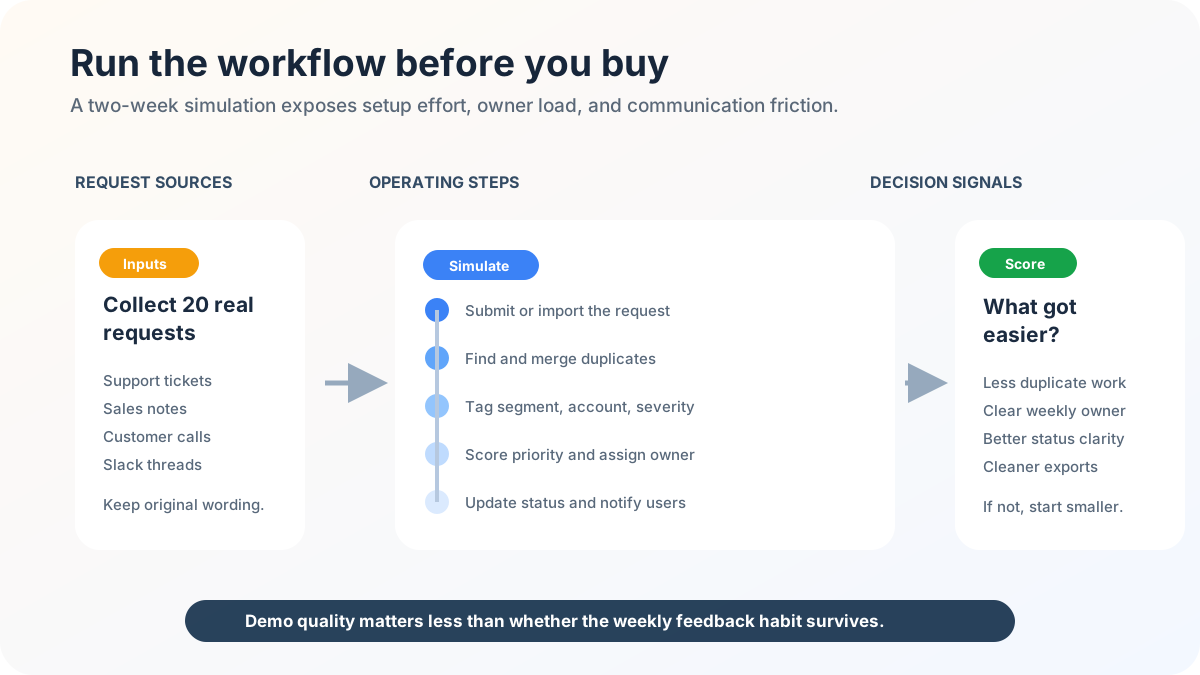
Run a two-week workflow simulation before signing a long contract. Export twenty recent requests from support, sales, Slack, and customer calls. Put each request through the imagined process: submission, duplicate check, tag, segment, priority review, status update, and final communication. Track where the work becomes easier and where it becomes heavier.
Interview the people who will touch the system weekly. Support may care about deflecting repeat tickets. Customer success may care about account visibility. Product managers may care about evidence quality. Marketing may care about changelog language. Executives may care about revenue exposure. A tool that delights one group but fails the weekly owner will not last.
Define your status vocabulary before launch. "New," "under review," "planned," "in progress," "shipped," and "not planned" are enough for many teams. Avoid vague statuses that sound reassuring but do not guide expectations. Also decide how often the board is reviewed. A weekly review cadence is usually better than a heroic quarterly cleanup.
If you want to validate participation before procurement, FeaturAsk can be used as a focused request board while you learn which categories, statuses, and customer behaviors actually matter.
Migration and data ownership questions
Ask export questions early. Can you export ideas, comments, votes, labels, statuses, timestamps, and user or account references? Can internal notes be separated from public comments? Can you preserve canonical customer wording if you later move systems? These questions are boring until they become urgent.
Also ask about identity. If customers vote publicly, how are users authenticated? If internal teams submit on behalf of customers, can the original source be preserved? If a large account has multiple voters, does the tool show account-level demand or only individual activity? These details shape whether the data can support product decisions.
For small teams, the safest path is often progressive commitment: start with a lightweight board, learn the request taxonomy, then migrate only when the next system will clearly improve decisions. A messy migration into a powerful tool is still messy.
When FeaturAsk is the better first step
A team that has not proven demand for a feedback process should not start by buying complexity. It should start by making the feedback loop visible. FeaturAsk is built for that moment: collect feature requests, let users vote, and publish status updates without turning feedback operations into a second job. It is especially useful when the team wants to know whether customers will participate before comparing enterprise workflows.
The pricing also fits an experiment. FeaturAsk is $29.95/year, includes a one month free trial, and does not require a credit card to start. That makes it practical to test a public request board, learn which requests repeat, and decide later whether UserVoice, Canny, or another system is worth the heavier commitment.
Buyer scorecard
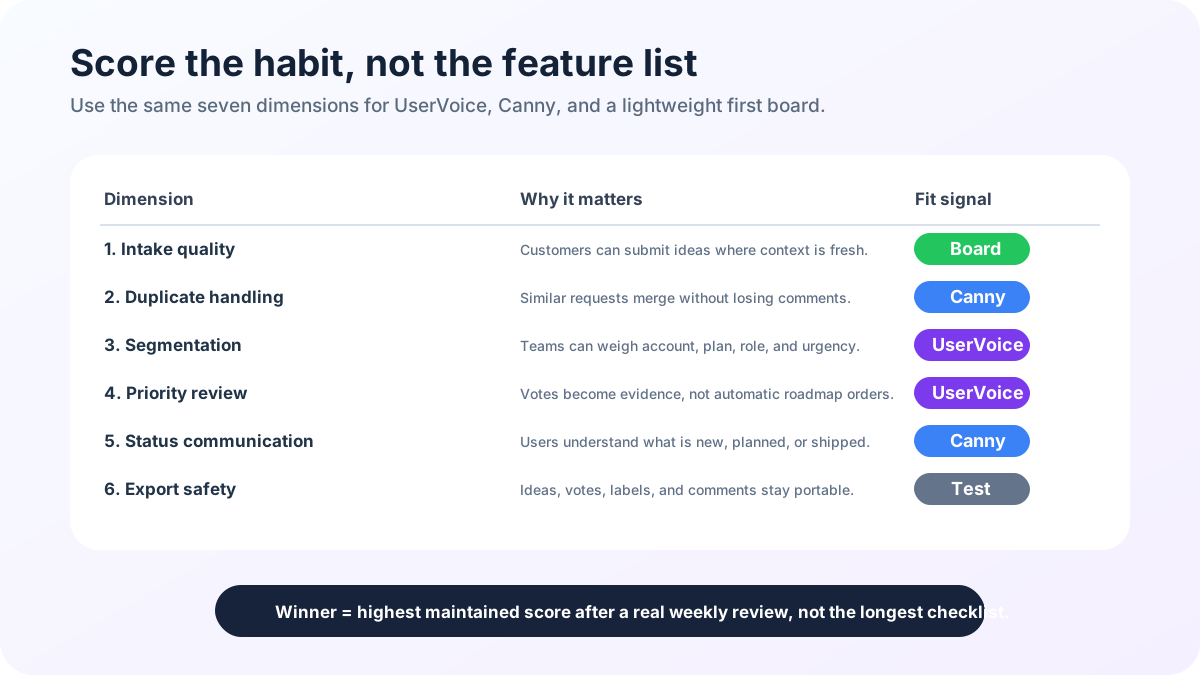
Score each product from one to five on seven dimensions: customer-facing submission, internal feedback capture, duplicate handling, segmentation, prioritization, status communication, and export quality. Then add a separate score for operational fit: can your team maintain this system every week? A tool should not win because it has more features; it should win because it makes the feedback habit easier to repeat.
Use this interpretation: if UserVoice wins mainly on segmentation and enterprise analysis, it is likely a better fit for a mature B2B feedback program. If Canny wins on speed, board clarity, and customer communication, it is likely a better fit for a team building a visible feedback loop. If neither option scores well against your current capacity, start smaller and collect evidence first.
Red flags during demos
A polished demo can hide the work your team will inherit. During a UserVoice vs Canny evaluation, ask the vendor to show the boring parts slowly. Watch a duplicate request get merged. Watch a status change notify subscribers. Watch an internal teammate add feedback on behalf of a customer. Watch an export leave the system. If any of those steps require awkward workarounds, the weekly operating cost will be higher than the sales conversation suggests.
Pay attention to language too. A board full of internal product vocabulary will not invite useful customer feedback. Customers describe problems in their own words: "we need clients to see what is happening," "we keep answering the same request," or "we cannot tell which ideas are being considered." The tool should let you preserve that language while still organizing it for product decisions.
Security and permissions deserve a practical check. Some teams need public transparency; others need private boards for enterprise accounts, beta groups, or internal feedback. Decide which requests can be public, which comments should stay private, and who can change statuses. The wrong permission model can either silence useful participation or expose conversations that should remain internal.
What to measure after launch
The first thirty days should measure participation quality, not vanity volume. Track the percentage of new requests that are duplicates, the number of requests with useful customer context, the time from submission to first review, and the number of status updates customers receive. Also track whether support and success teams actually search the board before creating new requests.
After sixty to ninety days, measure decision impact. Did feedback evidence change a roadmap priority? Did a status update reduce repeat tickets? Did a declined request become easier to explain because the reasoning was public? Did customer-facing teams trust the system enough to stop maintaining side spreadsheets? These are better indicators than raw votes alone.
If the team is still unsure, run the same measurement on a smaller board first. FeaturAsk keeps the loop simple enough to learn whether public requests and voting create value before you pay for deeper workflow complexity.
Use a final decision test tied to the next quarter, not the demo call. If the team mainly needs public intake, visible voting, and honest status updates, start with the smallest system that will be maintained every week. If leadership needs account-weighted evidence, revenue segmentation, and cross-functional reporting, the larger platform may justify its cost. The right answer is the one that produces cleaner customer conversations after launch, not the one with the longest feature grid.
FAQ
Is UserVoice more expensive than Canny?
Public pricing suggests very different entry points. UserVoice states that pricing starts at $16,000 per year, while Canny publishes a Free plan plus lower monthly self-serve tiers. Always compare total workflow cost, not only subscription price.
Which is better for a small SaaS team?
Canny is often easier to test for a small SaaS team that wants a visible request board and roadmap communication. UserVoice may be a better fit when customer intelligence, account context, and cross-functional feedback volume justify a larger platform.
Can FeaturAsk replace both?
FeaturAsk is not trying to replace every enterprise feedback workflow. It is a practical first step for teams that need a public request board, voting, and status updates at $29.95/year with a one month free, no credit card trial.
What should I test before buying?
Test whether customers submit useful ideas, whether duplicates can be merged cleanly, whether a product owner can review the queue weekly, and whether status updates reduce repeat questions.