Employee Feedback: Examples and Tips for Effective Collection
What employee feedback is and why collection quality matters
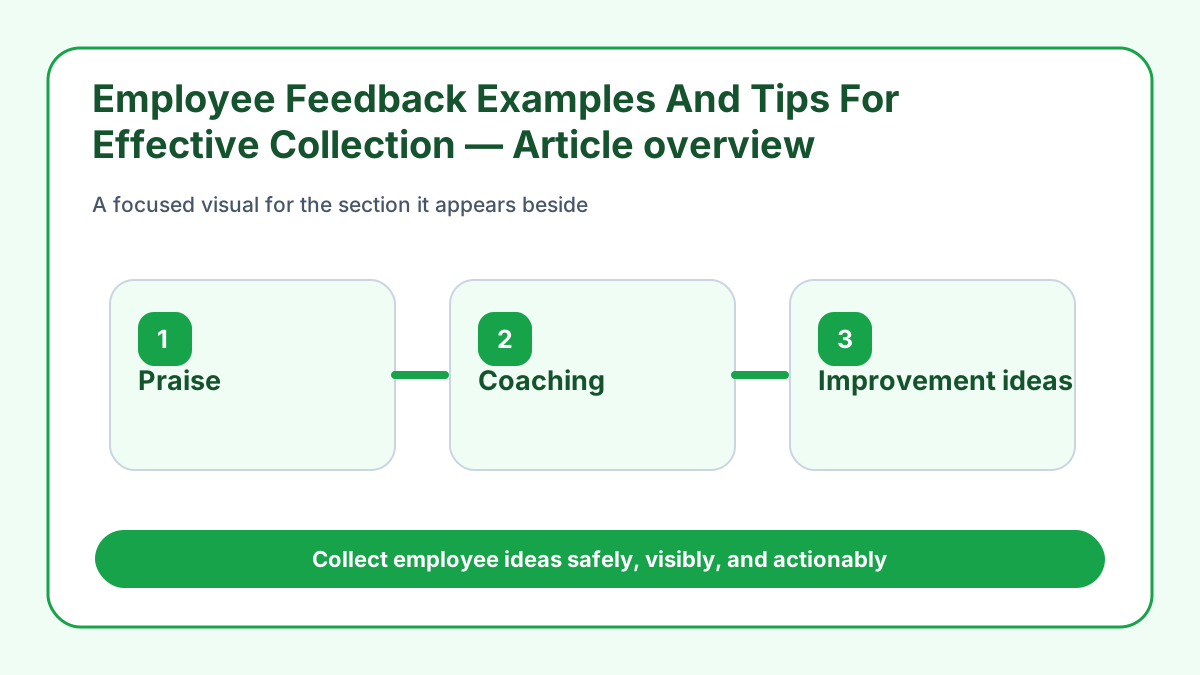
Employee feedback is information employees share about work quality, manager support, team processes, tools, culture, priorities, and the employee experience. It includes praise, concerns, improvement ideas, peer observations, upward feedback, and suggestions for how the organization can work better. The value is not in collecting more comments; it is in collecting comments that can be understood, prioritized, and acted on.
Poor collection creates noise. A generic survey may show that people are frustrated, but not why. A suggestion box may gather ideas, but not enough context to evaluate them. A manager may hear important feedback in a one-on-one, but the pattern disappears if there is no shared system. Effective collection keeps the human tone while adding enough structure to compare signals across teams.
For small businesses and lean SaaS teams, employee feedback often overlaps with customer feedback. Support, sales, onboarding, operations, and product teams hear pain points before leadership sees them in metrics. A lightweight internal idea board can help those teams submit workflow improvements, vote on recurring problems, and connect internal requests with customer needs.
Common forms of employee feedback
Performance feedback focuses on how someone is doing in a role. It should be specific, timely, and connected to expectations. Instead of saying “be more proactive,” a manager might say, “In the last sprint review, you identified two risks early; keep raising those before planning closes.” Good performance feedback gives employees a behavior they can repeat or improve.
Peer feedback captures collaboration quality. Teammates can see communication habits, handoff issues, meeting behavior, documentation gaps, and reliability in a way managers may miss. Peer comments work best when they are structured around observable behavior and shared goals, not personality judgments.
Upward feedback helps managers improve. Employees need safe ways to say when priorities are unclear, meetings are wasteful, tools are slowing them down, or decisions are not explained. Recognition and praise also count as feedback because they show what the team values. A complete system includes positive, corrective, and idea-oriented signals.
Employee feedback examples you can adapt
Positive feedback example: “Your customer handoff notes this week made the support transition faster. The summary of user goals, open risks, and next steps helped the team respond without re-asking the customer for context.” This works because it names the behavior and the impact.
Constructive feedback example: “The last release checklist was updated after QA began, which created rework. For the next release, please publish the checklist before the QA kickoff and flag any uncertainty in the planning doc.” It is direct but not personal, and it includes a practical next step.
Employee-to-company suggestion example: “Several trial users ask the same setup question. Could we add a request widget or feedback prompt on the onboarding page so customers can suggest missing help content?” This kind of internal feedback connects employee observation with customer experience. Related processes are covered in collecting in-app feedback.
How to collect employee feedback without creating fatigue
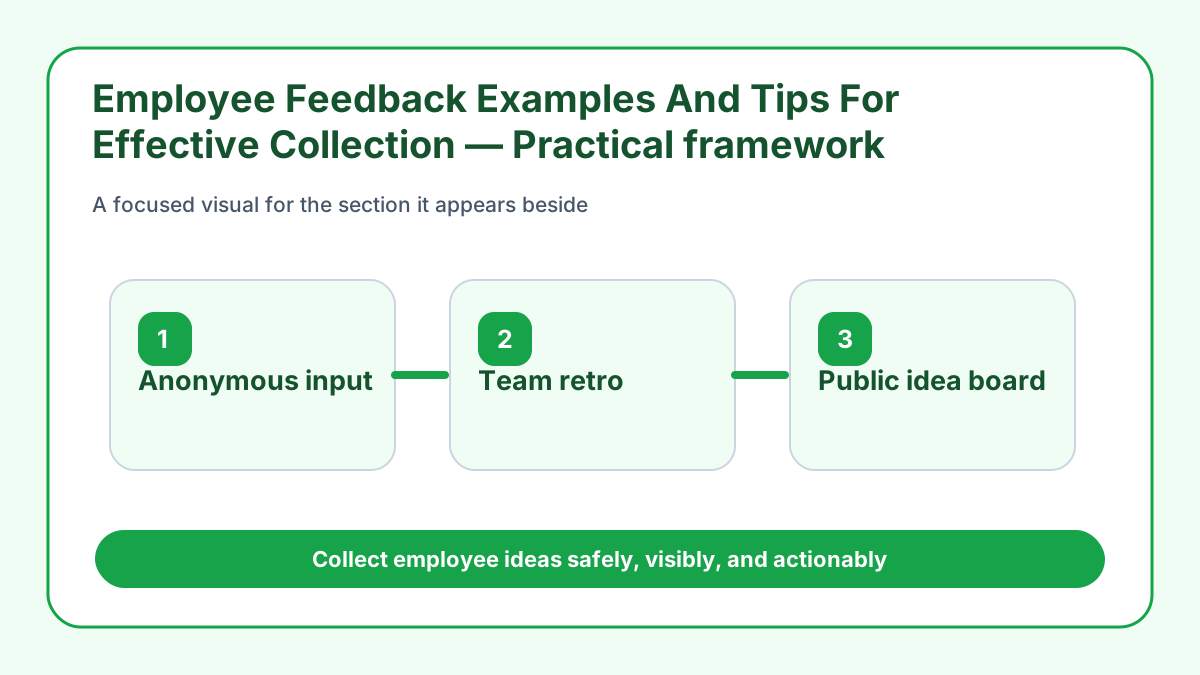
Use the smallest channel that fits the question. A pulse survey works for broad sentiment, a one-on-one works for sensitive topics, a retrospective works for team process, and an idea board works for ongoing operational improvements. Do not send a long survey when a short prompt would do.
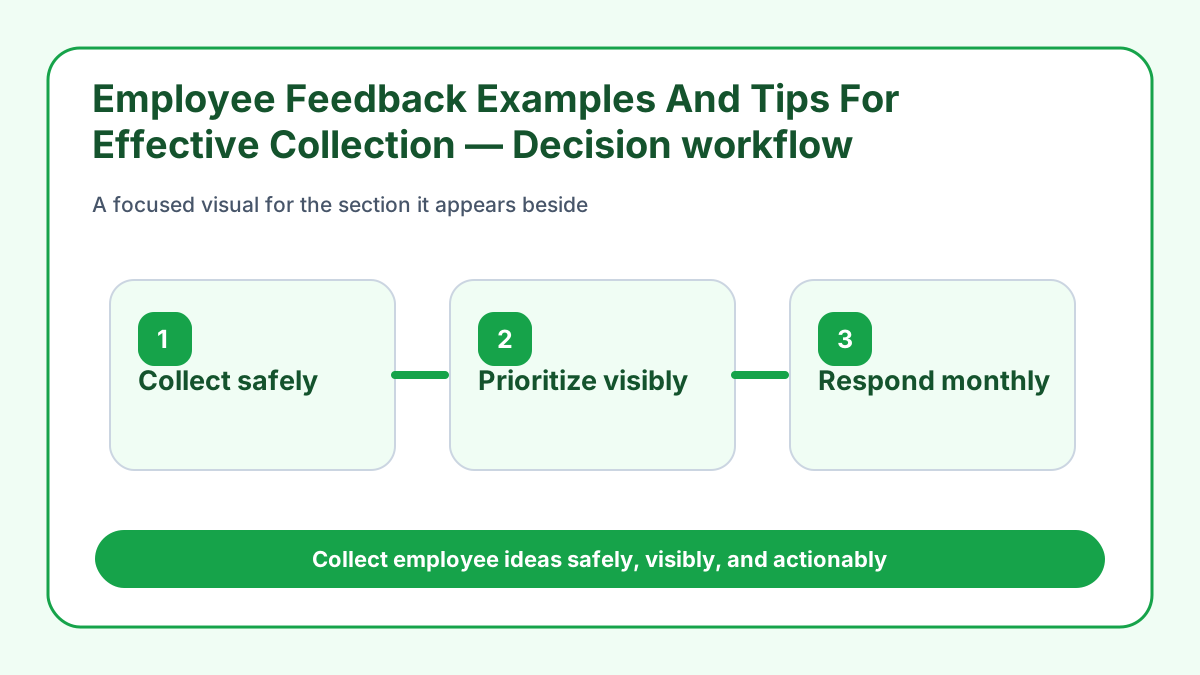
Set a response rhythm before collecting. Employees quickly learn whether feedback matters. If nothing changes and no explanation is given, participation falls. A monthly “you said, we did, we learned” update is often enough for small teams. The key is showing which ideas were accepted, which were deferred, and why.
If your team needs a simple place to capture employee improvement ideas, FeaturAsk can be used internally as a lightweight request board. For $29.95/year, with a 30-day free trial and no credit card required, a team can collect suggestions, let colleagues vote, and review priorities without buying an enterprise employee-experience suite.
Tips for giving feedback people can use
Be specific. Feedback should reference a situation, behavior, and impact. “Great job” feels nice but teaches little. “The new help-center draft reduced setup questions because it answered the three issues customers kept raising” is more useful. The same applies to corrective comments: name the behavior, not the person’s character.
Be timely but not reactive. Immediate feedback can help when the event is fresh, yet emotional feedback often lands poorly. For serious topics, write the core observation, check the facts, and choose a calm moment. Employees should experience feedback as a tool for growth, not a surprise attack.
Ask for feedback on the system itself. Are employees comfortable responding? Are questions clear? Are anonymous channels needed for some topics? Are managers closing the loop? This meta-feedback is often missed, but it determines whether the program keeps improving. Gallup’s workplace research consistently emphasizes the importance of engagement and manager practices; see <a href="https://www.gallup.com/workplace/349484/state-of-the-global-workplace.aspx" rel="nofollow">Gallup workplace engagement research</a> for broader context.
Turning employee feedback into business improvements
A practical feedback system has four steps: collect, clarify, prioritize, and act. Clarification matters because employee suggestions may be symptoms rather than root causes. A request for a new tool might actually mean the workflow is unclear. A complaint about meetings might mean decisions are spread across too many channels.
Prioritize employee feedback with the same discipline you would use for customer requests. Consider reach, severity, effort, risk, and strategic fit. Some issues are urgent because they affect trust or safety. Others are valuable but can wait. A transparent backlog helps employees see that “not now” is different from being ignored.
To connect internal ideas with product decisions, compare employee feedback against customer requests in your customer feedback tools stack. FeaturAsk gives smaller teams an affordable way to keep those ideas visible, voted on, and organized for $29.95/year after a one-month free trial, no credit card required.
Employee feedback templates for common situations
Use praise when you want a behavior repeated. Template: "When you did [specific behavior], it helped [person/team/customer] achieve [result]. Please keep doing it because [reason]." Example: "When you summarized the top customer questions before the product meeting, it helped engineering understand the real onboarding blockers. Please keep bringing that evidence because it makes roadmap discussions more grounded."
Use corrective feedback when a behavior needs to change. Template: "In [situation], [observable behavior] caused [impact]. Next time, please [specific change]." Example: "In the last support handoff, the missing reproduction steps caused QA to repeat the investigation. Next time, please include browser, account type, screenshots, and expected result before assigning the ticket."
Use upward feedback when a manager or leader can improve the work system. Template: "The team is experiencing [friction]. It affects [result]. Could we try [specific improvement] for [time period]?" Example: "The weekly priorities change after sprint planning, which causes unfinished work. Could we keep a visible decision log and mark which changes are urgent versus next-cycle candidates?"
Anonymous, public, and private channels
Anonymous feedback is useful when the topic involves safety, trust, fairness, or fear of retaliation. It should not be the only channel because anonymous comments can lack context, but it gives employees a safer way to raise sensitive issues. Organizations should explain who can see responses and how follow-up works.
Public idea boards are useful for operational improvements, tooling requests, documentation gaps, and customer-facing ideas. They let employees vote, add context, and avoid duplicate suggestions. This is where a lightweight request tool can support a team without becoming an HR system.
Private one-on-ones are still necessary for coaching, career development, interpersonal issues, and performance conversations. The best programs use all three channels. Match the channel to the risk, sensitivity, and decision required.
A collection cadence that prevents fatigue
Use a quarterly engagement survey for broad themes, a monthly team retro for workflow issues, weekly one-on-ones for personal context, and an always-on idea board for improvements that can appear anytime. This combination prevents every topic from becoming a long survey.
Close the loop in a visible format. A short monthly update can list ideas accepted, ideas under review, ideas not planned, and one lesson learned. Employees do not need every request to be approved; they need evidence that feedback is read and considered.
If your team wants an always-on board for workplace improvement ideas, FeaturAsk is a simple way to collect suggestions, votes, and comments in one place. It is $29.95/year with a 30-day free trial and no credit card required, which is practical for small teams that do not need a full employee-experience platform.
How to evaluate employee feedback fairly
Employee feedback should be evaluated by pattern, impact, and actionability. One comment may reveal an urgent risk, but most operational improvements become clearer when several people describe the same friction from different angles. Look for repeated themes across roles, teams, and time periods before assuming a problem is isolated.
Impact matters because not every suggestion deserves the same response. A request that improves customer handoffs, reduces rework, prevents missed deadlines, or protects employee trust should move faster than a nice-to-have preference. Small teams can use a simple score: how many people are affected, how painful the issue is, how hard it is to fix, and who needs to approve the change.
Actionability is the final filter. Feedback such as “communication is bad” needs a follow-up question. Does the employee mean unclear priorities, too many channels, slow decisions, missing documentation, or meetings without owners? The collection process should make clarification normal. A good manager or team lead thanks the person, asks for an example, and turns the theme into a specific improvement candidate.
Connecting employee and customer feedback
Employees often see customer pain before dashboards do. Support agents hear repeated setup questions. Sales teams hear objections. Designers notice usability confusion. Operations teams see where internal workarounds are hiding product problems. If those insights stay in private conversations, the organization loses useful product intelligence.
Create a habit of translating employee observations into customer-facing opportunities. An employee suggestion might become a help article, a product fix, a feature request, a workflow change, or a customer-education update. This is where an internal board helps: the team can vote on recurring friction and preserve examples before they disappear.
A useful final rule is to separate feedback about people from feedback about systems. If several employees struggle with the same handoff, tool, policy, or customer question, the first response should be to inspect the system rather than blame individuals. That mindset makes feedback less threatening and more productive. Employees become more willing to contribute when they see that suggestions lead to clearer processes, better tools, and fewer repeated mistakes.
FAQ about employee feedback
What are the best examples of employee feedback?
The best examples are specific, behavior-based, and tied to impact. They describe what happened, why it mattered, and what should continue or change. Vague praise and vague criticism are both less useful than concrete observations.
How often should managers ask for feedback?
Managers should ask for light feedback continuously in one-on-ones and retrospectives, then use broader surveys less often. The right cadence depends on team size and change rate, but every collection cycle should include visible follow-up.
Can FeaturAsk replace HR performance software?
No. FeaturAsk is not an HR performance-management system. It can support internal suggestion collection, operational improvements, voting, and prioritization for small teams that want a simple feedback board.