Top 11 User Feedback Analysis Software for Product Teams
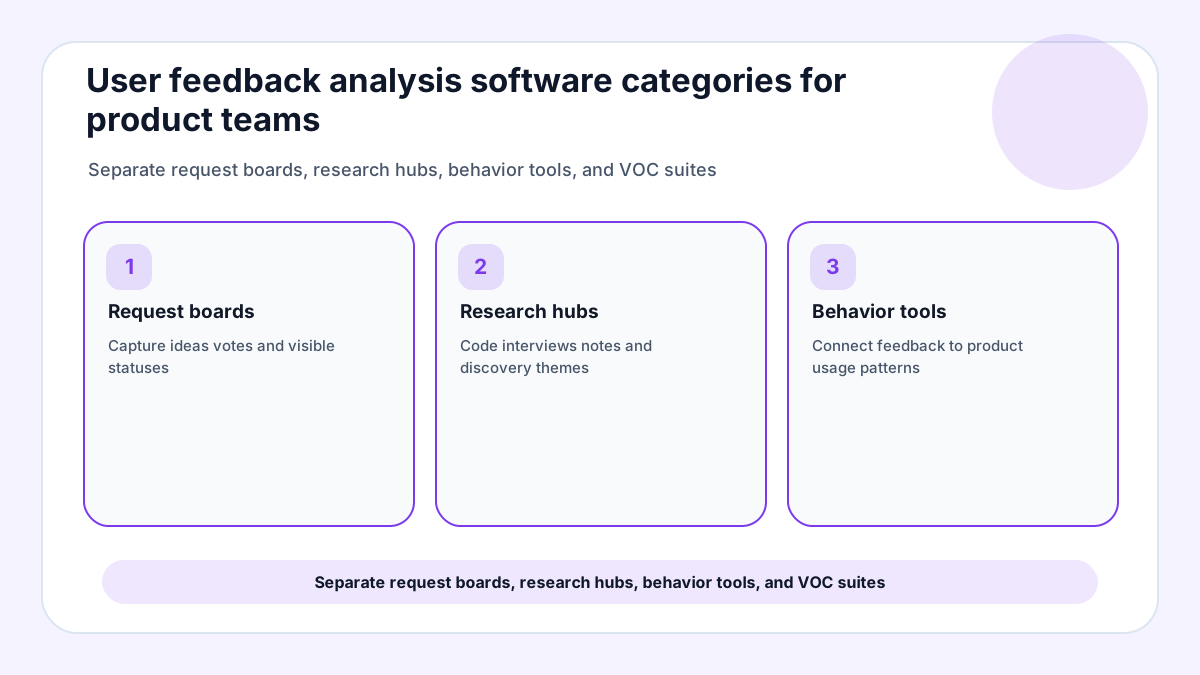
User feedback analysis software should help product teams understand what customers are asking for, why it matters, and which decisions deserve attention next. A useful shortlist separates analysis needs into practical categories: request boards, product discovery repositories, behavior analytics, survey platforms, support intelligence, and enterprise experience suites.
The phrase analysis software can be misleading. Some tools analyze unstructured interviews, some quantify in-product behavior, some prioritize feature requests, and some centralize voice-of-customer programs. A small SaaS team may need one focused request board, while a mature product organization may need integrations across support, sales, research, and analytics.
For a product team that mainly needs organized feature requests and votes, FeaturAsk is a lightweight alternative at $29.95/year, with one month free and no credit card required before the team tests the workflow.
Before buying, review FeaturAsk resources on product feedback tools, feedback board software, and customer feedback form questions to clarify what evidence the software must collect. For outside grounding, see Hotjar's customer feedback analysis overview and Gartner's voice of the customer definition.
Match the software category to the evidence problem
Request-board tools are best when the team needs customers to submit, vote on, and discuss product ideas. Research repositories are best when interviews, calls, and notes need coding. Analytics platforms are best when behavior patterns need measurement. Survey tools are best when the team needs structured answers from a defined audience.
Support intelligence tools can expose repeated pain after customers ask for help. Sales and CRM integrations help when enterprise prospects reveal revenue-weighted demand. No single category solves every feedback problem without trade-offs.
The safest selection method is to write the evidence gap before listing vendors. If the gap is repeated feature demand, do not buy an interview repository first. If the gap is unclear user motivation, a voting board alone will not answer it.
11 tools and where they fit
FeaturAsk fits teams that want simple request capture, voting, moderation, and a manageable dashboard. Productboard and Aha! Ideas fit organizations that connect feedback to formal product planning. UserVoice and Canny are established portal options for teams that want public boards with more configuration.
Dovetail is strong for research analysis and interview synthesis. Pendo connects feedback with product usage and in-app guidance. Usersnap focuses on visual feedback and bug context. Hotjar adds session behavior, heatmaps, and surveys for website experience questions.
Qualtrics XM serves broader experience-management programs. Savio helps sales and success teams connect customer requests to account context. A spreadsheet can still work for very early teams, but it usually fails once duplicates, votes, and status updates matter.
Evaluation criteria product teams forget
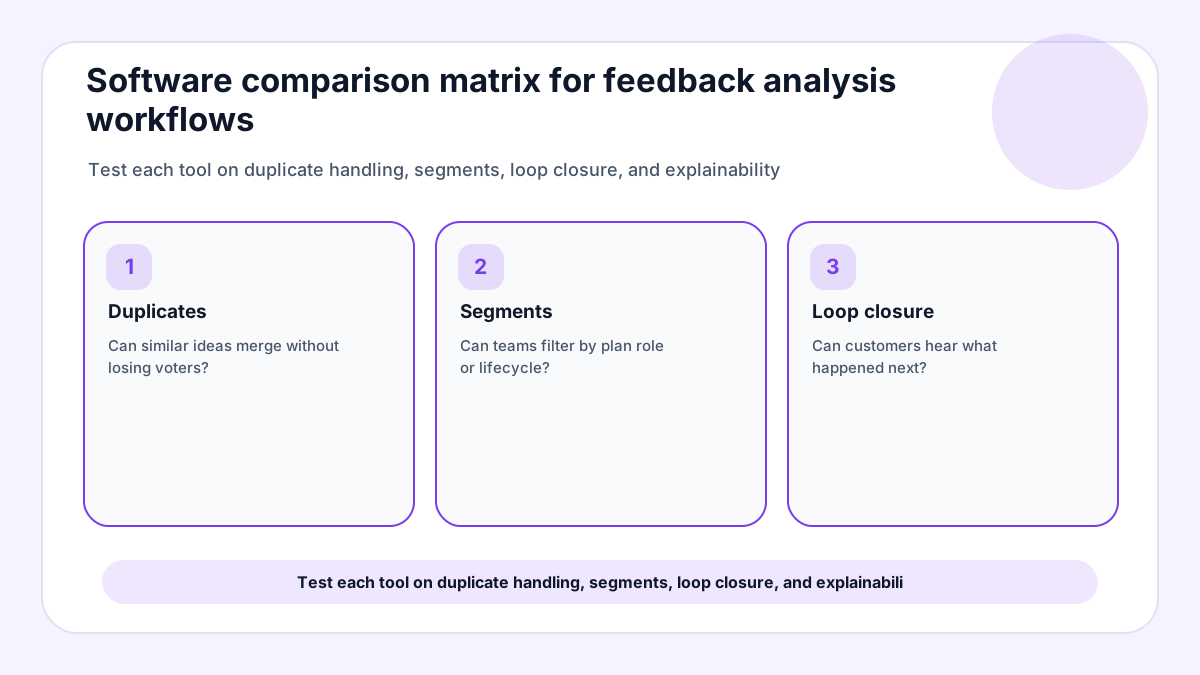
Look beyond feature lists. Ask how each tool handles duplicate merging, segment filtering, customer notification, export, permissions, moderation, and stale ideas. These details determine whether the system stays trusted after launch.
Assess the cost of interpretation. A tool that collects thousands of comments but cannot summarize themes by segment may create more work than it removes. A lean team should prefer fewer, cleaner signals over a huge unreviewed archive.
Check whether non-product teammates can participate safely. Support, sales, success, and founders often receive valuable feedback; the software should let them add context without letting every anecdote become a roadmap commitment.
If your comparison keeps drifting toward expensive suites, use FeaturAsk as the affordable request layer and add specialized research or analytics tools only where the evidence gap is real.
A buying workflow that prevents software sprawl
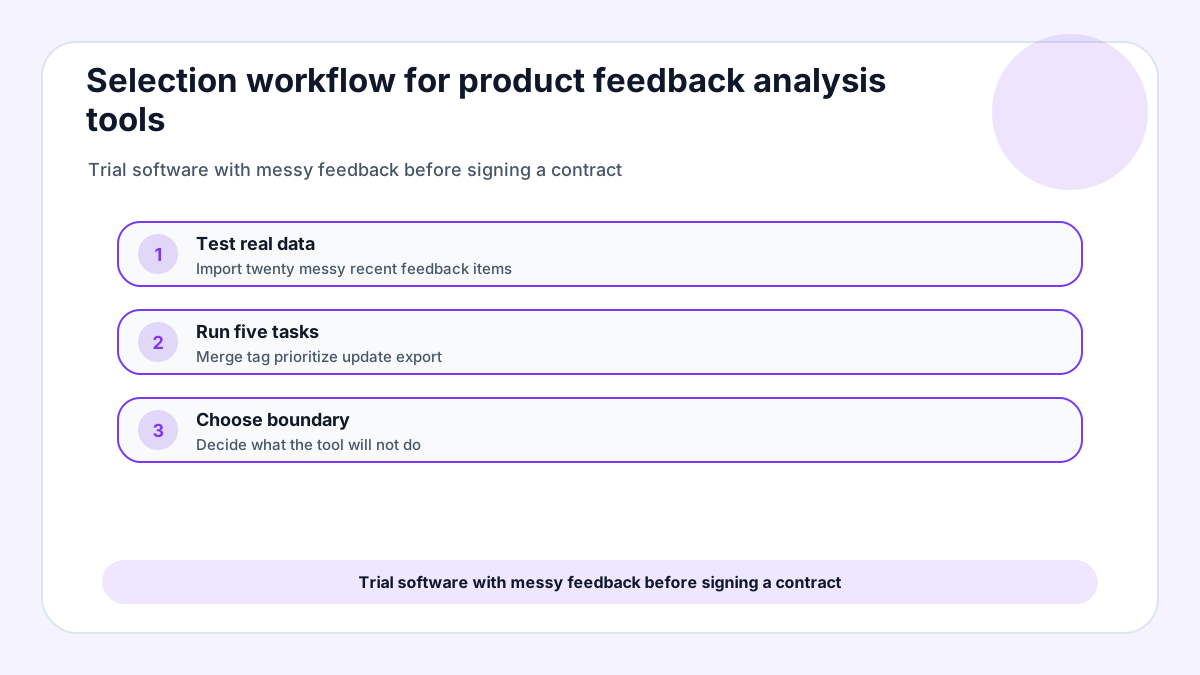
Collect twenty real feedback items from the last month and test them in each finalist. Include a feature request, a bug-like complaint, a sales objection, an interview quote, a survey response, and a repeated support theme.
Then attempt five tasks: merge duplicates, tag segment, attach evidence, change status, and explain the decision to a customer. If those steps feel slow during trial, they will feel worse when the board is live.
Decide what the tool is not responsible for. A request board should not replace product analytics. A survey platform should not become a public roadmap. Clear boundaries keep the stack understandable.
How to introduce analysis software to the team
Start with a small operating agreement. Define who reviews new feedback, which tags are mandatory, when requests move to planning, and how customers receive updates. Software without rules becomes another inbox.
Publish a short internal example of a good feedback item. Show the customer language, source, segment, desired outcome, evidence count, and chosen next action. People learn faster from one complete example than from a long taxonomy document.
After thirty days, audit whether the software changed decisions. If the team only collected more comments, tighten intake and review habits before adding another tool.
Software trial checkpoint
During a trial, import a messy mix of requests, survey answers, support notes, and interview quotes. The winning analysis tool should help the team explain the next action for each item without hiding uncertainty behind impressive dashboards.
Teams can start collecting product demand through FeaturAsk in minutes, then decide later whether interview repositories, session tools, or enterprise VOC platforms are worth adding.
How the 11 software categories differ in practice
FeaturAsk, Canny, UserVoice, Upvoty, FeedBear, and similar feedback-board tools are strongest when the team needs customers to submit requests, vote, and see status changes. They help turn scattered product demand into a visible queue. They are not replacements for interview synthesis or behavioral analytics, but they often solve the first problem a small product team actually feels.
Productboard and Aha! Ideas sit closer to formal product planning. They make more sense when feedback must connect to features, releases, accounts, internal notes, and portfolio decisions. That depth can be valuable, but it also assumes the team has the discipline and volume to justify the configuration.
Dovetail and other research repositories are better for qualitative discovery. They help teams code interviews, identify patterns in notes, and preserve research evidence. Pendo, Hotjar, and similar behavior-oriented platforms show what users do in the product or on the website. Qualtrics and larger experience suites can support survey programs and broader VOC work. Savio can help connect customer requests to account and revenue context.
Trial tasks that reveal the right tool
Do not judge analysis software from a demo dataset. Import a real support complaint, a feature request, a sales objection, an interview quote, a survey answer, and a usage clue. Then try to merge duplicates, tag segment, attach evidence, explain confidence, and notify the customer. Those five tasks expose whether the software matches the workflow or merely looks polished.
Ask who will own cleanup. A product manager may tag themes, support may add tickets, sales may add revenue context, and founders may make the final decision. If permissions or workflows make those contributions awkward, the system will lose important evidence. If every teammate can add anything without structure, the system will become noisy.
Buying advice by team stage
Very early teams should usually start with focused request capture, a simple voting model, and a review cadence. Growing SaaS teams may add segmentation, account notes, and prioritization views. Larger organizations can justify research repositories, analytics suites, and VOC programs when they already have enough feedback volume and team specialization to use them well.
The stack does not have to be permanent. A team can begin with a request board, add interviews when discovery questions become harder, and connect analytics when behavior patterns need measurement. Buying in that order keeps software aligned with learning instead of letting software define the process.
Mistakes to avoid when buying analysis software
One mistake is buying for every possible source before the team has a habit for one source. If support tickets, interviews, surveys, product analytics, and public requests all flow into a new platform at once, the review process can collapse under its own ambition. Start with the source causing the most decision pain, then expand when the team knows how to classify and act on it.
Another mistake is confusing automation with judgment. Summaries, sentiment labels, clustering, and AI assistance can speed review, but they do not replace the decision about strategy, segment fit, or product direction. Product teams still need to read representative examples and decide whether the pattern deserves action.
A third mistake is ignoring customer-facing communication. Some analysis tools are excellent internally but do nothing to update requesters. If customers are promised a voice, the stack needs a way to tell them when a request is reviewed, planned, shipped, or declined. Otherwise the team learns privately while customers see silence.
A fourth mistake is skipping data portability. Feedback systems collect valuable customer language over time. Before committing, check exports, API access, and how easy it would be to leave with comments, votes, tags, statuses, and account context intact.
A final mistake is measuring success by volume. More comments are not automatically better. The right software should reduce duplicate work, improve confidence, make decisions easier to explain, and shorten the distance between customer signal and product response.
Integration questions for product teams
Integrations matter only when they support a real review habit. A support integration is useful if support teammates will forward repeated product pain with context. A CRM integration is useful if revenue or account segment changes priority decisions. A Slack notification is useful if someone owns triage; otherwise it becomes another noisy channel.
Ask each software vendor how feedback moves from collection to decision. Does a request become a theme, a feature candidate, an insight, a ticket, or a roadmap item? Can the team trace the decision back to customer evidence? If that path is unclear, the software may collect information faster than the organization can learn from it.
Buy for the decision you need next
Choose user feedback analysis software by the next decision it must improve. A team trying to rank product requests needs different software from a team coding interviews or studying website behavior. The clearest buying process names the decision, imports real evidence, tests the review workflow, and checks whether customers can be updated afterward. If a tool makes the first month of feedback review calmer, faster, and easier to explain, it is a stronger candidate than a larger suite that creates more administration than insight.
A final selection workshop should include the person who will maintain the tool after purchase. Give that person permission to reject software that looks impressive but requires more cleanup than the current process. Maintenance reality is a product requirement, not an administrative detail. When the daily owner trusts the workflow, the rest of the team is more likely to contribute useful evidence instead of bypassing the system.
The safest final check is to compare the tool against a real planning conversation. Put one proposed feature, one usability complaint, one research quote, and one support cluster into the system, then ask whether the team can explain the next action in plain language. If the answer is yes, the software is helping. If the answer requires a long internal workaround, the tool is adding process without enough clarity.
Trial exercise before signing a contract
For lean teams, that first decision test matters more than an impressive feature matrix.
Choose one live customer example, classify it in the candidate tool, state the likely product action, and decide who receives the follow-up. If that exercise feels slow, the software needs a simpler configuration before purchase.
For software selection, keep a written reason for rejecting each finalist. That reason helps the team avoid reopening the same debate after the next shiny feature announcement.
That written rejection note also helps future teammates understand why the team chose a focused system instead of a broader suite.
Small buying teams should favor clarity over breadth here.