21 Best Product Management Software Tools: Roadmaps, Feedback & More
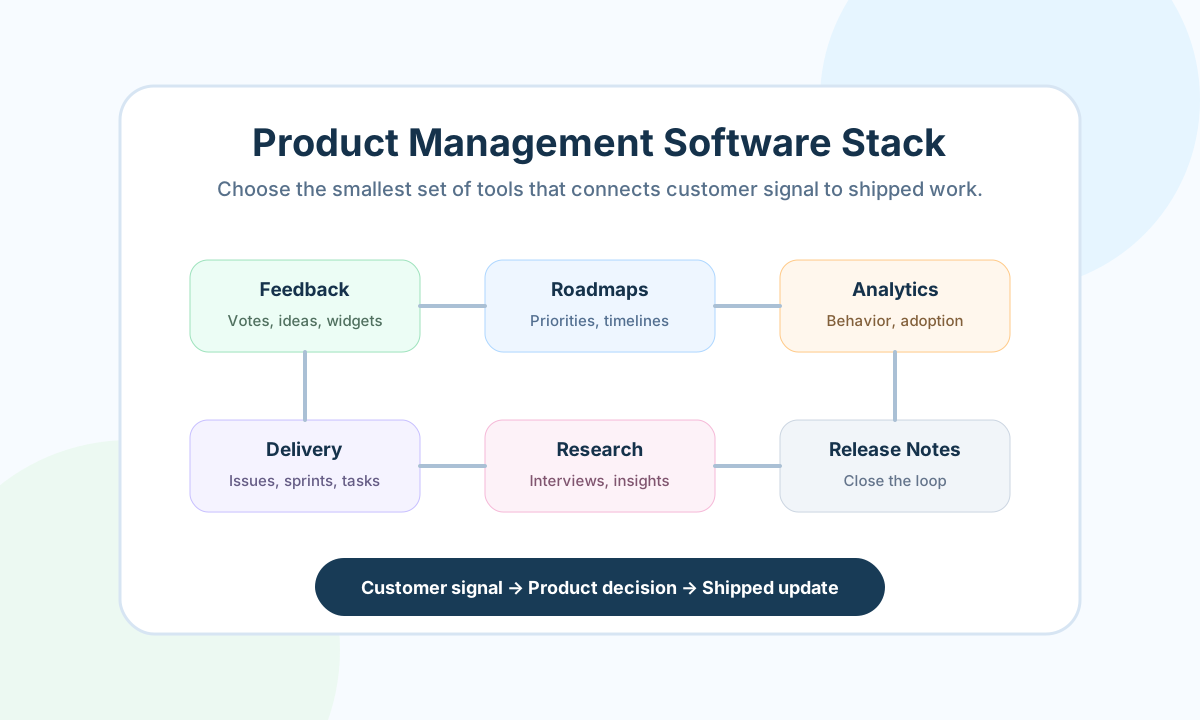
Product management software should help a team decide what to build next, not create another place where ideas disappear. The best setup connects customer feedback, discovery, prioritization, roadmaps, delivery, analytics, and release notes so teams can move from signal to shipped value with less chaos.
There is no single best platform for every company. A founder with a small SaaS site may need a lightweight feature request widget and voting board. A larger organization may need portfolio roadmaps, Jira integrations, and product analytics. This guide compares 21 current tools across feedback, roadmap planning, analytics, project management, research, and release communication.
If you are choosing the feedback layer first, start with related guides on feature request tools, user feedback tools, and feedback board software. The short version: pick the smallest stack that makes customer demand visible, keeps prioritization honest, and helps you close the loop.
What to look for in product management software
Before comparing tools, define the job you need the software to do. Many teams buy a big platform because it looks complete, then still manage customer requests in spreadsheets, Slack, support tickets, and meeting notes. A better approach is to map your workflow from input to output.
Look for six capabilities.
First, feedback collection. You need a reliable way to capture requests from customers, prospects, support teams, sales calls, and your website. For small teams, an embeddable widget with voting is often more useful than a heavyweight portal because it turns scattered comments into a prioritized queue.
Second, prioritization. Good product management software should let you tag ideas, deduplicate similar requests, estimate impact, and compare effort. Whether you use RICE, value versus complexity, opportunity scoring, or voting, the system should make trade-offs visible.
Third, roadmap communication. A roadmap is not just a Gantt chart. Internal stakeholders may need delivery dates and dependencies, while customers may only need themes, statuses, or a public board showing what is being considered.
Fourth, delivery integration. If engineers work in Jira, Linear, ClickUp, monday dev, Shortcut, or GitHub, your product tool should not force double entry. The best stack keeps discovery context attached to delivery tasks.
Fifth, analytics and research. Mixpanel, Amplitude, and Pendo show what users do. Research repositories and survey tools show why they do it. Combining behavior data with qualitative feedback makes prioritization more defensible.
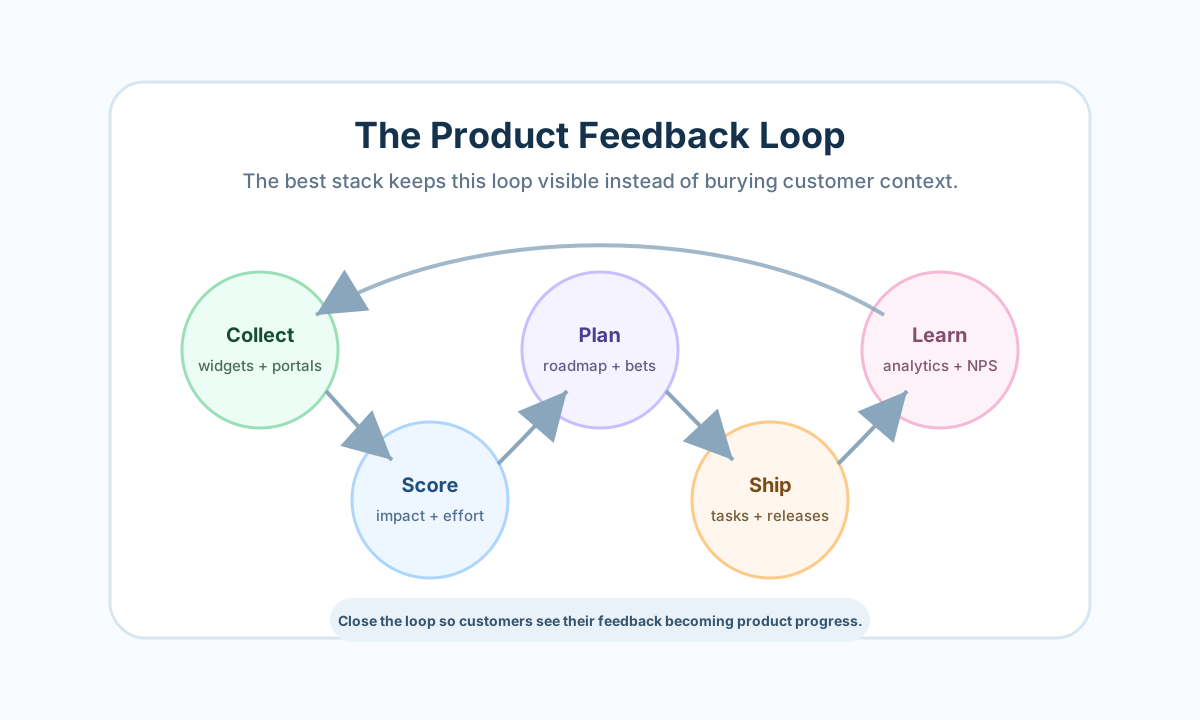
Sixth, release notes and customer communication. Closing the loop is where many teams lose trust. When users vote for an idea, they should eventually learn whether it shipped, changed, or was declined. For more on that workflow, see our guide to feature voting.
Stop guessing what to build next. FeaturAsk shows you what customers actually want, with a simple widget for capturing requests and an easy-to-use admin panel. Start your free trial today—no credit card required—and see how it works.
21 best product management software tools
The tools below are grouped by strongest use case, not marketing category. Pricing changes often, so use cited pricing pages and current review profiles as source links rather than treating any plan detail as permanent. Review themes matter most when they reveal fit: setup effort, admin complexity, support quality, and whether teams keep using the tool after purchase. FeaturAsk is first because it fills the simple, affordable feedback-widget role many small teams need before a larger suite.
1. FeaturAsk — best simple affordable feedback widget for small teams
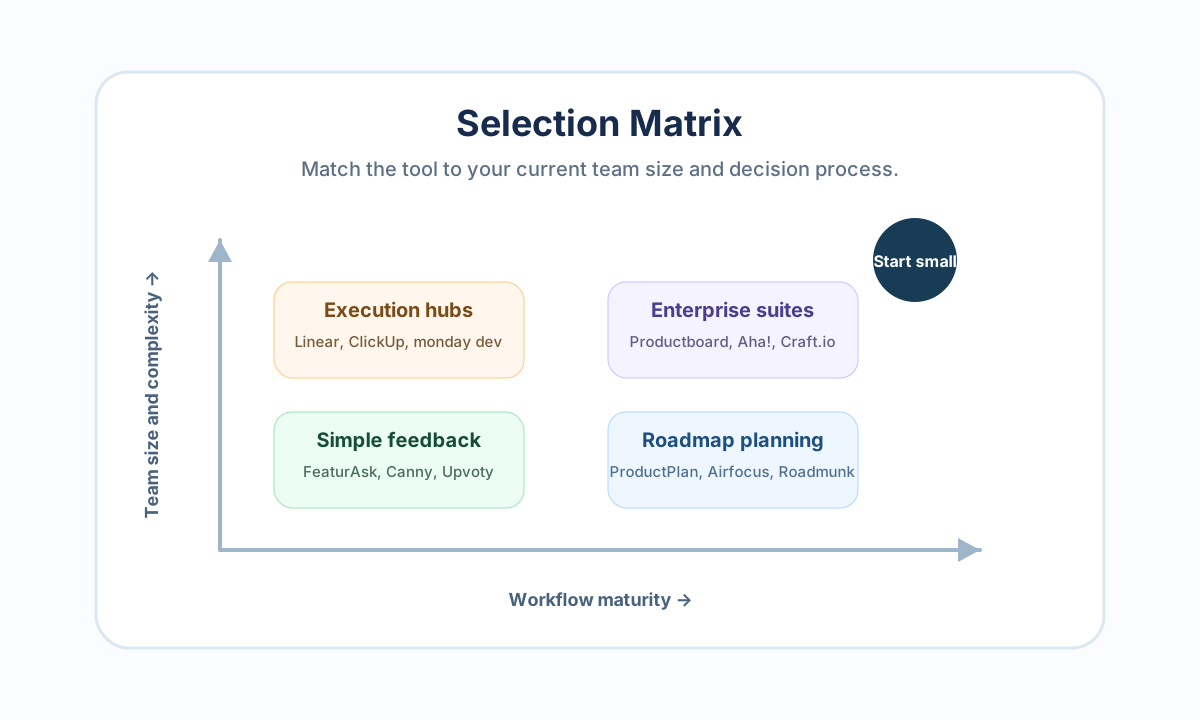
FeaturAsk is built for teams that want to collect feature requests without adopting an enterprise product management suite. It gives you a copy-paste widget for your site, request capture, voting, request management, analytics, moderation, custom branding, and a mobile-friendly experience. Small SaaS teams, creators, ecommerce stores, indie developers, and service businesses can start collecting ideas quickly without monthly enterprise-tool prices.
Its biggest advantage is simplicity. Instead of asking customers to leave your product, search for a portal, or send yet another email, FeaturAsk lets them submit ideas where the need appears. The 30-day free trial, no-credit-card signup, and $29.95/year pricing make it a strong first layer for teams that mainly need feedback capture and prioritization before complex portfolio planning.
2. Productboard — best for structured product discovery at scale
Productboard is a mature platform for centralizing customer insights, linking feedback to feature ideas, prioritizing with custom drivers, and sharing roadmaps. It fits B2B SaaS teams with high feedback volume and multiple stakeholder groups. Productboard’s pricing and packaging are published on its pricing page, and buyers should review plan limits for makers, viewers, integrations, and portal features.
3. Aha! — best for enterprise product strategy and portfolio roadmaps
Aha! offers a broad product development suite spanning strategy, ideas, roadmaps, whiteboards, knowledge, and delivery. It is powerful when leadership wants product goals, initiatives, releases, dependencies, and reporting in one system. Aha! publishes plan information across its pricing page, making it easier to compare modules before buying.
4. ProductPlan — best for executive roadmap presentation
ProductPlan focuses on visual roadmaps for executives, customer-facing teams, and stakeholders. It is useful when the main problem is communicating timeline, theme, and priority clearly rather than collecting every user idea. Current plan details are available on the ProductPlan pricing page.
5. Jira Product Discovery — best for Atlassian teams
Jira Product Discovery helps product teams capture ideas, score opportunities, and connect discovery decisions with Jira delivery work. It is especially practical if engineers already live in Jira Software and product managers want to reduce context switching. Atlassian maintains current plan details on the Jira Product Discovery pricing page.
6. Linear — best for fast product-engineering execution
Linear is loved by many product and engineering teams because it is fast, opinionated, and clean. It is not a classic feedback portal, but it excels at issues, cycles, projects, roadmaps, and product-engineering workflows. The Linear pricing page explains current plan differences for teams evaluating it as a delivery hub.
7. ClickUp — best flexible all-in-one workspace
ClickUp combines tasks, docs, whiteboards, dashboards, goals, forms, and automations. Product teams can use it for roadmaps, sprint planning, bugs, launch checklists, and cross-functional work. Because ClickUp is broad, setup discipline matters; without naming conventions and ownership, it can become noisy. See ClickUp’s pricing page for current plan details.
8. monday dev — best visual workflow management for product teams
monday dev brings monday.com’s visual boards and automations to product development. It works well for teams that prefer configurable workflows, status tracking, release planning, and stakeholder-friendly dashboards. Current plan details are listed on monday.com’s pricing page.
9. Craft.io — best for product portfolio planning
Craft.io offers product strategy, prioritization, capacity planning, roadmaps, and feedback management. It is designed for product organizations that need a structured system rather than a simple task board. The Craft.io pricing page is the best place to validate current packaging.
10. ProdPad — best for lean roadmaps and outcome-focused product work
ProdPad emphasizes product discovery, lean roadmaps, idea management, objectives, and feedback. It is useful for teams that want to move away from date-heavy roadmaps and toward now-next-later planning. ProdPad publishes current plan options on its pricing page.
11. Airfocus — best modular prioritization and product operations
Airfocus is a modular product management platform with prioritization, insights, roadmaps, portals, and product strategy tools. Its strength is flexibility: teams can create views for product managers, leadership, and customer-facing teams. Check the Airfocus pricing page for current plans.
12. Roadmunk — best dedicated roadmap planning
Roadmunk focuses on roadmap visualization, prioritization, and feedback. It is a good fit when teams want multiple roadmap views for different audiences, including timeline and swimlane formats. Current packaging is available on the Roadmunk pricing page.
Turn scattered customer feedback into clear product direction. FeaturAsk helps you gather ideas, prioritize requests, and communicate updates—all from a single dashboard. Start your free 30-day trial today—no credit card required.
Analytics and product experience tools
Analytics platforms are not replacements for feedback systems, but they make feedback smarter. A user saying “your onboarding is confusing” is helpful. Seeing where thousands of users drop off makes it actionable.
13. Mixpanel — best event analytics for product teams
Mixpanel helps teams analyze funnels, cohorts, retention, feature adoption, and user journeys. Product managers use it to validate whether shipped features are being discovered and whether changes improve behavior. Mixpanel maintains current plan details on its pricing page.
14. Amplitude — best advanced product analytics
Amplitude is a leading product analytics platform for experimentation, behavioral cohorts, user journeys, and digital analytics. It is especially strong for data-mature product organizations that want deeper analysis across web and mobile products. See the Amplitude pricing page for current packaging.
15. Pendo — best in-app guidance plus product analytics
Pendo combines product analytics, in-app guides, surveys, feedback, and product experience tools. It is useful when teams want to understand behavior and guide users without relying only on engineering releases. Pendo’s pricing page describes current plan paths.
Feedback, support, research, and release-note tools
Feedback tools are closest to the customer. They capture the language people use when they are frustrated, excited, or blocked. The right choice depends on whether you need a public board, private support feedback, bug screenshots, helpdesk workflows, or research notes.
16. Canny — best established feedback portal
Canny offers feature request boards, voting, roadmaps, changelogs, and customer feedback workflows. It is a well-known option for SaaS companies that want a hosted feedback portal and public roadmap. Current plan details are on the Canny pricing page.
17. Upvoty — best straightforward feature voting portal
Upvoty provides feedback boards, roadmaps, and changelogs with a relatively simple setup. It is often considered by teams comparing feature voting tools. Its current plans are listed on the Upvoty pricing page.
18. Usersnap — best visual feedback and bug reporting
Usersnap specializes in visual feedback, screen capture, bug reports, surveys, and user acceptance testing. It is especially useful when product feedback includes screenshots, browser context, or QA details. See the Usersnap pricing page for current plan information.
19. UseResponse — best support and feedback community workflows
UseResponse combines customer support, feedback, knowledge base, community, and helpdesk-style workflows. It may fit teams that want feedback connected to support operations rather than a standalone roadmap tool. Current plan details are published on the UseResponse pricing page.
20. Notion — best lightweight research and product documentation
Notion is not a specialized product management platform, but many teams use it for product specs, research notes, meeting summaries, launch plans, and lightweight roadmaps. It works best when paired with a feedback tool and delivery system. Current plan details are available on the Notion pricing page.
21. Trello or Shortcut — best lightweight delivery alternatives
Trello and Shortcut serve different audiences, but they share a role in this list: lightweight product delivery management. Trello is simple and visual for kanban planning, small launch workflows, and early-stage teams. Shortcut is more software-team-oriented, with stories, epics, iterations, and product-engineering planning. Review the Trello pricing page and Shortcut pricing page to compare current plans.
How to choose the right product management software stack
Use a stack decision instead of a tool beauty contest. Most teams need one primary tool in each workflow layer, not five overlapping systems.
If you are a solo founder or small SaaS team, start with feedback capture, voting, and a basic delivery board. FeaturAsk plus Linear, Trello, Shortcut, ClickUp, or Notion may be enough. You can export insights into a bigger roadmap tool later, but you will avoid buying process before you have volume.
If you are a growing B2B product team, look for feedback deduplication, account context, roadmap views, and delivery integrations. Productboard, ProdPad, Airfocus, Jira Product Discovery, Craft.io, or Aha! may make sense when many stakeholders ask for competing priorities.
If your main uncertainty is behavior, invest in analytics. Mixpanel, Amplitude, or Pendo can reveal whether a requested feature is a top user problem or a loud edge case. Pair analytics with qualitative feedback so you understand both scale and motivation.
If your main pain is communication, prioritize roadmap and release-note workflows. ProductPlan, Roadmunk, Canny, Upvoty, Pendo, and FeaturAsk can all help customers and internal teams understand what is planned, shipped, or under review.
Also consider implementation cost. Enterprise tools can be worth it, but only when someone owns taxonomy, tagging, integrations, permissions, and cleanup. A simple tool your team uses every week beats a complete platform that becomes a museum of stale ideas.
Key takeaways: which product management software is right for you?
Choose FeaturAsk if you want a simple, affordable way to collect and prioritize feature requests directly from your website. It is the best fit here for small teams that want a feedback widget, voting, analytics, moderation, branding, and a clean request dashboard without enterprise complexity.
Choose Productboard, Aha!, Craft.io, ProdPad, Airfocus, Roadmunk, ProductPlan, or Jira Product Discovery if roadmap strategy and stakeholder alignment are the central problem.
Choose Linear, ClickUp, monday dev, Trello, or Shortcut if execution workflow is the bottleneck.
Choose Mixpanel, Amplitude, or Pendo if you need behavioral evidence to support roadmap decisions.
Choose Canny, Upvoty, Usersnap, or UseResponse if your focus is public feedback boards, visual bug reports, support-connected communities, or customer communication.
The practical answer for most teams is to start small: capture customer requests, score them consistently, connect chosen work to delivery, and close the loop when updates ship. Once that loop is healthy, larger product management software becomes a multiplier instead of another admin burden.
Collecting and organizing feature requests doesn't have to be messy. FeaturAsk gives you a clean, embeddable widget and a simple dashboard to manage all feedback in one place. Get your one month free—no credit card required—and streamline your product decisions.